When choosing a classic premium-class instrument, you will almost immediately come across discussions about the brand’s two manufacturing centres. You are probably wondering whether a model produced in Germany or one from the factory on the other side of the Atlantic will be the better choice. Both factories have different approaches to details, finishing, and the voicing process itself. Understanding these specific characteristics will make it easier to choose an instrument that matches your playing style.
One Brand, Two Factories – How Did Steinway Hamburg and Steinway New York Come Into Existence?
The existence of two factories resulted from the geographical division of the market and the desire to avoid logistical difficulties and high customs duties at the end of the nineteenth century. The company’s founder decided to establish two separate production facilities in order to supply instruments more efficiently to customers in America and Europe. Over the years, both factories developed their own methods of wood processing and a slightly different aesthetic style. Thanks to this approach, the renowned grand piano manufacturer successfully established itself on both sides of the Atlantic. When comparing Steinway Hamburg and Steinway New York, you will quickly notice how history has influenced today’s structural differences.
The History of the Two Factories and the Development of the Steinway & Sons Brand
The history of Steinway is directly connected with the German Steinweg family, who emigrated to America and established their musical business there. Their first instruments quickly gained recognition in American concert halls and private salons. As demand in Europe increased, the decision was made to open a second factory in Germany. For decades, both factories relied on the same patents while introducing their own technological solutions. This parallel development allowed the brand to maintain its position as a leader in grand piano manufacturing on both sides of the Atlantic Ocean.
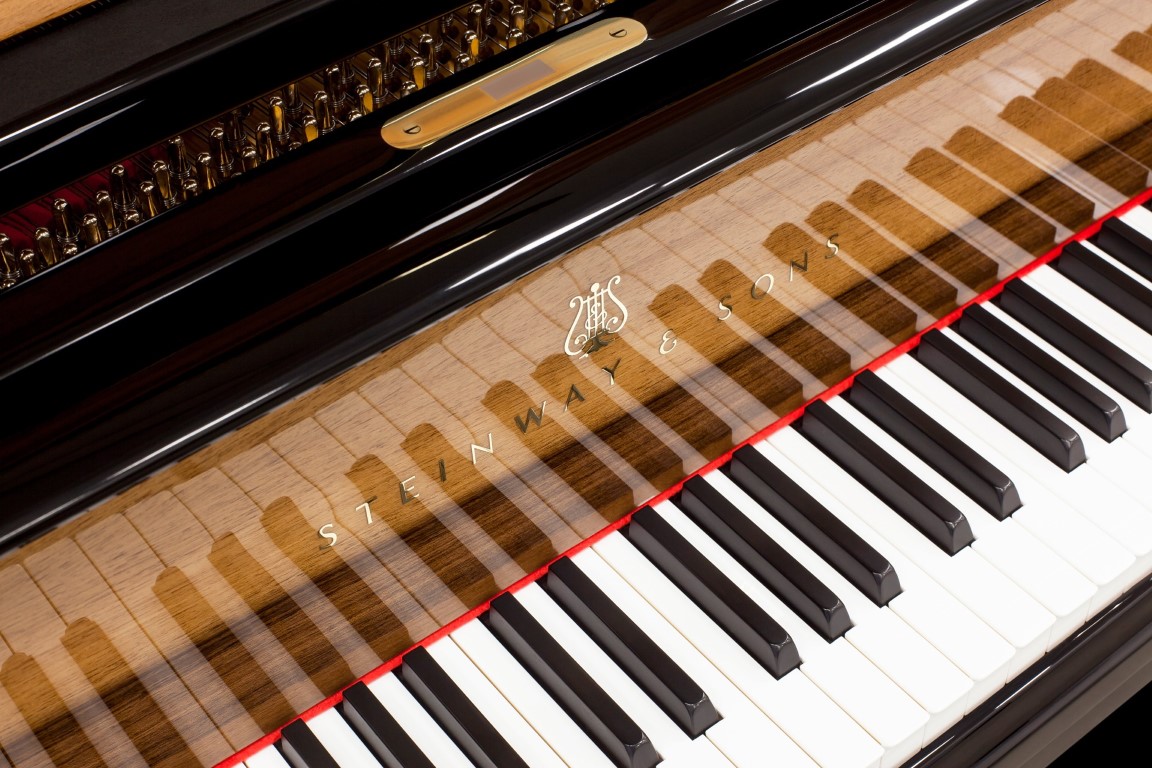
The Establishment of the New York Factory
The American factory was founded in 1853 in Manhattan and quickly became the main supplier for the American market. Engineers in New York focused on strong, impact-resistant cases and a deep, powerful tone. Such a Steinway grand piano proved ideal for large recording studios and concert halls filled to capacity. The craftsmen there also used distinctive matte nitrocellulose lacquer finishes with a unique texture. Instruments built there are still renowned today for their powerful and direct tonal character.
The Opening of the Hamburg Factory
The European branch began operations in 1880, supplying instruments to the European and Asian markets. In Hamburg, Steinway & Sons combined American engineering with German traditions of woodworking and piano craftsmanship. The result was instruments with exceptionally precise cabinet finishing and a slightly brighter tonal character. The German factory gained tremendous recognition among European classical pianists. Take a look at our restoration services to see how construction methods influence later restoration work.
Expansion into Global Markets
Expansion into global markets established the brand as the standard in concert halls around the world. Pianists on international concert tours soon began clearly distinguishing American instruments from German ones. To this day, both factories maintain separate production identities, responding to the different needs of artists. This enables musicians to choose the tonal character that best matches their own artistic interpretation. By browsing individual restoration projects, you can easily see how the materials from both factories age differently.
Are Steinway Hamburg and Steinway New York Built in the Same Way?
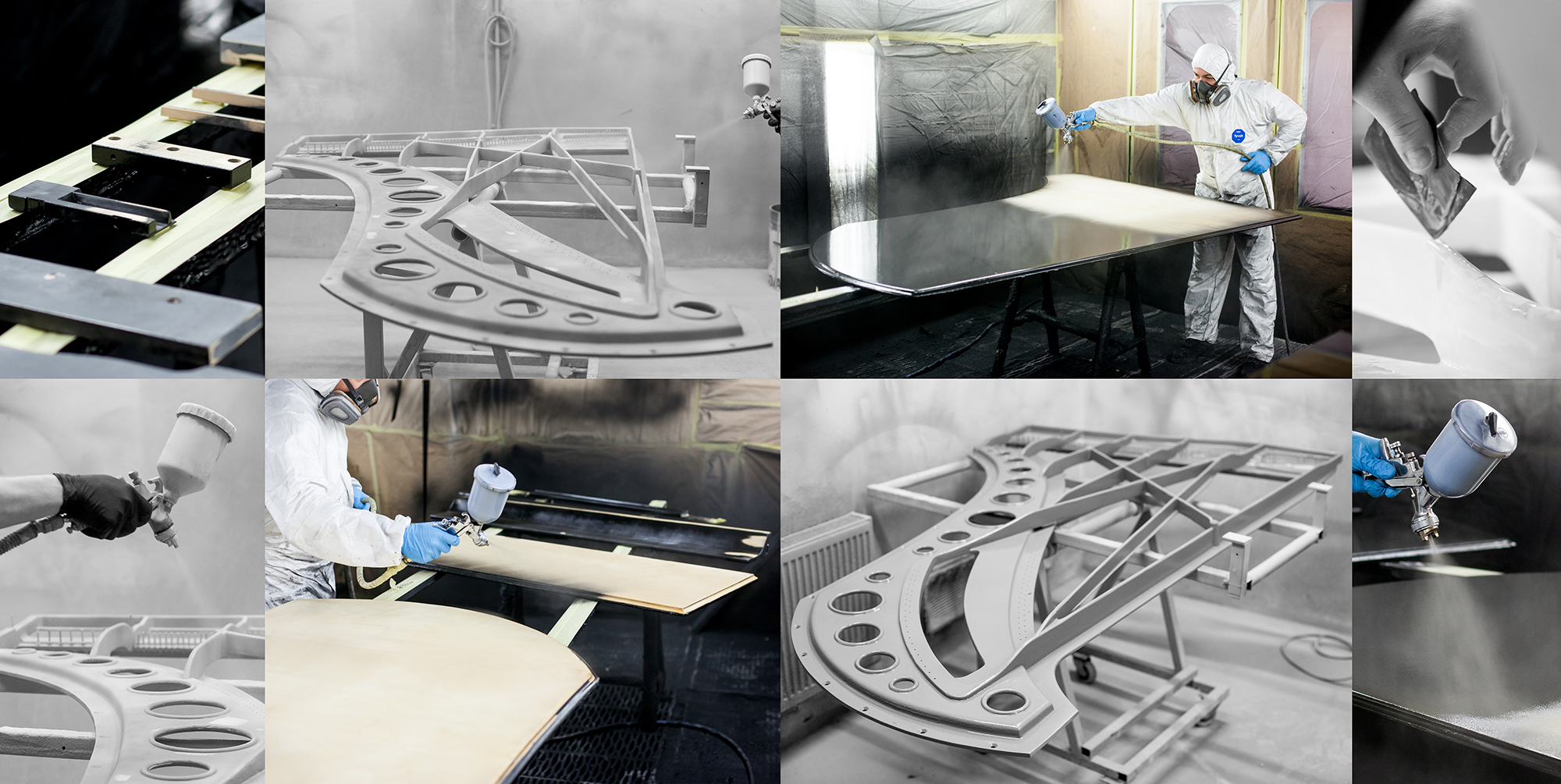
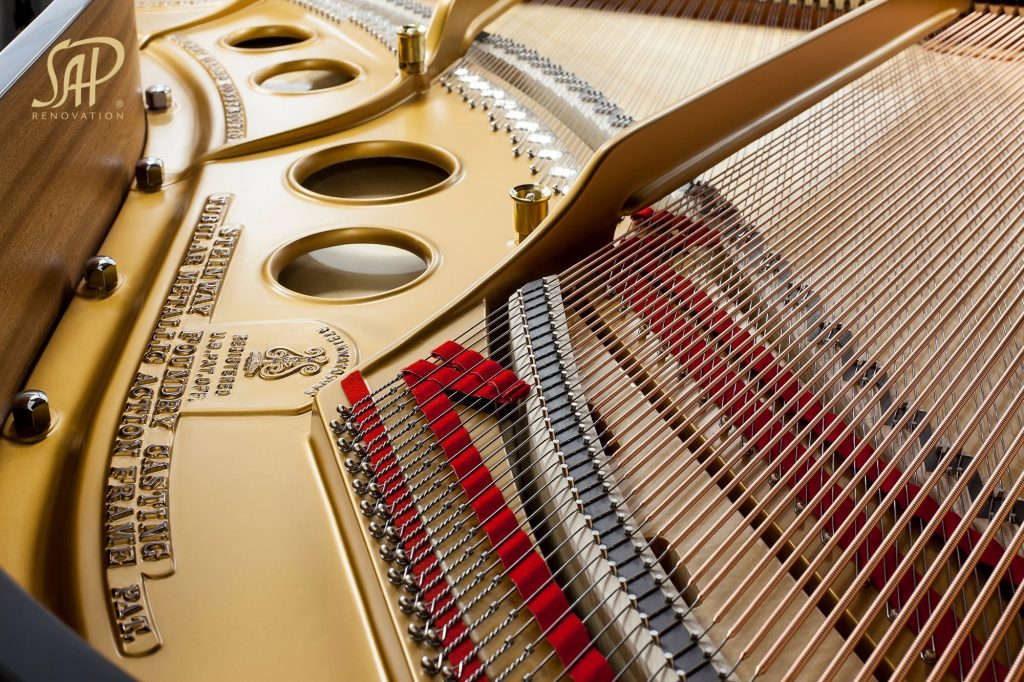
Steinway Hamburg and Steinway New York use the same core patents of the brand, yet they differ in their cabinet finishing methods and in the hammer voicing process. In Germany, a high-gloss finish achieved with hard polyester lacquers is used, whereas satin finishes predominate in the United States. In addition, the European factory sources hammer felt from different suppliers than the New York facility. These seemingly minor details have a direct impact on the visual appearance and the feel of the keyboard beneath the pianist’s fingers. By browsing our Steinway restoration projects, you will notice these subtle differences in the lacquer structure and cabinet components.
Differences in Tonal Character
The differences in tonal character result mainly from the different preparation and hardening methods of the hammer felt used in the two factories. New York instruments produce a broader, darker sound that is rich in overtones. German instruments are renowned for a clearer, more bell-like upper register and a pure tone. Different methods of processing the hammer felt make it possible to achieve distinct tonal colours in selected registers. By analysing the differences between Steinway Hamburg and Steinway New York, you will quickly understand why pianists express such different opinions about these instruments.
Sound Projection
New York models project sound in a broad manner, making it easier to cut through the sound of an orchestra. The acoustic wave from an American instrument quickly fills the entire space of a large concert hall. Hamburg instruments, on the other hand, focus the sound in a more linear and concentrated way. This provides the pianist with excellent control over softer musical phrases in more intimate spaces. Understanding this distinction makes it easier to match the instrument to the acoustics of a particular venue.
Tone Colour
The tone colour of American models is often described as rich, deep, and capable of handling a powerful touch. The European version, on the other hand, focuses on singing quality, flexibility, and exceptional clarity in the treble register. Every Steinway concert grand piano from both factories undergoes a lengthy hand-voicing process. This gives each individual instrument its own unique tonal character, highly appreciated by performers. Your final choice depends on whether you are looking for a more dramatic or a more singing sound.
Dynamic Range
The dynamic range of both versions allows for complete musical expression, although each has slightly different strengths. The New York version effortlessly produces a powerful bass fortissimo. Its Hamburg counterpart impresses with the smoothness of its pianissimo registers, responding beautifully to the lightest touch. This diversity makes it easier to choose an instrument suited to a particular classical or contemporary repertoire. An excellent example of such balance is the Steinway & Sons SAP 10480, which regained its full dynamic range after restoration work.
Action Response
The action response in the German models is based on Renner components, providing an exceptionally smooth key movement. The New York action, manufactured directly by Steinway in the United States, offers slightly greater resistance under the fingers. For many jazz musicians, this American characteristic provides better control over the striking point. Pianists performing fast and virtuosic repertoire, on the other hand, usually prefer the feel of the Hamburg keyboard. Proper grand piano tuning and maintenance, however, make it possible to precisely regulate the keyboard weight in both cases.
Which Models Are Most Commonly Found in Europe and the United States?
The Hamburg model dominates the European market, while in North America the New York production almost exclusively prevails. This situation results from local distribution networks and the purchasing traditions of musical institutions. The largest Steinway Model D is sometimes imported from the other factory at the special request of a philharmonic orchestra or a particular artist. On the private market, you will now find instruments originating from both production centres. Well-informed buyers focus on the instrument’s qualities rather than solely on its place of manufacture.
How Can You Identify the Origin of a Steinway Grand Piano?
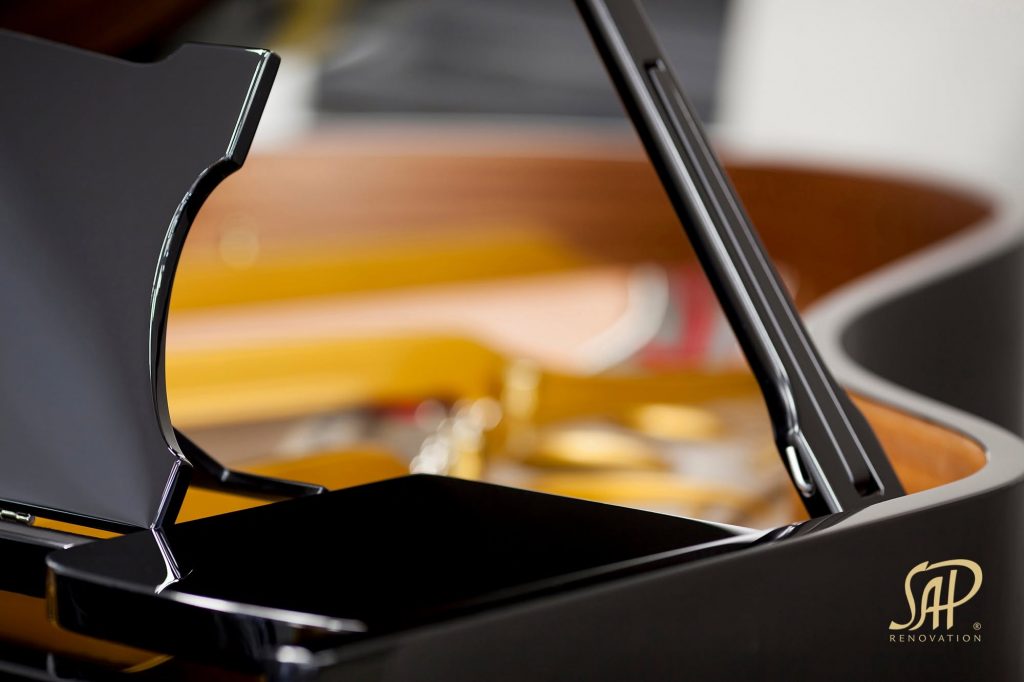
You can identify the origin of a Steinway grand piano by the details of the cabinet finish, the shape of the cheek blocks, and the type of lacquer used. There are several visible construction features that immediately indicate the factory in which the instrument was built. An experienced piano tuner or restorer will notice these differences almost immediately after opening the keyboard lid. Knowing these details helps prevent mistakes when purchasing a pre-owned instrument.
- The American cabinet features a satin, semi-matte finish, while the German version has a high-gloss polyester finish.
- The cheek blocks (the sides next to the keyboard) are straight and angular in the New York version, whereas they are gently rounded in the Hamburg version.
- The pedal lyre on the American model has sharper lines and straighter arms.
- The lid buttons and brass fittings differ in both texture and surface finish.
- The nameplate and the cast iron plate bear different factory markings.
This classic premium grand piano also reveals its origin through its serial number. These markings are stamped onto the cast iron plate in a precisely defined location. It is always advisable to verify this information against the factory documentation before making a purchase decision. By examining well-preserved examples, you can admire the craftsmanship of both factories. Take a look at the restored Steinway & Sons SAP 10744, where the characteristic cabinet lines are clearly visible.
Does the Restoration of Steinway Hamburg and Steinway New York Require a Different Approach?
Restoring a Steinway from the New York factory requires different materials and finishing techniques than restoring a Hamburg model. When restoring an American instrument, the traditional lacquer coating with its characteristic texture must be faithfully recreated. European versions require work with polyester lacquers and precise polishing to achieve a high-gloss finish. Using the wrong lacquer or hammer felt can permanently alter the instrument’s original tonal character. A comprehensive Steinway grand piano restoration must always take into account the specific action design and the original hammer felt used by the respective factory.
Do These Differences Matter to Pianists and Collectors?
The production differences are highly significant both for pianists seeking a particular keyboard response and for collectors evaluating an instrument’s originality. A pianist performing Impressionist music may prefer the softer tonal character of the Hamburg version, while a soloist performing a large concerto with an orchestra may choose the New York instrument because of its powerful projection. For collectors, consistency of components and the preservation of original factory specifications are of paramount importance. Understanding these nuances helps avoid misunderstandings during valuation or purchase. A professionally carried out Steinway & Sons restoration preserves the instrument’s original character regardless of the factory in which it was built.
What Experience Does SAP Renovation Have in Restoring Steinway Instruments?
SAP Renovation has many years of experience in the comprehensive restoration of Steinway instruments from both factories. Our team of specialists has an in-depth understanding of the specific characteristics of both American and German actions, as well as the methods used to manufacture their cabinets. The use of carefully selected restoration materials allows us to restore each instrument’s original acoustic and aesthetic qualities. Every project is treated individually, with full respect for the history of the particular instrument. If you would like to restore your own instrument, complete our contact form and get in touch with us to discuss all the technical details.