Building an instrument for the concert stage brings the laws of physics together with centuries of craftsmanship. The response of the levers beneath the fingers defines the musician’s expressive possibilities. A premium grand piano’s touch is the result of meticulous work on wooden and metal components. Designers examine action movements within fractions of a millimetre to give the player control over tonal colour. Balanced component masses allow effortless phrasing, while the internal architecture connects the artist’s gesture with the mechanism’s resistance.
What is piano touch, and why does the pianist feel it before hearing the sound?
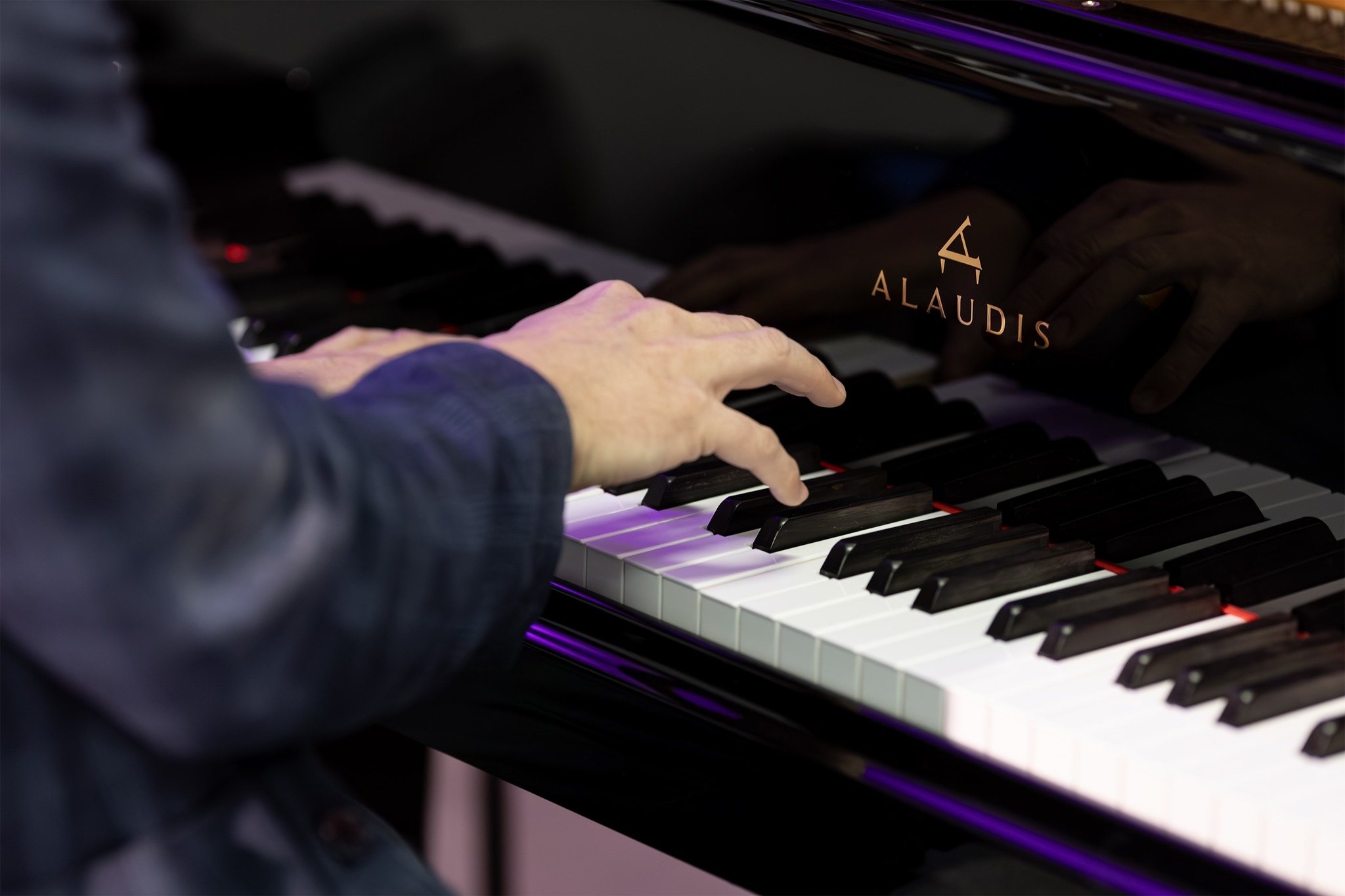
The response musicians call touch is felt in a fraction of a second. The player registers the resistance of the wooden and cloth components before the resulting sound reaches the ears. Vibrations transmitted through the wooden structure also contribute to tactile feedback. Pressure on the key sets it in motion and determines how the action behaves inside the case. The movement travels through the levers towards the felt-covered hammer within milliseconds. Before the hammer strikes the steel string, the pianist is already adapting the wrist to the resistance.
Keyboard and action: two systems that must work as one
The keyboard and action need to function as one continuous mechanism. Wooden keys, levers and hammers form a connected chain of movements inside the case. Their settings must be coordinated to deliver an immediate musical response. Designers examine contact points to reduce friction between materials. Cloth interfaces at supporting and contact points must remain dependable for years. Precisely matching these parts allows energy to pass smoothly from finger to hammer felt.
The key as a lever
A wooden key operates according to the principles of lever mechanics. It pivots at a balance point located by a metal pin: pressing the front raises the rear and moves the associated action parts. Designers position the pivot with meticulous care so that the pianist can play comfortably even at fast tempos. Moving the pin by a fraction of a millimetre changes the force needed to set the parts in motion. Careful balancing and reduced friction minimise energy losses along the mechanism.
Transmitting movement to the hammer action
The rear of the key transmits movement through the action to the jack, driving the felt-covered hammer towards the steel string. The assembly must respond immediately so the finger retains continuous control over the moving mass. Repetition depends on how quickly the levers return to a position ready for the next strike. Wool components help cushion the forces and vibrations of powerful playing. The jack’s interaction with the knuckle allows the hammer to move and then enter free flight towards the string. The action’s leverage shapes the dynamic range heard in the hall.
The point of contact between pianist and instrument
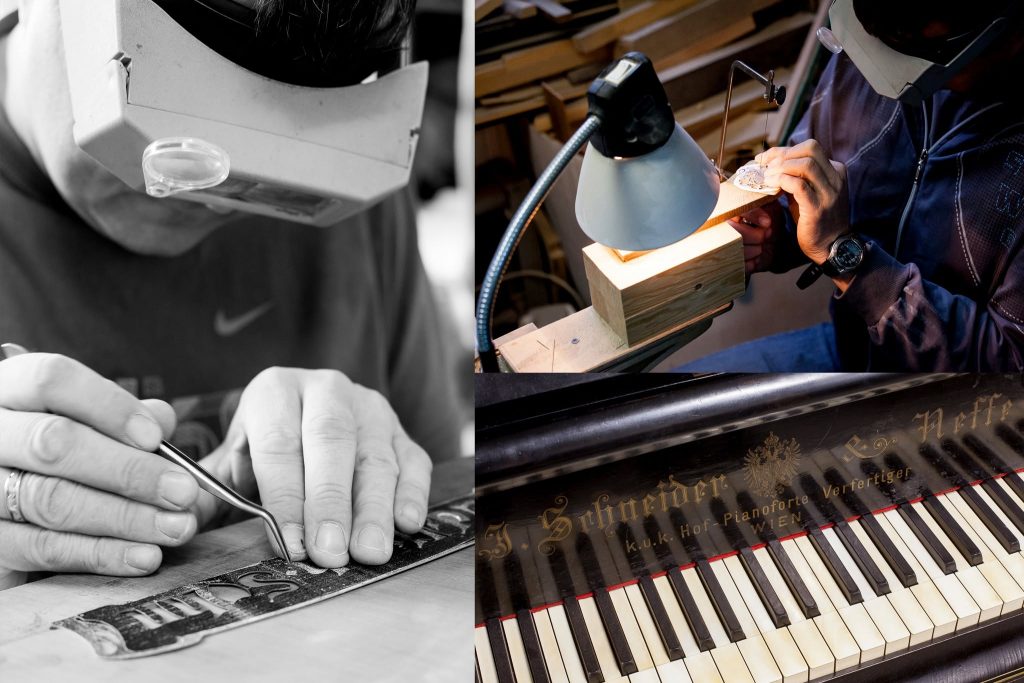
The keytop is the musician’s contact surface and affects finger stability. Professional restoration of the key coverings restores appropriate grip beneath the fingertips. The edge profile influences how easily the hand moves between notes. Technicians attend to the material’s fine surface texture to support precise control of touch. Its response to moisture from the hands helps prevent slipping in performance. A dependable contact surface gives the player confidence in passages spanning different octaves.
Keyboard geometry: how do key length and proportions affect control?
Component dimensions determine the leverage and the player’s experience. Designers seek proportions that provide an even response across the usable key surface. Appropriate lever-arm lengths reduce hand fatigue during long practice sessions. Moving the fulcrum directly changes the force required to overcome inertia. Analysing the geometry establishes a balance between key travel and resistance. The design is based on physical principles and mathematical calculations.
The front and rear sections of the key
The position of the keyframe and action determines how the wooden key is divided around its pivot. Professional repair of the internal mechanism respects the lever-arm dimensions of the original design. The ratio between the front and rear sections determines the force needed to move the hammer. Greater effective key length reduces the difference in resistance between playing near the front and farther in. Behind the pivot, the key rises with a force related to the pressure applied at the front. Designers refine the lever length to improve tonal control.
Fulcrum position and leverage
The position of the balance point determines the key’s mechanical advantage. Moving it by millimetres changes the resistance the musician feels. Correct adjustment of the action’s leverage increases control over the hammer’s strike. Craftspeople refine this relationship to make the response even across the compass. Bringing the pivot closer to the front of the key increases the force required from the player. Optimising its position supports fast, energy-efficient playing.
Playing near the front or farther into the keyboard
Playing near the front of a key requires less force because the finger is farther from the pivot. Moving in between the black keys changes the effective leverage. Regulation after rebuilding helps make resistance more consistent at different contact points. The aim is a uniform sensation wherever the finger is placed. Longer keys extending into the case reduce abrupt changes in force when playing farther in. Carefully designed geometry supports freedom in rapid passages and chords.
Static and dynamic touchweight: why one figure cannot describe the whole action
Static measurements reveal only part of how the mechanism behaves. Quality control assesses resistance both at rest and in motion. Piano touchweight must be considered alongside inertia and friction. Accelerating the hammer changes what the musician feels beneath the finger. Static and dynamic touchweight therefore describe complementary aspects of the key’s behaviour. Craftspeople select lead weights to balance these characteristics across the keyboard.
The Renner action in Alaudis: response, repetition and control
Traditional workmanship and contemporary design can produce exceptional results. At the heart of the Alaudis concept is a Renner action. The Alaudis grand piano uses these components to give the pianist full tonal control. The solutions described in the brand’s development story support stable settings over many years. The jack’s rapid return makes repeated strikes of the same note possible. The player can trust each gesture to find its expression in the sound.
The Kluge keyboard: precision as the foundation for regulation
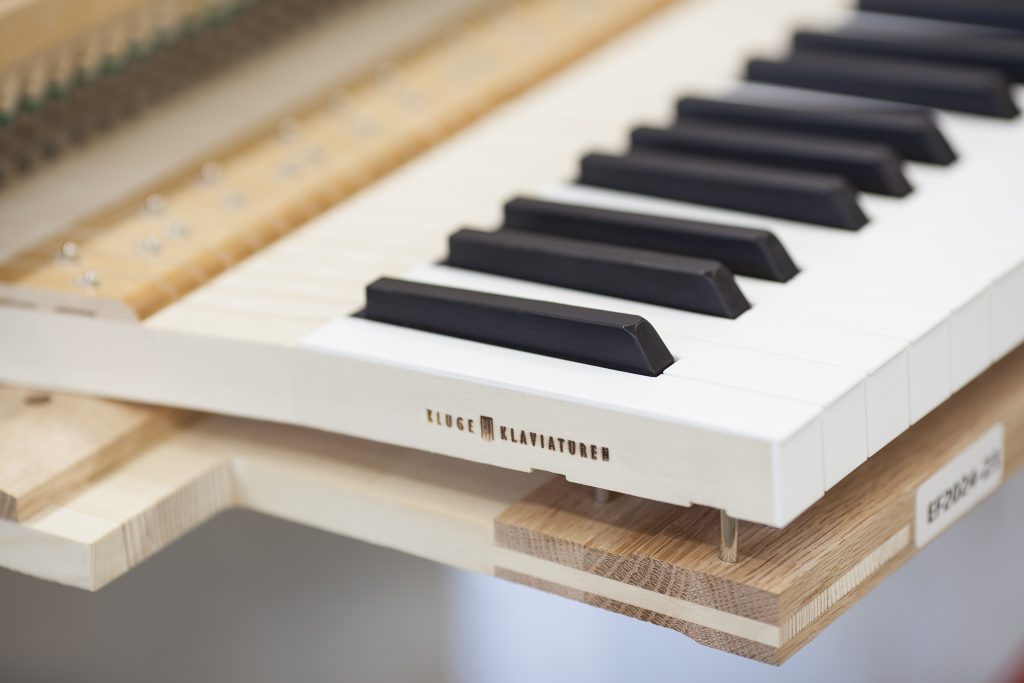
The spruce key structure must remain stable as humidity changes. The Kluge keyboard uses carefully selected materials. Cutting parts within fractions of a millimetre provides the starting point for balancing the complete assembly. Dimensional stability keeps adjacent keys from rubbing against one another. CNC-machined pin holes support accurate key travel. High-quality material preparation makes each stage of regulation easier for the technician.
Balancing the keyboard: achieving an even feel across the compass
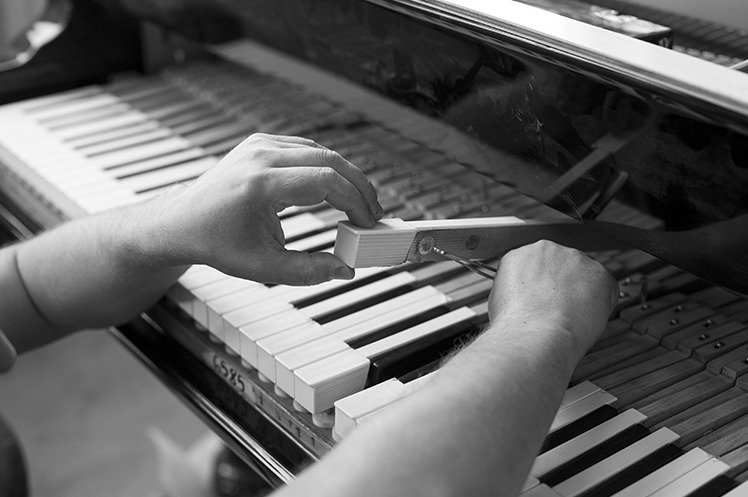
Differences in hammer mass require individual attention to every key. Larger bass hammers call for counterbalancing towards the front of the lever. Keyboard balancing involves fitting lead weights into the wooden keys. The technician measures the force needed to depress each key, adding or removing mass accordingly. Consistent resistance across the compass improves playing comfort. Careful measurement gives the instrument a predictable response to touch.
Regulating the Alaudis action: precision within fractions of a millimetre
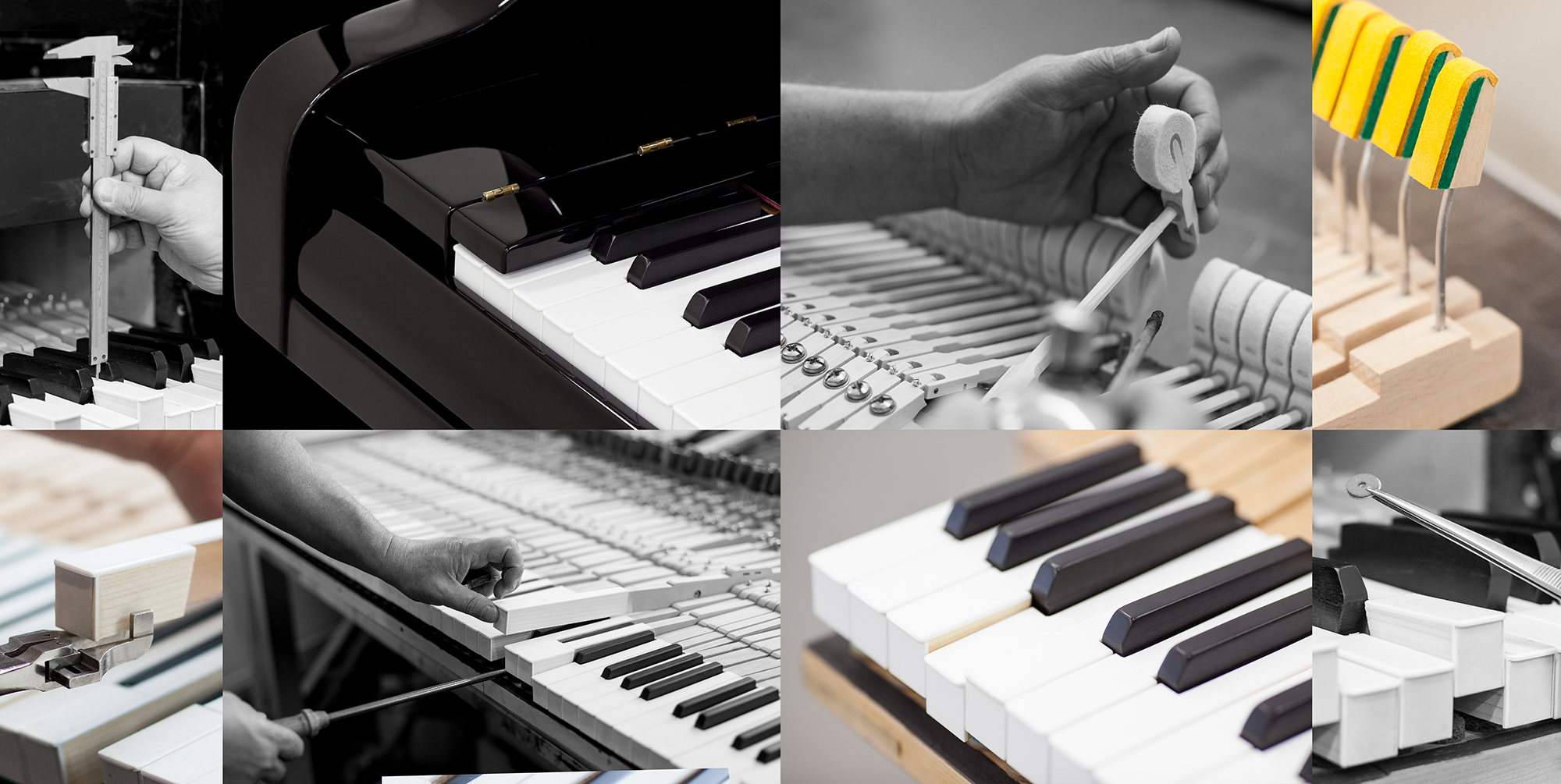
Piano technicians carry out a series of adjustments to meet demanding performance requirements:
- Levelling the keys with paper punchings beneath the cloth or felt punchings.
- Setting the hammer’s let-off by adjusting the regulating screws.
- Setting the backcheck position relative to the hammer for reliable repetition.
Grand piano action regulation involves correcting the relationships between thousands of parts. This attention to clearances helps create the performance found in models that set demanding standards.
How does a pianist test the touch of a premium grand piano?
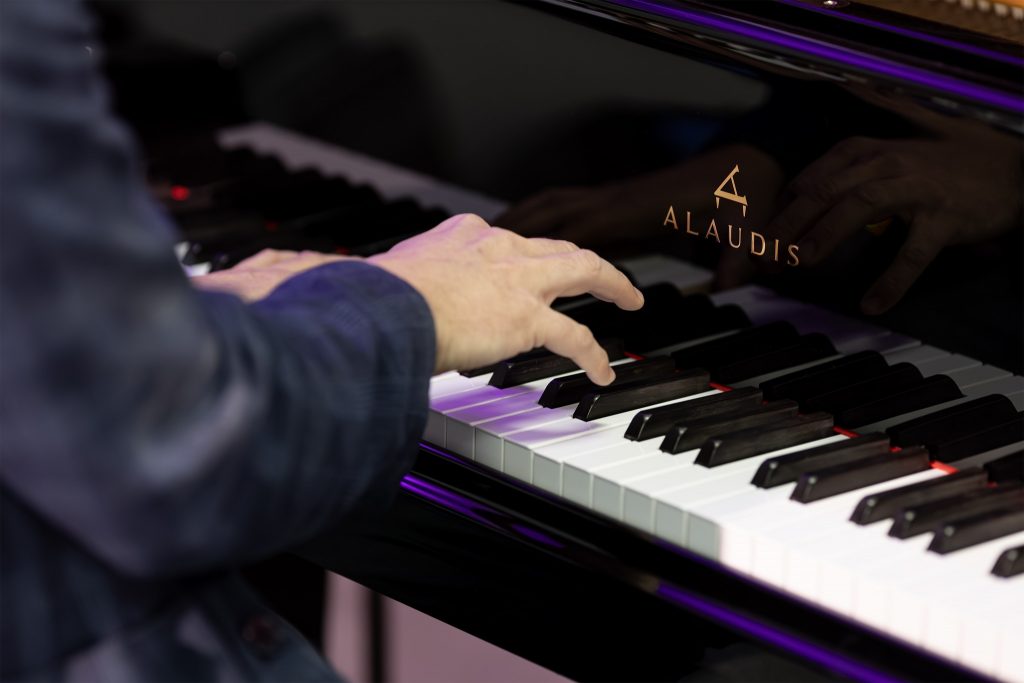
Testing begins with quiet notes at a slow tempo. The pianist checks whether the premium keyboard responds to the smallest variations in touch. Assessing the action’s return speed reveals its suitability for rapid trills. Powerful chords test the stability felt beneath the hands. A carefully prepared premium grand piano made in Poland gives the player freedom to shape the musical narrative. The assessment concludes with passages in the extreme registers.
Can the touch be tailored to an individual pianist?
Players’ preferences vary with hand anatomy and playing style. By consulting the specialist, the pianist can explore adjustments to key resistance through changes in lead weighting. Key dip influences security at fast tempos, while spring tension can alter the mechanism’s dynamic response. Changes require the balance of the complete action and keyboard assembly to be checked again on the workbench. Tailoring the action to the player improves comfort and helps relieve wrist tension.
Why are premium components not enough without expert regulation?
The finest materials provide the foundations for excellence. A sophisticated hammer action still needs skilled handwork to realise its potential. Human expertise turns a collection of precision parts into a coherent musical instrument. Poorly set levers can cancel out the advantages of premium components. An experienced craftsperson spends many hours correcting contact points within fractions of a millimetre. The resulting comfort beneath the fingers is achieved through regulation.
Designing the lever system of an exceptional instrument unites physics and craftsmanship. Every stage of work on wood, felt and metal shapes the player’s final experience. The relationship between geometry and component mass defines expressive freedom on stage. Advanced engineering gains its musical value through expert regulation. The pianist receives an instrument that responds immediately to musical intention. Carefully coordinating every component brings the craftsperson’s work into a unified whole.