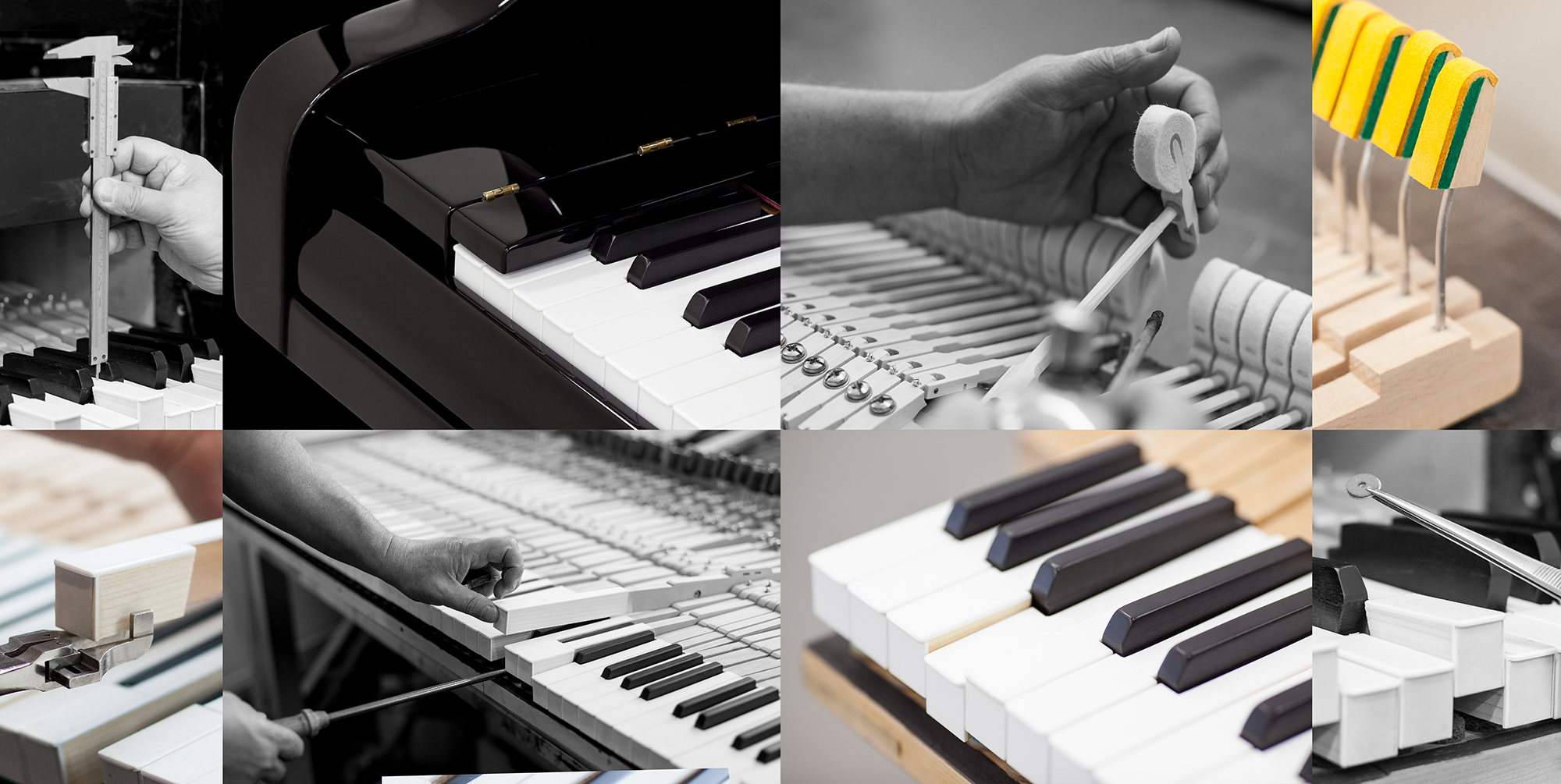

When you sit down at the instrument, your fingers touch the keys, but the real magic happens beneath the case, where hundreds of components work together in a fraction of a second. The evolution of this engineering lasted for centuries, leading from simple constructions to advanced systems used in what are today recognised as concert standards. Understanding what happens inside the instrument allows you not only to control the sound better, but also to take conscious care of its technical condition for many years.
How the action of the upright piano and the grand piano works – basics worth understanding
The operation of the action is based on the principle of a multi-stage lever, which transfers the energy of the strike of your finger to a felt hammer that strikes the strings directly. When you press a key, you set in motion a series of precise elements, such as pushers, levers and forks, which must cooperate with mathematical accuracy. This entire complex upright piano action construction was designed in such a way that, after striking the string, the hammer immediately rebounds from it. This is essential, because if the hammer were to remain against the string, it would damp its vibration and make it impossible to produce a pure, clear sound. If you want to know a deeper comparison between an upright piano and a grand piano, it is worth noting that the direction of movement of these elements depends on the physical orientation of the strings in a given model.
Why the grand piano allows greater control of dynamics
The grand piano offers a much broader range of expressive possibilities thanks to its horizontal construction, in which the hammers return to their initial position naturally under the influence of gravity. Thanks to this solution, the grand piano action, construction and specific repetition system make it possible to strike the same key repeatedly without the need for it to return fully upward. By analysing the available options, you will make it much easier for yourself to choose the ideal instrument that will fully satisfy your growing artistic demands. The exceptional operation of the grand piano keyboard means that, as a musician, you can play extremely soft pianissimo or powerful fortissimo with absolute control over tone colour.
The Viennese action – historical precision and delicacy of playing
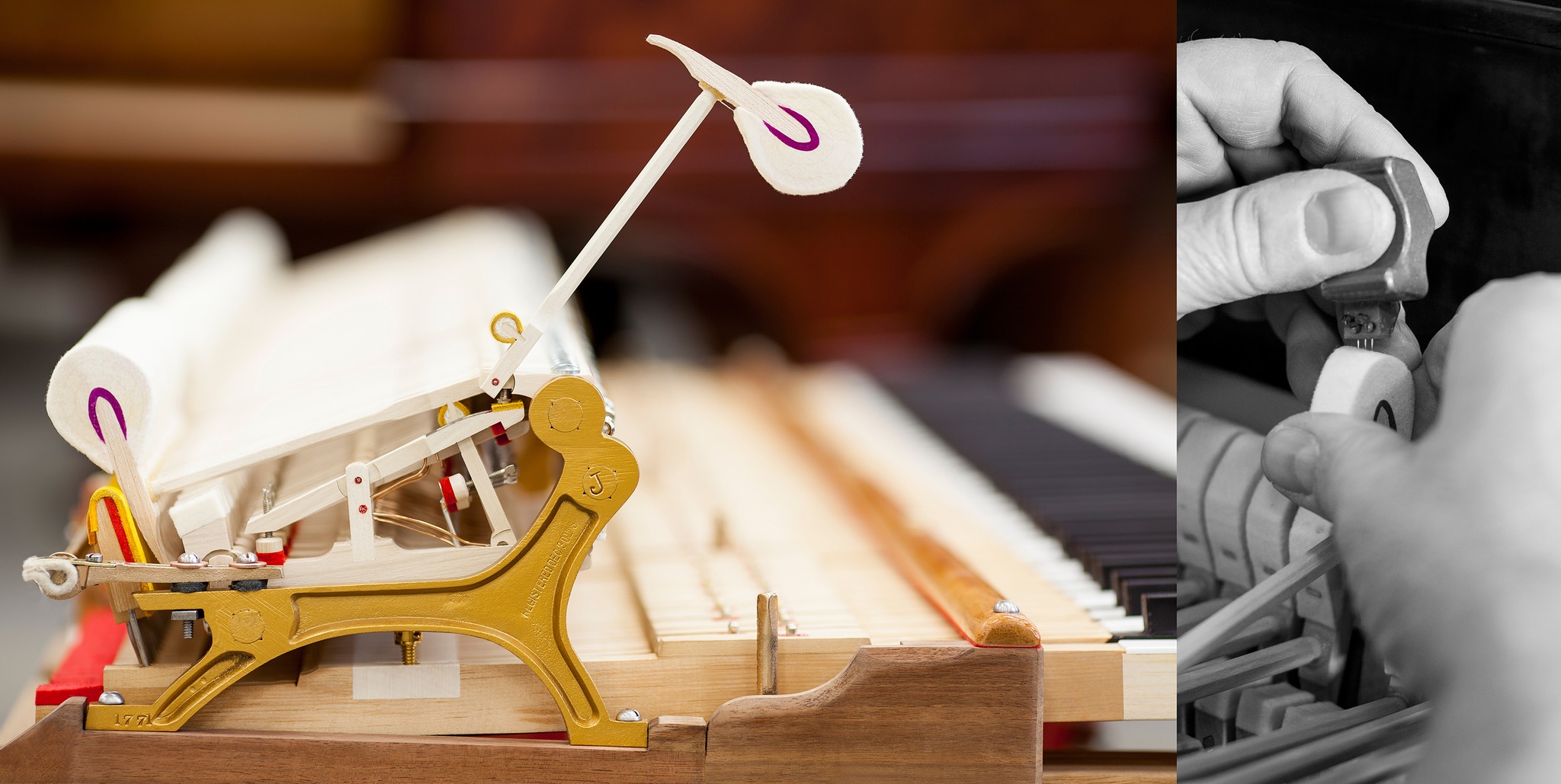
The Viennese action is based on a unique and simple construction in which the hammer is mounted directly on the key lever and directed with its head toward the player. When you press a key in such an instrument, the tail of the hammer catches on a fixed wooden escapement, which causes the head to be dynamically thrown toward the tensioned string. This system, historically referred to as Prellmechanik, is characterised by extraordinary lightness of operation and allows for very subtle shading of the softest sounds. If you own a historical instrument from that period, the Viennese grand piano action will require from you a great deal of patience and the regular care of a technician.
Why did this action fall out of use?
The main reason for abandoning the Viennese construction was its naturally limited dynamic capacity and the difficulty of achieving very fast and repeatable repetitions of sound. Together with the evolution of Romantic music and the transfer of recitals to increasingly larger concert halls, composers needed instruments with a much more powerful sound. Unfortunately, this construction did not cope very well with the enormous string tensions introduced in order to radically increase sound volume in the middle of the nineteenth century. The ongoing repair and precise regulation of these action was extremely time-consuming, which, with the growing popularity of English systems, became inefficient.
The overdamper action – simplicity of construction and its consequences
The overdamper action is distinguished by the characteristic placement of the dampers above the line of the hammers, which makes them perfectly visible immediately after opening the upper lid of your upright piano. In this specific system, the felt dampers are pressed against the strings by means of long metal wires controlled by the lower levers of the action. Understanding how the overdamper action of an upright piano functions makes it easy to grasp why some older instruments have that characteristic long sustain after releasing the key. It often requires the owner to have specific knowledge in order to understand how the professional repair of the action of a grand piano or upright piano with such an old architecture proceeds.
Where does it occur and how does string damping work?
This type of damping occurs almost exclusively in older models of upright pianos mass-produced from the middle of the nineteenth century until the first decades of the twentieth century. The way dampers work in an upright piano equipped with the upper system is based on the vertical movement of long wires that press the felt in the upper part of the string, often not silencing it immediately. This causes the formation of a specific silvery reverberation, which for some artists is a defect, while for others it is an extremely interesting colouristic effect. In order to keep such a system in full working order, a reliable and professional maintenance guide is indispensable, which will help you avoid typical failures.
The English action and modern solutions – the standard in modern instruments
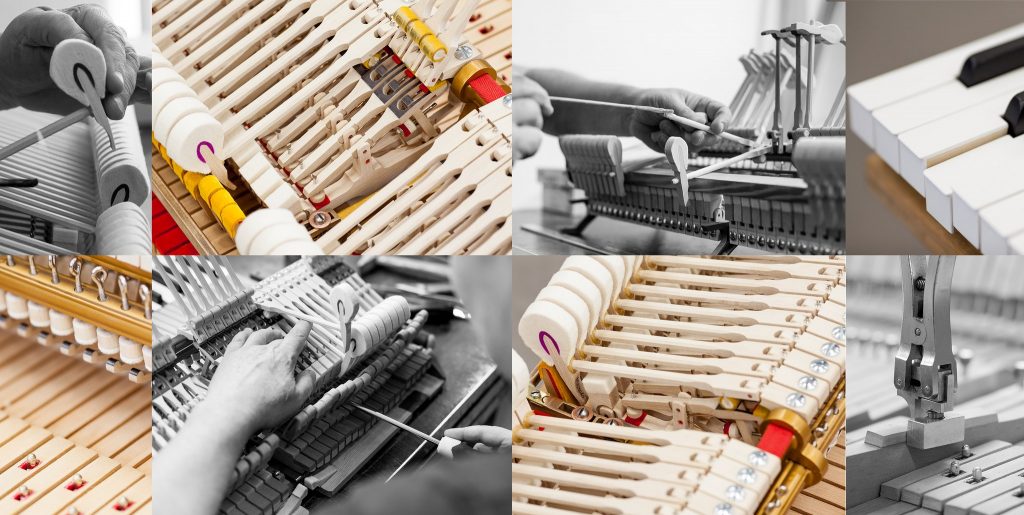
The English action currently constitutes the constructional foundation of the vast majority of instruments manufactured around the world, offering musicians a stability of operation previously unknown. It uses an advanced system of intermediate levers that allows for much better transfer of the force of your touch and a faster return of the hammer to readiness. It can safely be considered that the English grand piano action is today synonymous with full professionalism, because it enables the trouble-free performance of the most demanding works of world piano literature. It is worth visiting a professional and reputable workshop for instrument correction in order to see with your own eyes how tiny millimetre changes in the settings of this system affect your comfort.
What affects playing comfort? Key weight and action regulation
The comfort of your daily playing depends on dozens of precise parameters that must be set by an experienced specialist during each routine service visit. Appropriate and professional regulation of the grand piano action allows one to obtain the ideal balance between the desired lightness and the perceptible resistance of the keys under your fingers. Here are the most important technical elements that have a decisive influence on your direct sensations during contact with the keyboard of the instrument:
- The key dip, that is, the precise distance by which the key sinks after being fully depressed;
- The static and dynamic weight, determining how much muscular force you must use to produce a clean sound;
- The technical condition of the felts and leathers, which effectively cushion the movements of individual internal levers;
- The distance of the hammer from the string at rest, influencing the available dynamics of your strike.
When does the action require regulation, and when renovation?
Regulation is a periodic and preventive procedure consisting of restoring optimal factory settings, while renovation is already a deep intervention in the structure of worn elements. If you notice that the keys in your instrument work unevenly or that the sound produced becomes dull and deprived of brilliance, this may be a clear signal that renovation of the upright piano action is necessary. At such a moment, it is worth carefully checking the restoration offer available on the market in order to find out what specific work can be carried out to restore the instrument to its former splendour. Remember that even the highest quality materials undergo natural compression and wear over the years under the influence of fluctuations in humidity and intensive use.
The action as the heart of the instrument – why its condition determines sound quality
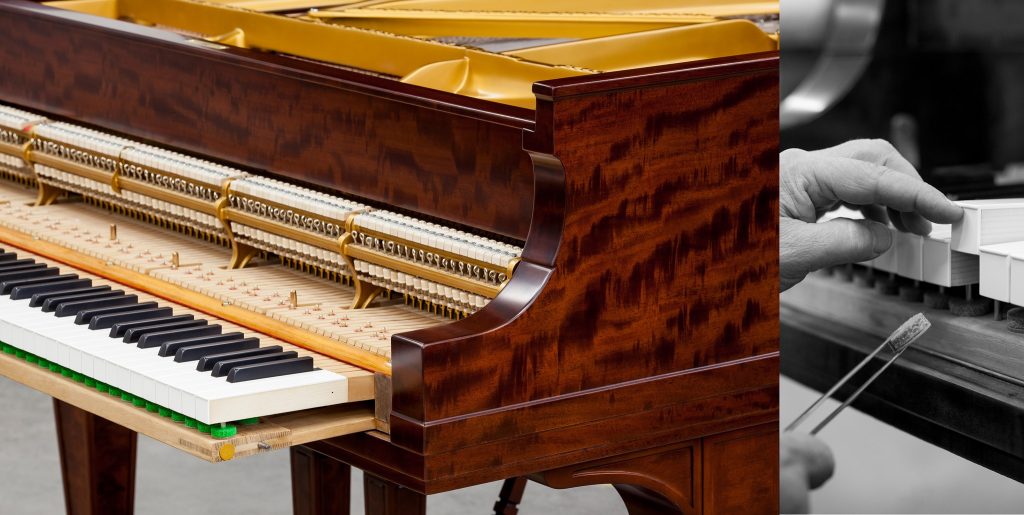
The technical condition of the action has a direct impact on what you hear in the room, because it is precisely this action that initiates contact with the acoustic element, namely the strings. Even the most expensive and best-sounding strings will not give their full potential if the hammers striking them are too hard, uneven or improperly aligned in relation to one another. Knowing the important differences between an upright piano and a grand piano, the action becomes for you the main starting point for a reliable assessment of the market and artistic value of a given instrument.
Do you have doubts about the condition of the action? Consult our workshop
If you feel that your instrument has stopped responding as precisely as before or you hear worrying knocks coming from inside it, it is worth seeking the opinion of qualified experts. Professional diagnostics carried out by a specialist make it possible to quickly determine whether your upright piano needs only a minor correction or whether it already requires more advanced work in the workshop. You can confidently contact us in order to discuss the specifics of your instrument in detail and arrange a professional technical inspection.