Inheriting an instrument from your ancestors is a logistical and financial challenge that requires a rational approach. You need to determine whether the instrument has the potential to regain its former musical performance. In many cases, such family heirlooms require extensive intervention by a piano technician before they can safely stand in your home. Your decision will determine whether the instrument remains merely a piece of furniture or becomes a fully functioning artistic instrument once again. Before taking any further steps, it is worth learning the facts about the condition of the wood and the mechanical components.
You Have Inherited a Grand Piano – The First Step That Determines Everything That Follows
The first step after taking ownership of the instrument is to reliably establish its history and the conditions in which it was stored. Check whether the old grand piano inherited from your grandparents was kept near sources of heat or in a damp basement. You must decide whether you intend to play it or preserve it solely as a decorative element. Your needs will determine how extensive the family grand piano restoration process will need to be in the future. Remember that rushing into repair decisions is often a mistake. Every instrument requires an individual plan of action that will help you avoid unnecessary expenses.
Why Sentimental Value Does Not Always Go Hand in Hand with the Instrument’s Actual Value
Emotional value can be misleading because the market value of an instrument in poor condition is often very low. You need to understand that an inherited grand piano may require investments that exceed its value after restoration. Learn about the most common types of damage found in pianos and grand pianos so that you can assess the situation realistically. Sentimental attachment to your great-grandmother will not repair a cracked cast-iron frame or a damaged soundboard. Before investing your money, consider whether the particular model deserves such extensive technical attention. Remember that the question of when piano restoration is financially worthwhile depends primarily on the uniqueness and brand of the instrument.
How to Assess for Yourself Whether a Family Grand Piano Has Potential
You should begin your assessment by checking whether all the keys move smoothly and do not stick under your fingers. Open the top lid and inspect the interior for signs of wood-boring pests or severe rust on the strings. The impact of humidity and temperature on a piano is extremely important, as it determines the durability of wooden joints and components. Try producing a sound from every string and evaluate whether the tone is clear or dull and short-lived. Your initial assessment of the old grand piano’s condition will help you prepare for a conversation with a professional piano tuner. If the action responds correctly, your family grand piano has a good chance of a successful restoration outcome.
Brand and Serial Number – What You Should Check Before Calling an Expert
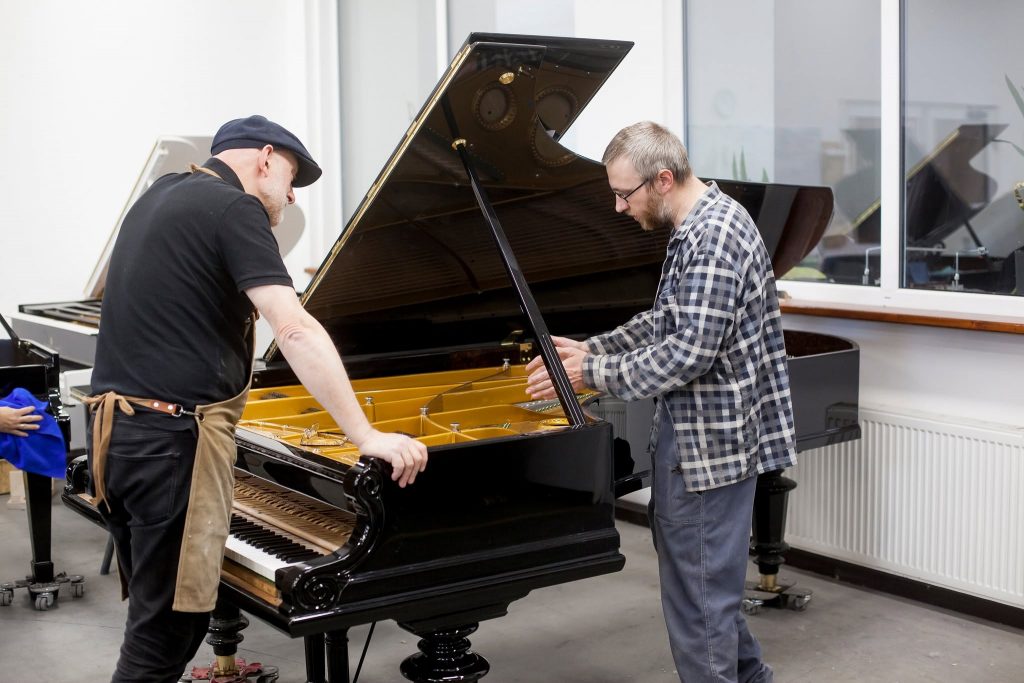
Identifying the manufacturer’s name and the serial number is the foundation for determining the origin of your instrument. If you own an old German grand piano, restoration is often more worthwhile due to the prestige associated with historic German manufacturers. The serial number will allow you to determine, through available databases, the year in which the instrument left the factory. Make a note of this information, as it will be essential for any workshop specializing in restoration and conservation. With this knowledge, you can determine whether you are dealing with a mass-produced instrument or a unique handcrafted example. This allows for an initial assessment of the instrument’s prestige without leaving your home.
Visual Warning Signs – Cracks, Corrosion, and Traces of Moisture
Deep cracks in the finish or in the soundboard indicate poor structural and biological condition of the wood. Check whether the key coverings have chips or missing sections, as this significantly affects both playing comfort and appearance. Rust on the strings is a sign that restoring the old piano may require replacing the entire string set. Pay attention to the stability of the legs and the condition of the pedals, which are particularly susceptible to mechanical damage. White residue inside the cabinet may indicate the presence of harmful mould that can damage the structure of the instrument. Each of these issues requires professional repair if the grand piano is to function safely in your living room.
What You Can Really Hear in an Old Grand Piano – Sound as a Diagnostic Tool
The sound of an instrument is the best indicator of the condition of its action and soundboard. If you hear buzzing noises, this may indicate that the reinforcing ribs attached to the soundboard have become loose. Learn how quality control departments operate in professional piano companies to better understand accepted tonal standards. A short sustain suggests that the soundboard has lost its natural elasticity. Pay attention to whether the dampers effectively silence the strings when the keys are released. If the sound is muted, your grand piano inspection should focus on the condition of the hammer felts.
A Family Heirloom as an Exception – When Emotions Justify Higher Costs
Saving a family heirloom is justified when your primary goal is to preserve a tradition passed down through generations. In such a situation, the restoration of historic grand pianos becomes an investment in your family’s history. Your historic grand piano at home will remind you of your ancestors every time you gather with family and friends. Even if the cost of the work exceeds the market value of the instrument, you gain an object with a unique character and soul. By choosing this path, you give a second chance to an instrument that has accompanied your family for decades.
A Professional Pre-Restoration Assessment – What It Looks Like and How Much It Costs
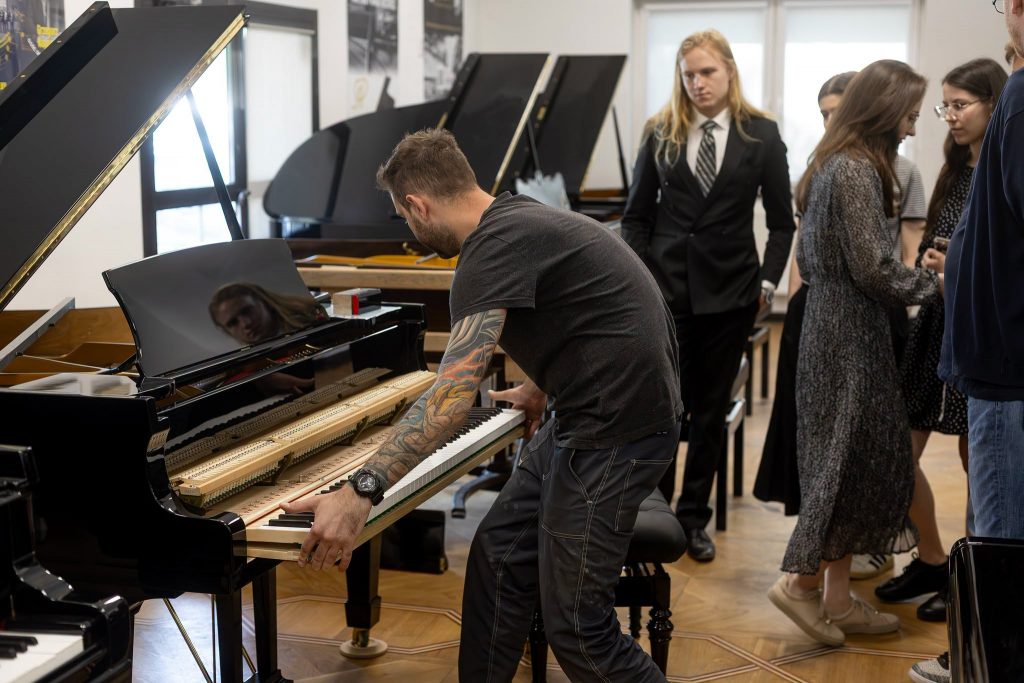
A professional evaluation of the instrument’s technical condition is an essential step before any restoration work is undertaken. A specialist will examine tuning stability, the condition of the cast-iron frame, and the degree of wear of the action. Learn what a grand piano assessment before purchase or restoration involves so that you can plan your expenses consciously. You will receive a clear report indicating which components require immediate replacement and which can simply be refreshed or repaired. The cost of such a service is small compared to the risk associated with an unsuccessful amateur repair.
An Alternative to Restoration – Selling, Donating, or Exchanging for a Restored Instrument
If restoration proves to be uneconomical, you may consider exchanging your instrument for a fully functional model. When wondering what to do with an old grand piano, explore workshops that offer restored instruments. In many cases, restoration companies provide trade-in options, allowing you to exchange your old instrument for a discount on a restored one.
The following options are available:
- Selling the instrument to a collector looking for a foundation for reconstruction.
- Donating the grand piano to a cultural institution as a historical exhibit.
- Exchanging a large instrument for a smaller baby grand or salon piano.
- Donating parts of the action for educational purposes for young piano technicians and tuners.
- Converting the cabinet into a unique decorative piece of furniture for your office.
What to Do with a Grand Piano That Cannot Be Saved – A Responsible Farewell to the Instrument
When the technical condition makes restoration impossible, you should ensure the environmentally responsible disposal of the instrument’s remaining components. Some metal parts can be recovered, while the wood can be recycled. If you are considering what to do with an old grand piano, you may also ask local artists whether they are interested in using some of its components. Keeping a deteriorating instrument in your home can become hazardous due to accumulating dust and mould. A responsible farewell is a difficult but necessary decision made for the well-being of your surroundings.
How to Prepare a Family Grand Piano for Transport and Valuation at a Workshop
Transporting a grand piano requires the assistance of specialists equipped with appropriate skids, lifting equipment, and transport straps. You should ensure that the chosen piano transport company can guarantee safe handling, particularly when navigating staircases and narrow passages. Before the moving team arrives, remove all objects from the instrument and make sure that all access routes are clear.
Proper logistical preparation minimizes the risk of cracks in the finish and mechanical damage to the piano’s legs and structure. Inform the transport company about the floor level and the type of surfaces they will need to move across. This will help ensure that the valuation process at the workshop proceeds smoothly and without unnecessary complications.
A Second Life After Restoration – Real Results and Owners’ First Impressions
The return of an instrument from the workshop is the moment when a family heirloom regains its former beauty and functionality. By viewing our completed projects and other restoration examples, you will see the remarkable difference between neglected and restored instruments.
The instrument ceases to be an old object and once again becomes the musical heart of your home. It is worth understanding what truly determines the quality of a piano restoration in order to appreciate the craftsmanship involved in such work. If you would like to enjoy a similar result, complete our contact form and learn more about our restoration services.