
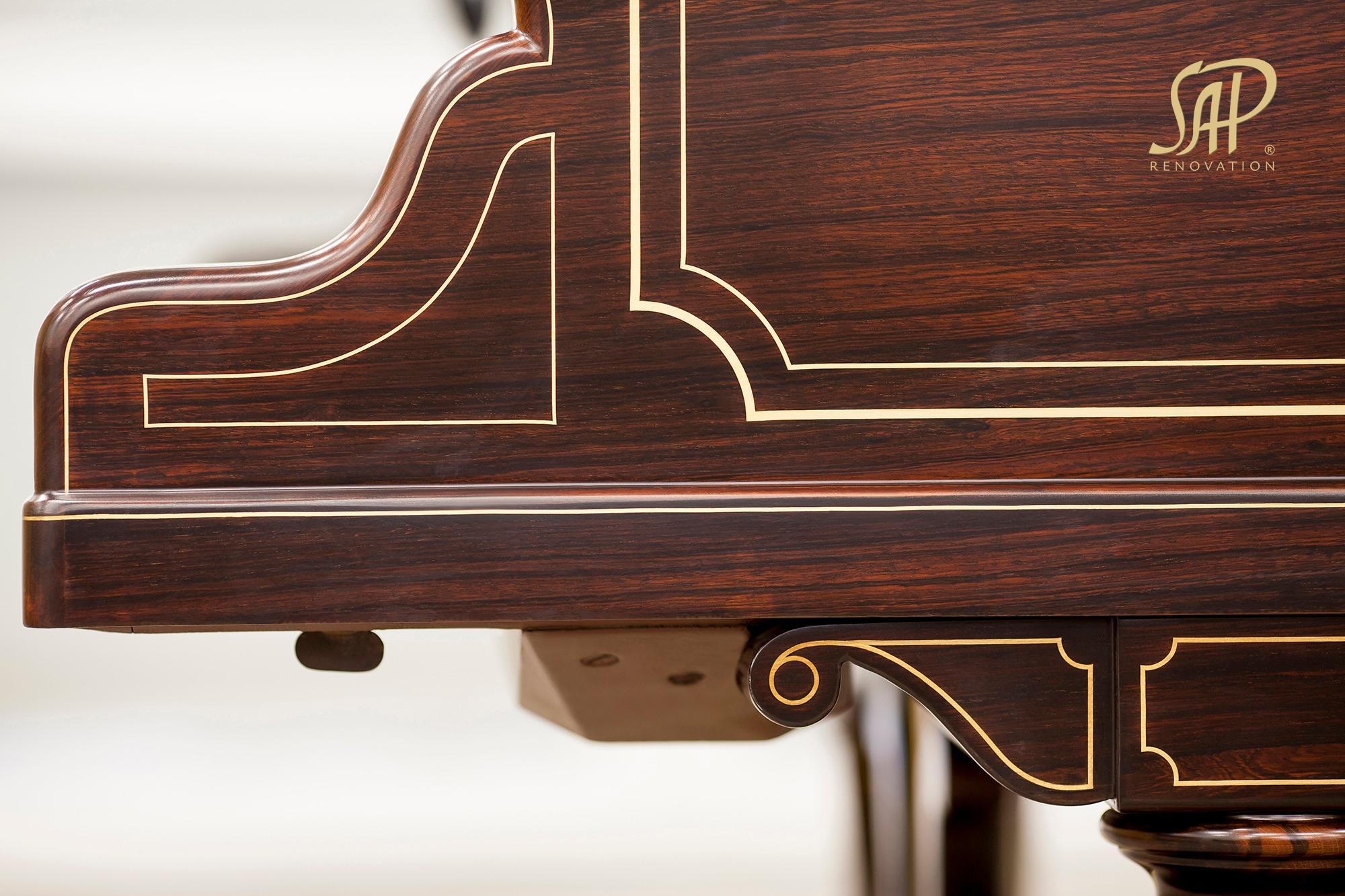
A grand piano can sound stable for many years, until suddenly various minor problems begin to appear. The sound loses clarity, the keys offer resistance, the instrument goes out of tune more quickly. This is not a coincidence – most damage in grand pianos develops gradually and sends warning signals that are easy to overlook. Knowing what to look for allows you to react in time and avoid costly major restoration. This text helps you identify the most common problems and understand when regulation is sufficient and when professional piano or grand piano repair is necessary.
When the sound loses its brilliance – first signs that a grand piano repair is needed
If you notice that the sound of your grand piano has become flat, metallic or uneven across registers, this is a sign that the instrument is beginning to require attention. A damaged grand piano does not always mean spectacular cracks or visible defects – most often it is the accumulation of many small neglects.
Pay attention to whether the tone decays evenly, whether individual keys respond with delay and whether dynamics can be controlled freely. If you observe disturbing symptoms, this is the moment when piano or grand piano repair can be significantly less costly than a later comprehensive restoration.

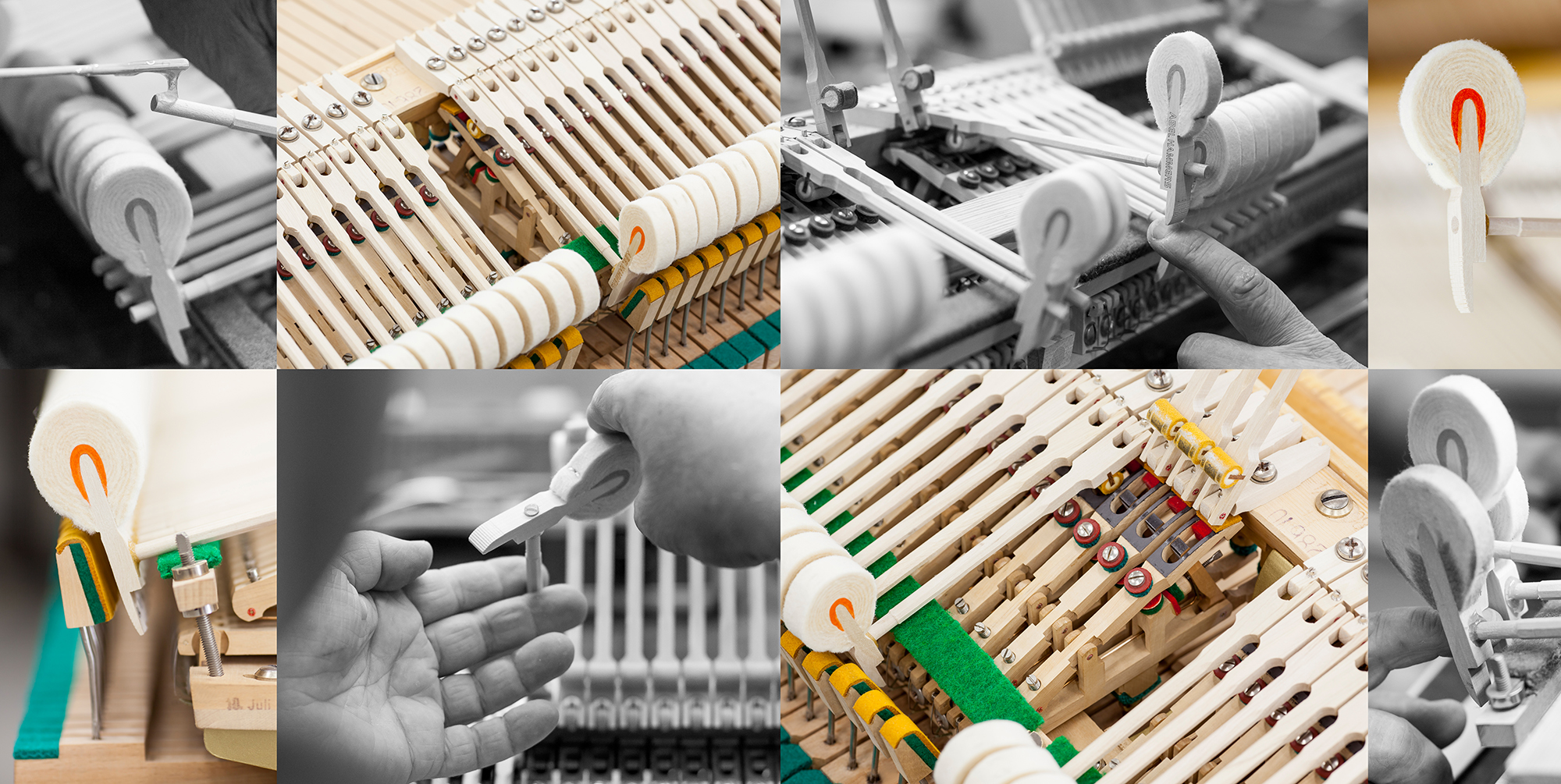
Worn hammers and felts – small components with a major impact on sound
Piano hammers work for thousands of hours. The felt gradually compresses, hardens or wears unevenly. The result is a muted, dull sound or aggressive “attack” in the upper register. Neglected hammers significantly affect tone colour and intonation. Professional action servicing restores the correct hammer shape and elasticity.
How improper microclimate destroys a piano
Wood and felt do not tolerate extremes. Air that is too dry causes components to shrink, while excessive humidity causes swelling. The consequences can be serious – from loosened joints to permanent structural deformation.
Typical signs of microclimate problems include frequent detuning, cracks in the wood or changes in keyboard touch. If the instrument has stood for years near a radiator or in an unheated room, comprehensive piano restoration may be unavoidable.
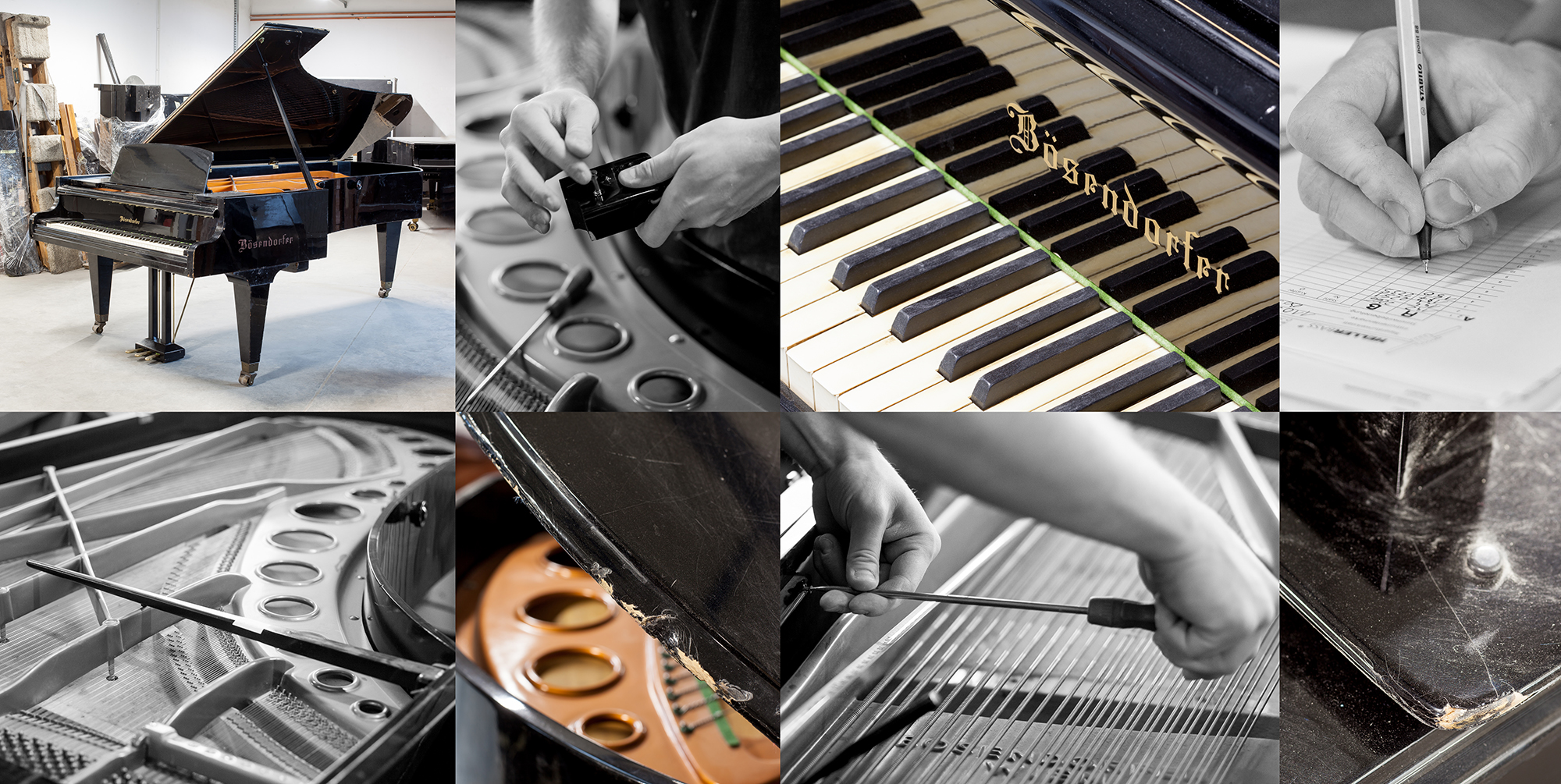
Dullness, scratches, lacquer flaking – only an aesthetic issue or something more?
Not every case damage affects appearance only. Flaking lacquer can expose the wood, which then reacts to moisture. In such cases, an aesthetic problem quickly becomes a structural one, potentially affecting sound resonance. It should be understood that piano repair concerns not only sound, but also long-term protection of the instrument.
The grand piano goes out of tune after a few days? The tuning pins may be the cause
If the instrument holds tuning only briefly, loose tuning pins are often responsible. They maintain string tension, and their wear causes the tuning to “escape”.
Warning signs include:
- rapid loss of tuning,
- lack of tuning stability after tuning,
- characteristic cracking sounds during temperature changes.
In extreme cases, a general overhaul including work on the pinblock may be required.
Cracks and buzzing – when the soundboard loses its function
The soundboard is the heart of the instrument. Small cracks do not always mean disaster, but accompanying buzzing or loss of tonal projection are serious warning signs.
How to distinguish a cosmetic issue from a serious defect? If buzzing occurs only on specific notes or during dynamic playing, diagnosis should not be postponed. Professional assessment of the mechanism and structure allows an informed decision.
Mechanical problems – sticking keys and squeaking pedals
The grand piano action is a precise system of hundreds of components. Dust, wear and lack of regulation lead to typical malfunctions. A key that does not return or a squeaking pedal is not only inconvenient but also increases the risk of further damage.
Contact a technician immediately if:
- keys block during playing,
- pedals operate unevenly,
- the instrument’s dynamics become unpredictable.

Broken strings and their resonance – replace one string or the entire set?
A broken string is not a catastrophe, but replacing a single element is often a compromise. A new string usually sounds brighter than the others and disrupts tonal homogeneity. In some cases, when the overall condition is good, replacing a single string is possible, but more often replacement of several strings in the register is recommended. If string breakage results from the poor condition of the entire string set often first revealed by audible buzzing – complete restringing may be necessary.
The faster you react to early warning signs, the greater the chance that piano or grand piano repair will be limited to regulation and maintenance. Neglected damage almost always leads to costly and time-consuming work. If your instrument matters to you – listen to it carefully.