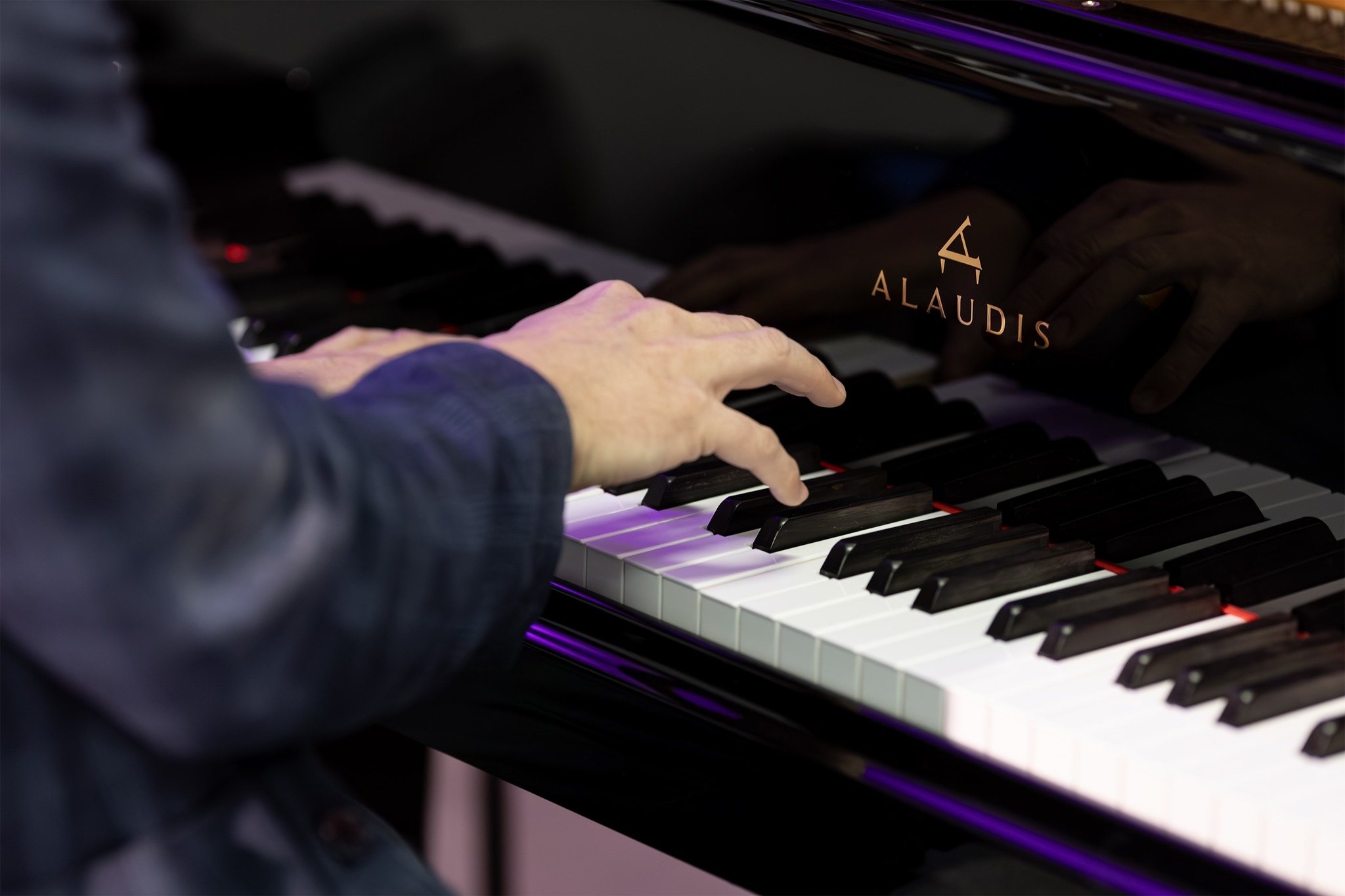
The relationship between a musician and the specialist responsible for an instrument’s mechanical condition is a subtle dialogue between two worlds. The artist speaks in emotions and aural impressions; the technician translates that poetic language into millimetres, grams and felt density. Tailoring a piano requires precise diagnosis, a thorough understanding of physics and individual attention to the player’s technique and physical approach. Effective collaboration between pianist and piano technician unlocks the instrument’s full potential and creates the conditions for unrestricted artistic expression.
Why is the ideal piano setup different for every pianist?
The ideal setup varies with hand anatomy, playing dynamics and personal preferences in tone. Every artist brings a different touch, finger position and set of technical habits, all of which influence the perceived resistance of the keyboard. One pianist may find that a firm action provides security in Romantic repertoire, while another experiences it as a restriction on movement. These individual expectations shape the servicing work, so a professional piano technician approaches each instrument as a bespoke project.
How do pianists describe what they want from an instrument?
Pianists often describe their expectations through abstract terms relating to tone, touch response and the intended mood of a piece. Words such as “warm”, “bright”, “glassy” or “soft” give a skilled technician clues about the hammer felt’s hardness. Descriptions of a keyboard as “deep”, “shallow”, “quick” or “sluggish”, meanwhile, point towards specific aspects of the action’s lever geometry. Interpreting this language is the first step towards successful adjustment.
A light or heavy touch: what do these terms really mean?
A light or heavy keyboard describes both the physical and perceived resistance of the action, arising from component mass, friction and inertia. Sometimes the sensation of weight is primarily acoustic: a deep, dark tone can create a subconscious impression of greater resistance. An excessively bright, strident tone may instead make the instrument feel almost weightless. Appropriate action regulation, complemented where necessary by voicing, balances these impressions through changes to the mechanism’s dynamic behaviour or the tone itself.
Response in pianissimo, legato and fast repetition
The piano’s response in delicate pianissimo phrases, flowing legato and rapid repetition depends on precisely adjusted let-off and checking. Quiet playing demands stability: the hammer must strike accurately under the lightest touch without double-striking. Smooth legato also requires the dampers to release and stop notes evenly, without abrupt changes in resistance beneath the fingers. Exploring how a grand piano action is repaired reveals just how many components influence the sensitivity of repetition.
The technician’s initial diagnosis: separating impressions from mechanical causes
The technician starts by investigating the pianist’s concerns through objective measurements, distinguishing aural impressions from mechanical faults. The instrument is tested without pedals, assessing each register’s response and the condition of individual components. The specialist must establish whether the issue lies in lever geometry, worn felt or unsuitable ambient humidity. Separating subjective impressions from actual defects provides a precise basis for planning the service work.
Assessing the keyboard and action
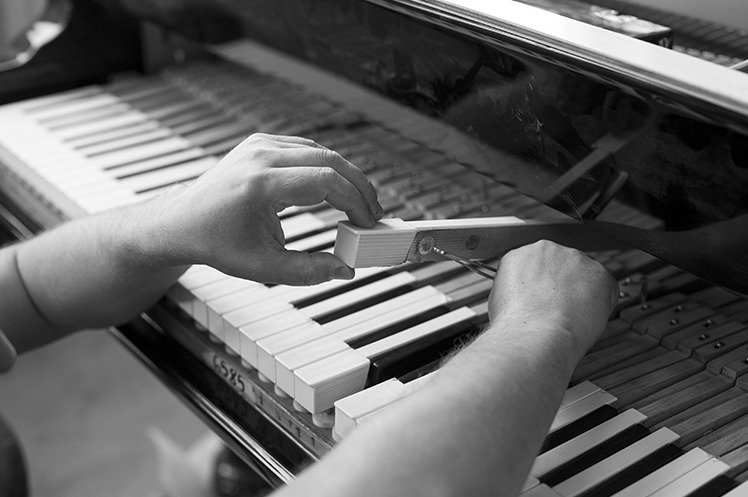
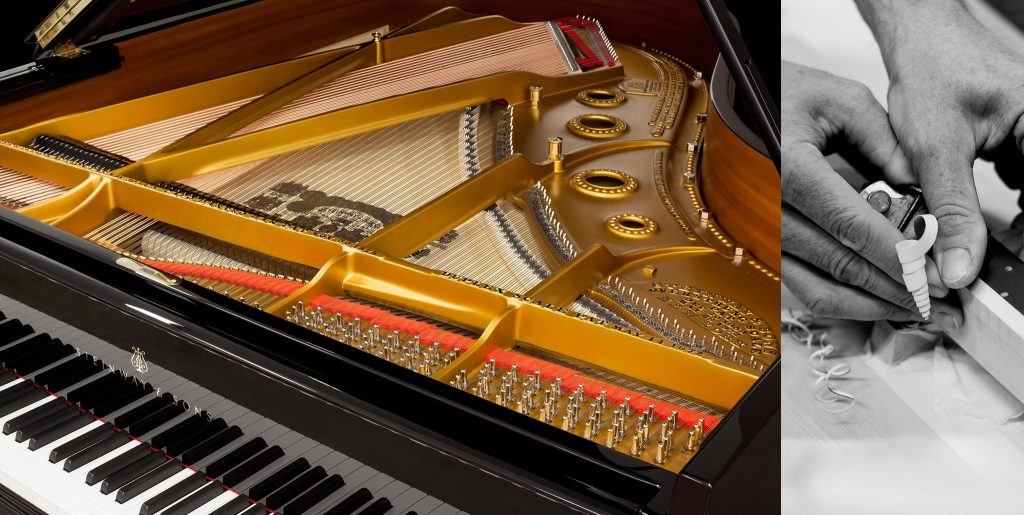
This assessment examines wear in felt, leather and action centres, all essential to smooth operation. Excessive clearance around key pins allows unwanted lateral movement, compromising precise control of the sound. Distorted wooden parts also interfere with the alignment of the levers’ travel. In many cases, comprehensive grand piano keyboard restoration is needed to recover proper balance and evenness.
Checking the evenness of key resistance
Key resistance is checked with calibrated gram weights placed on the front of each key. The technician measures both static downweight and upweight with the damper disengaged from the key’s load. Differences between neighbouring keys should remain within fractions of a gram to give the musician complete dynamic control. An evenly weighted keyboard helps prevent fatigue during long practice sessions.
Checking hammers, dampers and regulation settings
Checking the hammers, dampers and regulation involves examining clearances and working surfaces in detail. Grooves in the hammer felt substantially alter contact with the strings and can produce a hard, unpleasant tone. Dampers must lift evenly and stop the strings’ vibration completely when the key is released. Before changing the voicing, a conscientious specialist assesses the condition of the entire piano action.
Action regulation: shaping the piano’s response to touch
Action regulation shapes touch response by precisely setting the angles and distances between moving parts. A correctly regulated grand piano action responds immediately to the smallest variation in touch, creating a direct connection between the artist and the sound. Poor regulation wastes energy between key and hammer, which the pianist experiences as reduced control over tone. Proper keyboard regulation restores sensitivity and immediacy of response.
Key dip and hammer blow distance
Key dip and the hammer’s distance from the strings define the mechanism’s working travel and influence dynamic control. Typical key dip is approximately 10–10.5 mm, while the hammer’s rest distance from the strings is usually 45–48 mm. A deeper dip can suggest greater weight and power; a shallower dip favours speed but can restrict dynamic range. Balancing these dimensions provides the foundation for subsequent repetition settings.
Let-off, checking, repetition and action return
Let-off and checking determine when the hammer is released into free flight and caught after striking the string. Let-off distance should be 1–3 mm from the string, allowing the quietest pianissimo without the hammer blocking. The repetition lever must raise the hammer promptly when the key is partially released, ready for another strike. SAP Renovation’s rigorous three-stage quality control verifies these relationships and plays an important role in the finished instrument’s quality.
Balancing action speed with the pianist’s control
Combining fast action response with precise control requires the right repetition spring tension. An overly strong spring noticeably pushes the key upwards after the strike, making restrained playing more difficult. A weak spring slows hammer return and prevents rapid repeated notes. Careful adjustment produces smooth operation while preserving a stable feeling beneath the fingers.
Touchweight: measurement, perception and the scope for adjustment
Touchweight can be adjusted within practical limits by changing the lead weighting in the keys, setting spring tension or correcting friction at the action centres. Altering a key’s mass also affects its inertia, so such modifications require careful judgement. Close collaboration with the pianist is essential: the player tests the different settings on representative sections of the keyboard. The final weighting must account for both static load and the dynamics of the mechanism as a whole.
Hammer voicing: how the technician shapes tonal character
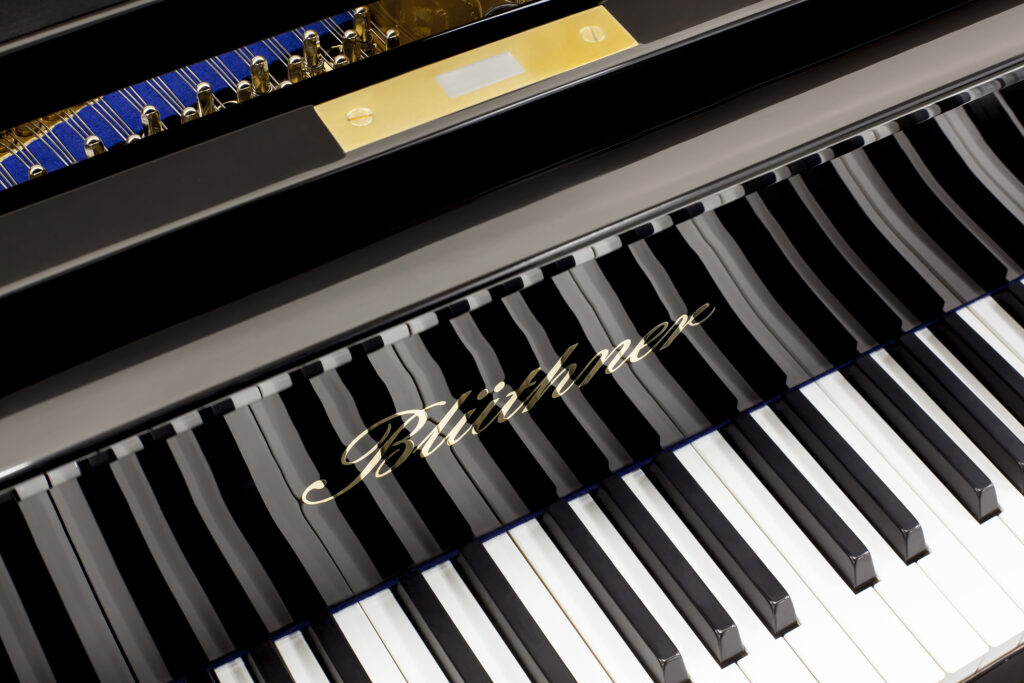
Piano voicing shapes the instrument’s tone by needling selected areas of hammer felt or hardening it with specialist preparations. Needling the hammer crown can soften an excessively sharp, shrill sound and give it greater breadth and refinement. Needling the shoulders influences how the tone develops in forte playing. Peter Salisbury’s masterful work demonstrates the striking results of this process and the full range of tonal possibilities it can reveal.
Solo recital, chamber music and recording: different artistic requirements
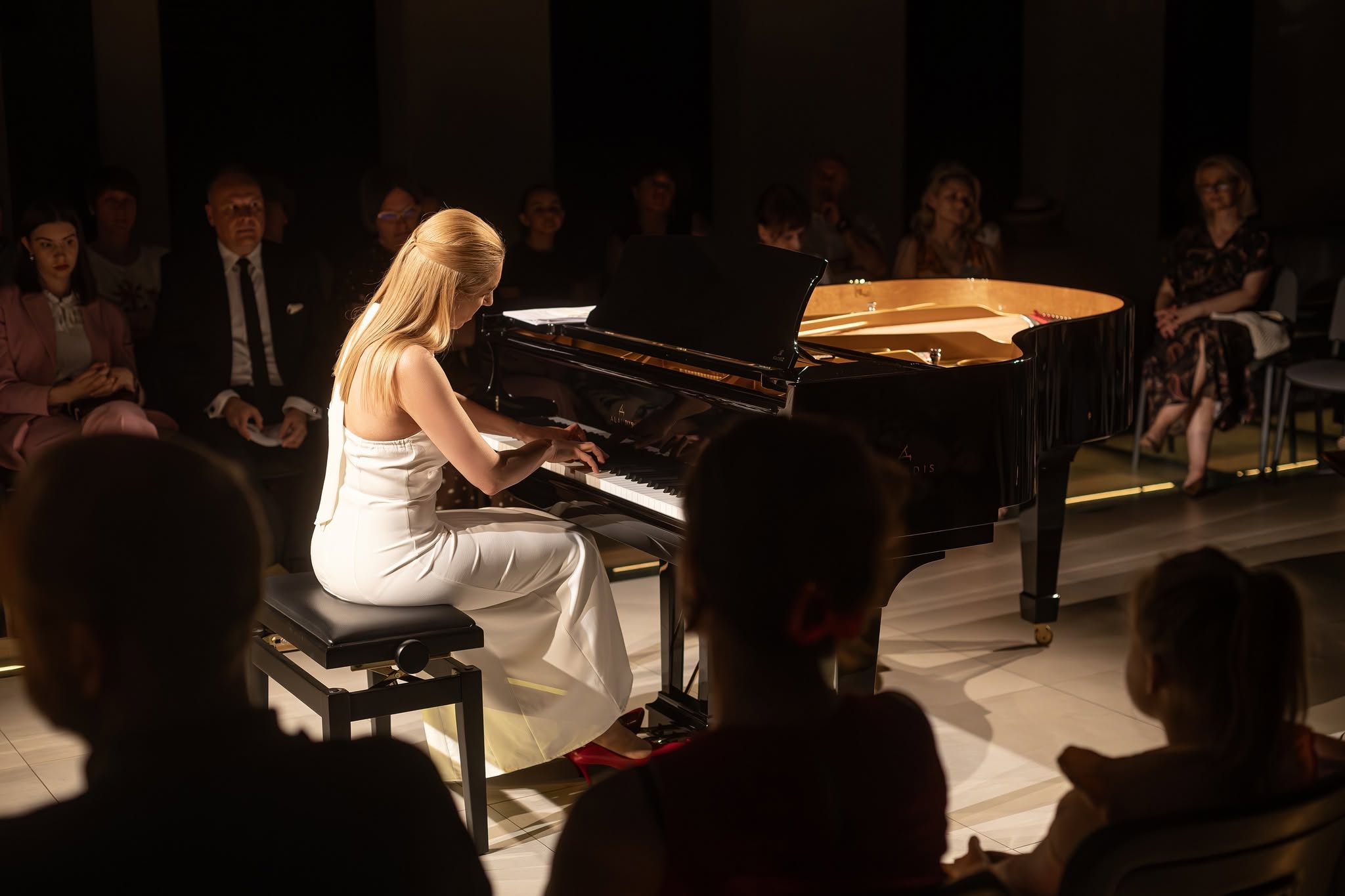
A piano for solo recitals needs a wide dynamic range and strong projection; a chamber music instrument must blend easily with other instruments. In a recording studio, silent action operation and even voicing across every register become essential. To meet these different needs, a comprehensive grand piano restoration service includes adjustments for the intended hall or studio. Hammer shaping tailored to the room’s acoustic requirements plays an important part.
Pianist and technician working together: why make adjustments in stages?
Joint adjustment sessions proceed in stages because the pianist’s hearing and physical technique need time to adapt to changes in touch and tone. Making every modification at once could disorient the player and make the final result difficult to judge. In workshop practice, the process begins with a sample within a selected octave:
- First, the technician regulates the geometry of several adjacent keys to establish the basic key dip and let-off.
- Next, the pianist tests the touch at different dynamic levels and comments on any resistance issues.
- Finally, the specialist carries out preliminary hammer voicing, evening out the tone in the sample section before extending the work across the instrument.
This approach makes concert preparation efficient and helps avoid adjustment errors.
The limits of personalisation: what cannot be changed without altering the structure?
The scope for personalisation is defined by the soundboard’s construction, string lengths and the basic geometry of the cast-iron plate. No concert piano service can turn a short baby grand into a full concert grand with a deep bass. The many examples of restoration show that professional rebuilding can realise a model’s full potential, but cannot override the laws of acoustics. Understanding these limits prevents unrealistic expectations of what adjustment can achieve.
The technician as the artist’s partner: why experience matters as much as tools
A technician’s experience and judgement are as important as specialist tools, allowing mechanical theory to meet artistic sensitivity. Years of working with accomplished musicians help the technician anticipate how a particular adjustment will affect comfort in live performance. A piano properly tailored to its player builds trust and a sense of security on stage. Our finished instruments for sale and the rich history of SAP Renovation illustrate the value of a craft tradition devoted to music. For questions about tailoring an instrument to your needs, please contact our specialist directly.