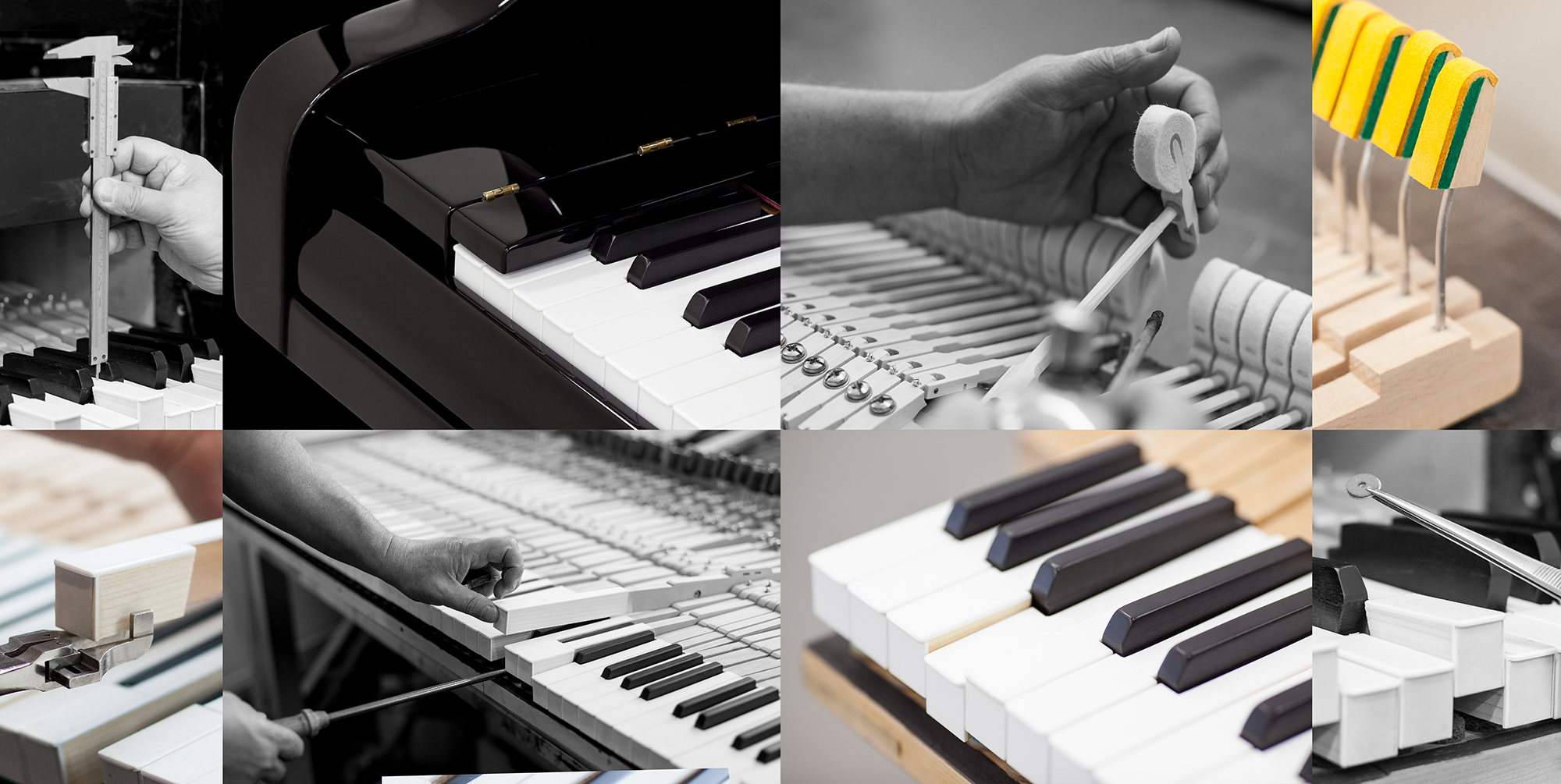
A restored grand piano presents a seamless case and an elegant silhouette, yet beneath its surface lies a complex structure. Each instrument contains several thousand precision parts that naturally wear over the decades. Restoring their function brings together acoustics, woodworking, precision mechanics and finishing. Follow your instrument through our workshops as we recover its dynamic response and stable sound.
Why does a complete grand piano restoration require more than one person?
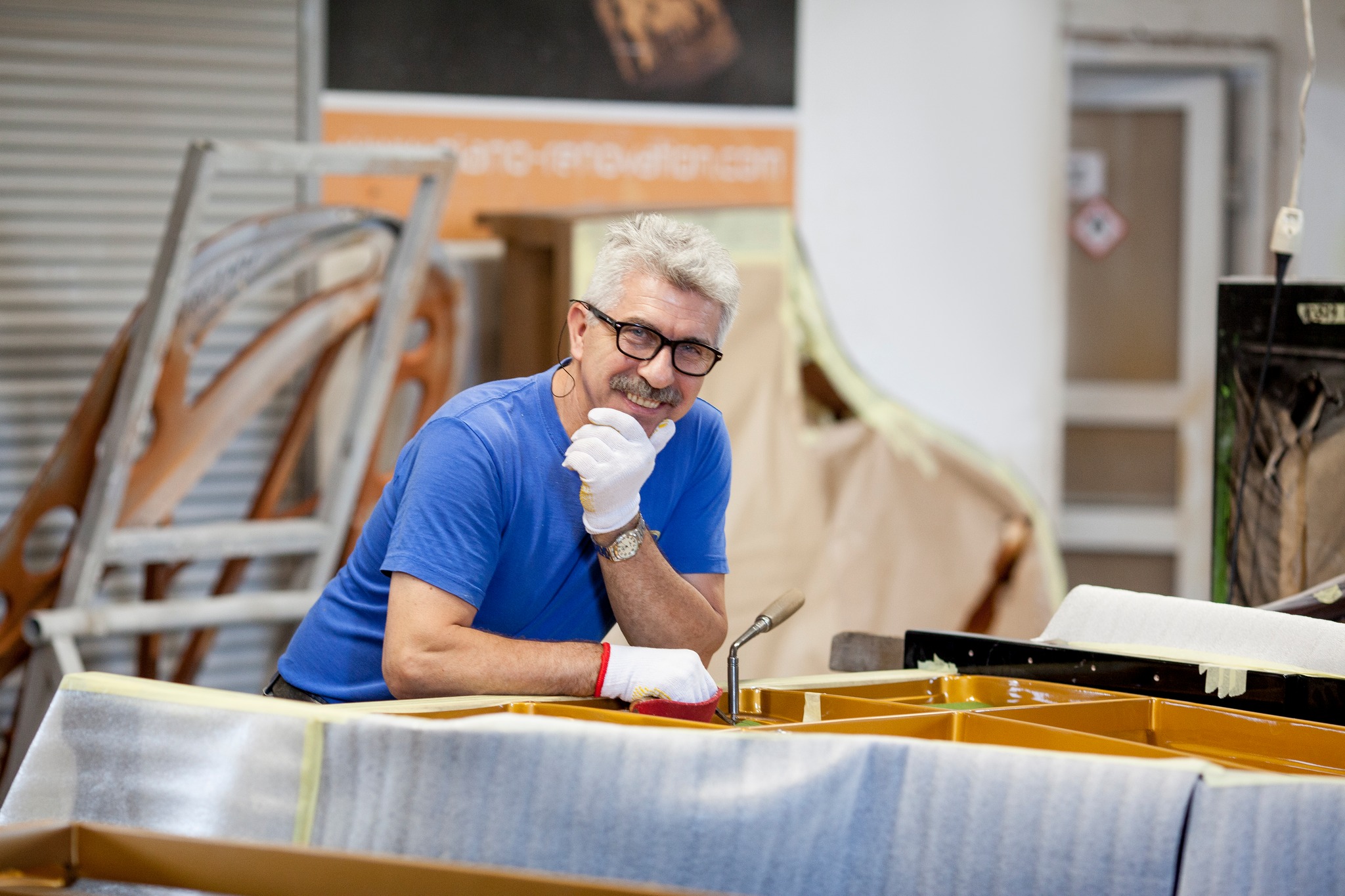
Comprehensive restoration brings together fields as different as woodworking, acoustics, finishing and mechanical engineering, each requiring specialist mastery. Developing all these skills would take an individual craftsperson decades. Our grand piano restoration workshops therefore divide the work between specialist departments. This makes professional piano restoration efficient and consistent with the technical requirements of each process. Explore our detailed restoration service to see the full scope of each specialist’s work.
Assessment and planning: giving the whole process a clear structure
A technical assessment establishes the instrument’s condition and assigns defined tasks to the relevant teams. During the initial inspection, experts examine wear in the mechanical and structural components. A thorough diagnosis prevents unforeseen problems later in the restoration. The team defines the exact scope of work and assesses how the case and resonant structure function together. Our article on what truly determines restoration quality explains the diagnostic process in more detail.
Deciding which parts to repair, retain or replace
Craftspeople carefully assess every component’s suitability for continued use. Parts in good condition are cleaned, refreshed and retained as original historic material. Damaged pieces are assigned to woodworking or metalworking restoration. Completely worn components are replaced with new parts suited to the maker. In this way, our specialist piano restoration workshops preserve the construction’s authentic character.
Defining the sequence and each department’s responsibilities
The production schedule sets out the precise order in which the instrument moves between workstations. Every department receives a technical specification defining its tasks. The individual stages of grand piano restoration show how this sequence works. Clear responsibilities help prevent newly finished surfaces from being damaged during assembly and keep the craft process moving smoothly.
The acoustic restoration workshop: rebuilding the heart of the instrument
The acoustic workshop rebuilds the piano’s heart by restoring and adjusting the components responsible for sound production. Its specialists work with carefully selected tonewood that responds to changes in humidity. Correctly rebuilding these parts restores projection and tonal depth. Our grand piano acoustic workshop also calculates the appropriate structural loads. The acoustic restoration workshop page explains the technical details of working with tonewood.
Soundboard, ribs and bridges
Cracks in the soundboard are repaired by precisely fitting and gluing spruce shims. The ribs are reinforced to recover the required crown. Bridge caps are corrected and bridge pins replaced. A properly shaped soundboard transmits the strings’ vibrations efficiently through the acoustic structure. Finally, the wood is protected with a soundboard finish of appropriate flexibility.
Pinblock, tuning pins and stringing
The pinblock must grip the tuning pins securely under heavy load. Replacing it with a new beech block requires a precise fit to the plate. New oversize tuning pins are installed to provide the required turning resistance. The stringing follows the model’s original scale design. A correctly fitted pinblock supports lasting tuning stability.
Bass strings and plain-wire strings
The bass strings are hand-wound with copper wire of a precisely selected diameter. The plain-wire section uses specialist steel piano wire with the required properties. Choosing suitable materials prevents unwanted resonances during playing. The strings are laid at the correct bearing angles over the bridges and termination points. Properly balanced string tension supports a clear sound in every register.
Checking structural geometry and loading
Technicians use measuring instruments to check string downbearing on the bridges. Soundboard geometry must conform to the maker’s design. Loads are balanced during the initial tensioning of the strings on the plate. Errors at this stage could create acoustically weak areas. Precise measurements help achieve an even dynamic response throughout the instrument.
The cast-iron plate workshop: stability under many tonnes of string tension
Specialist repair, cleaning and refinishing of the cast-iron plate secure the structure under substantial string tension. The plate carries loads of well over ten tonnes, so cast-iron plate restoration requires proven metalworking techniques. The casting is carefully examined for hidden material defects. Removing old coatings prepares the metal for further work. A properly restored plate supports the safety of the entire structure.
Checking for cracks and distortion
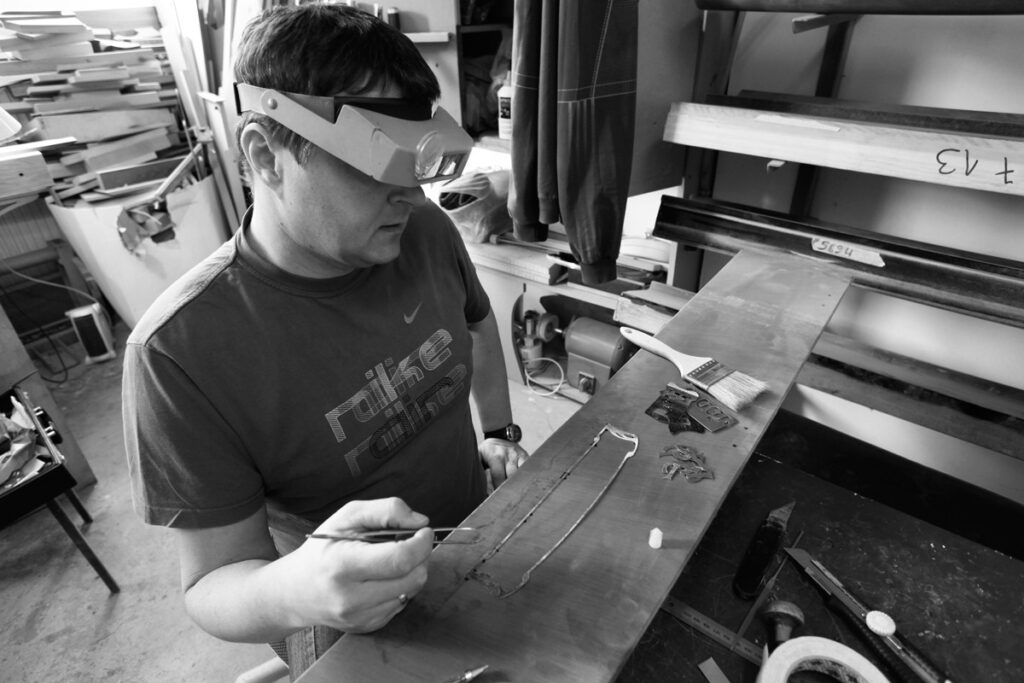
The cast-iron plate receives a detailed surface examination for damage. Each hairline crack is assessed to determine the appropriate repair procedure. Technicians check its contact surfaces with the pinblock and case. An undetected defect could lead to failure under string tension. Careful assessment of the metal’s integrity is essential to safe use.
Repair and surface preparation
Plate damage is addressed with specialist cold or hot cast-iron welding techniques. The surface is then sandblasted to remove old coatings. Epoxy primers protect the metal from further corrosion. Smoothing prepares it for the decorative finish. Every stage uses coating products chosen for high mechanical durability.
Finishing and recreating the markings
A dedicated finish in gold or brass tones is applied to the plate. Historic inscriptions, serial numbers and the maker’s logo are recreated. Skilled craftspeople paint the decorative details by hand. The coating protects the cast iron from moisture and external influences, restoring an appearance consistent with the historic original.
The woodworking workshop: geometry, case and structural details
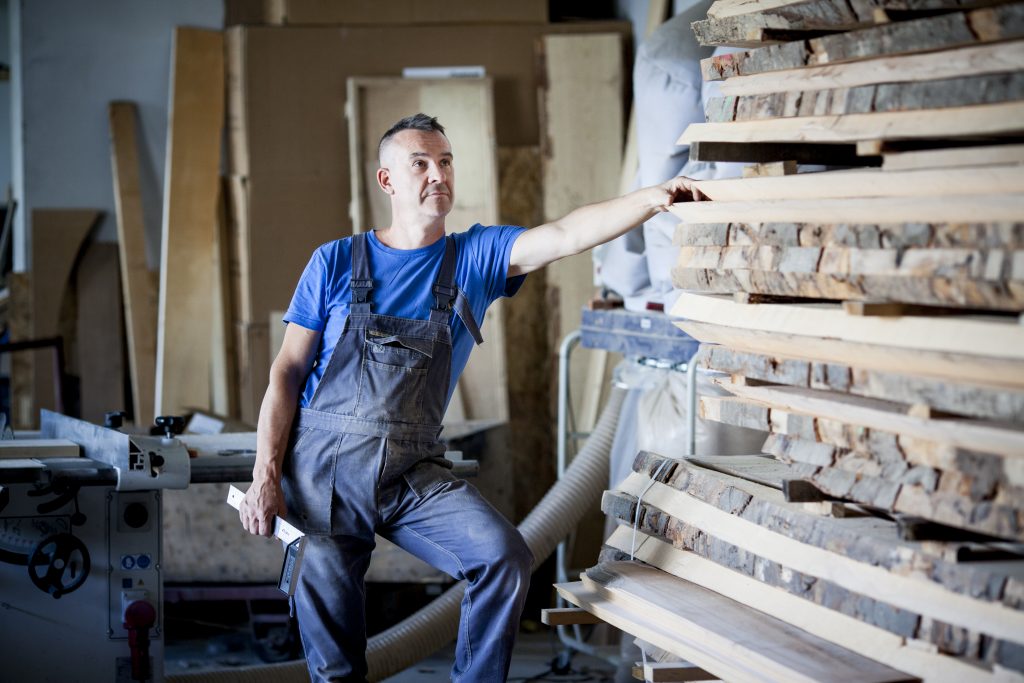
The woodworking team restores geometry and structural details by repairing wooden parts, replacing missing veneer and levelling components. Our experienced piano woodworking workshop is responsible for the instrument’s outer structure. The case restoration page presents the methods used. Traditional craftsmanship is combined with precise cabinet fitting. The published restoration examples show the results.
Repairing the case, legs, pedal lyre and lids
Cracks and open joints in the case are repaired with woodworking adhesives. The legs and pedal lyre are reinforced to regain the required rigidity. The lids are straightened and fitted accurately to the rim. Deep scratches and missing wood are repaired, restoring the case’s original structural stability.
Replacing veneer and decorative elements
Damaged veneer is replaced with the same wood species, with grain matched to make the repair unobtrusive. Woodcarvers recreate missing inlays and carved details from period patterns. Precise workmanship preserves the original decorative proportions and gives the wood a coherent appearance across the surface.
Refitting parts affected by distortion
Years of changing humidity can distort wooden components. Cabinetmakers correct their dimensions using clamps and machining. Carefully fitted hinges and locks operate smoothly, while the lids and music desk open without resistance or binding. All case components are brought back into proper alignment.
The action and keyboard workshop: precision within fractions of a millimetre
The action and keyboard workshop achieves this precision by regulating, replacing worn components and balancing thousands of moving parts. The grand piano action restoration carried out here directly determines dynamic control. The piano action section explains the regulation standards. The keyboard must respond evenly at every level of touch.
Action work includes the following procedures:
- Replacing hammers, shanks, flanges and wippens.
- Replacing key coverings and precisely levelling the keyboard.
- Individually balancing and weighting each key with lead.
The finishing and French polishing workshops: two approaches to the surface
These workshops offer both polyester finishes and traditional shellac French polishing. The choice depends on the instrument’s period and the desired appearance. Modern piano lacquering creates a hard, scratch-resistant coating. Traditional French polishing involves applying shellac by hand to reveal the wood’s depth. Visit our polishing workshop page to explore both methods.
The assembly workshop: bringing the piano back together
Assembly reunites the restored case, cast-iron plate, acoustic structure and action. This is where the final grand piano assembly takes place. The teams fit each component while maintaining the specified clearances. Every part must be installed without introducing unwanted stress. The instrument becomes a complete structure, ready for final regulation.
The final preparation workshop: tuning, regulation and voicing
The final preparation team tunes, regulates and voices the piano to establish its finished tonal character and correct mechanical response. Tuning and voicing at this stage refine the overall sound. The voicer needles the hammer felt to even out its hardness at the string-contact surfaces. Action regulation provides fast, precise repetition. The instrument reaches its full playing capability.
Quality control: independent inspection of the completed work
The quality control department independently checks tonal, mechanical and aesthetic characteristics against strict standards. Inspectors take no part in the repairs, ensuring impartiality. The quality control department page explains the assessment criteria. Any shortcomings are immediately returned to the appropriate workshop for correction. The piano leaves only after final acceptance.
The lead master craftsperson: keeping the process coordinated
The lead master craftsperson ensures continuity by coordinating communication between workshops and overseeing the agreed objectives. This coordinator keeps transfers between workstations on schedule and ensures compliance with the technical documentation and the client’s requirements. For questions, please contact our team and speak with our specialists.
Why do multiple specialist workshops make a difference in premium piano restoration?
Dedicated craft departments ensure that each task is performed by a qualified specialist. Every workshop has tools suited to its materials, whether wood, metal or felt. Coordinated expertise helps eliminate assembly and structural errors. The restored grand piano can achieve technical performance comparable to a new instrument leaving the factory.