You will face a challenge that may define your musical path for the coming decades. Choosing the right instrument is a process full of emotion, but also of technical pitfalls that are easy to overlook under the influence of a beautiful sound. Before you make your final decision, you need to know that the price rarely reflects the actual condition of the mechanism hidden beneath the elegant case. Your task is to get to the truth about the condition of the wood and metal, and not merely to give in to a momentary fascination with a tone colour that may disappear with the first change in humidity in your home.
Why inspecting a grand piano by ear is not enough
A grand piano appraisal before purchase is more than simply listening to a few chords, because the sound can mask serious structural defects. It often happens that an instrument tuned by the seller sounds correct for a few days, only to lose quality drastically afterwards due to instability of the pinblock. If you are interested in buying a used grand piano, you must look beyond superficial listening impressions, which can be extremely misleading to an untrained ear. By learning about the history of piano craftsmanship, you will understand how complicated systems work together to draw an ideal tone from thousands of components. Listening is subjective, while technical condition is hard data that determines whether the instrument will serve you for years or become only an expensive piece of furniture.
Most buyers make the mistake of assessing only the volume and brightness of the sound, forgetting to check the sustain time of individual strings. Professional grand piano diagnostics makes it possible to detect whether the tone colour is not being artificially produced by overly hard hammer felts, which will tire your ear in the future. You must check whether the sound is even in every register, which without appropriate technical preparation is practically impossible. Note that the acoustics of the seller’s room may differ drastically from those in your living room, which will affect your perception. Only a cool analysis of the physical parameters will allow you to avoid disappointment just after the transport arrives at your address.
The difference between a visual assessment and a technical appraisal
Distinguishing a beautiful piece of furniture from a functional musical tool requires knowledge that you will not acquire during a short visit to a private apartment or a showroom. Assessing the condition of a grand piano involves analysing hundreds of moving parts hidden deep inside the body, while a layperson sees only gleaming polish and white keys. It is worth checking reliably whether the price of a piano determines its quality, in order to avoid overpaying for a well-known brand while ignoring significant mechanical wear. A professional will notice traces of old, often unprofessional repairs, which will be completely invisible to you under a layer of dust or new lacquer. You, however, will focus on external aesthetics, which in the world of string instruments is often the parameter of least importance for durability and tuning stability.

Key elements that determine the value of a grand piano
The technical condition of the acoustic core and the precision of the mechanical assembly determine the real amount worth paying for a given instrument. Only a sound “spine” and “heart” of the grand piano allow for many years of trouble-free use without the need to incur enormous financial outlays in a short time. You need to know what to pay attention to when buying a piano so that your joy of playing does not quickly turn into frustration caused by constant breakdowns. Every detail, from the smallest screw to the powerful cast iron frame, has its important role in creating the musical landscape you want to experience every day. A properly conducted verification allows you to determine precisely how many years of life particular assemblies still have before they require a thorough renovation.
Soundboard – microcracks and stability
The condition of the soundboard determines whether the sound will have the appropriate depth and projection that every pianist cares about so much. Even small cracks may in the future generate unpleasant buzzing and extraneous noises, the removal of which can be extremely difficult and costly for the owner. In a professional woodworking workshop, specialists are able to identify whether the wood has retained its original elasticity and the proper profile, known as crown. Check whether the board has not sunk, as this directly affects a drastic decrease in the instrument’s dynamics and tone colour across its entire register. A good grand piano expert will check the stability of this element using specialist measuring tools unavailable to the ordinary buyer without technical preparation.
Cast iron frame – deformations and stresses
The cast iron frame must withstand a load of several tonnes, which is why any deformation or crack in this area disqualifies the instrument from further safe use. You should carefully inspect the metal surface in search of hairline cracks, which may lead to catastrophic failure while the tuner is bringing the strings up to tension. The stability of this structure is a guarantee of safety and durability, without which even the most beautiful sound has no practical meaning in the long term. Any stresses visible on the edges of the frame suggest that the instrument was stored for many years in extremely unfavourable humidity conditions. Remember that repairing cracked cast iron is an extremely complicated process and often simply unprofitable for a private user for financial reasons.
Strings and tuning pins – holding the tuning
Maintaining proper tuning depends on the condition of the tuning pins and the pinblock in which they are seated with tremendous friction. If the pins turn too loosely, the instrument will require servicing almost every week, which generates constant and high running costs that nobody likes. Old strings lose their natural elasticity and begin to sound dull, which drastically reduces your playing comfort and the pleasure of listening to music. You must assess whether the steel is not covered with rust, which weakens its structure and leads to frequent breakage during intensive virtuoso practice. Find out exactly how much it costs to repair a grand piano in terms of replacing the entire stringing before you finally sign the purchase and sale agreement with the seller.
Action – precision and wear
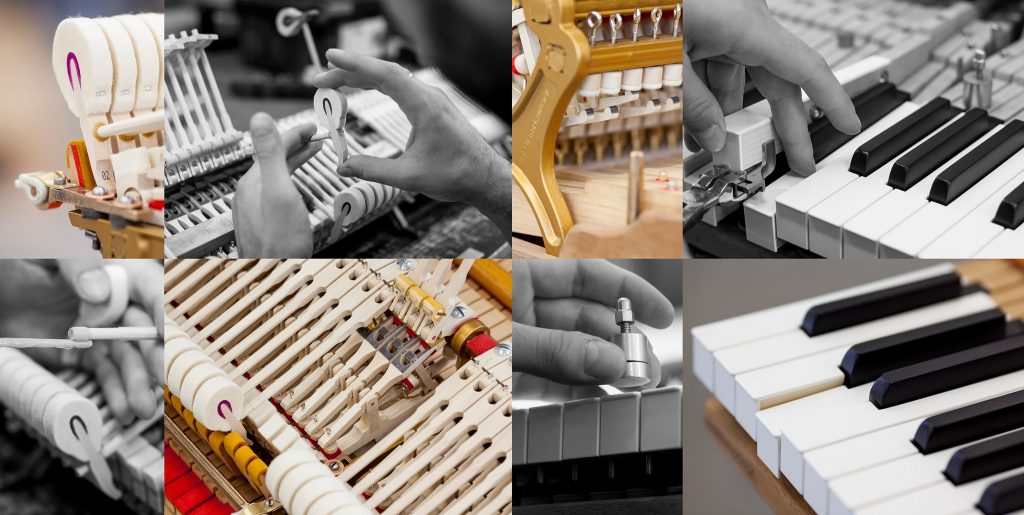
The action must work with watchmaker-like precision so that you can fully control the dynamics and tone colour of every sound produced during daily practice. Worn felts on the hammers or play in the levers will make playing tiring, and your piano technique will not be able to develop properly. Check whether the keyboard responds evenly and whether there are no delays in the keys returning to their starting position after they are released quickly. It often happens that a complete restoration of the action is necessary, which involves an expense of several or even more than ten thousand zlotys. Only a detailed verification of the degree of wear of individual centres and punchings will give you a true picture of the real technical condition of the heart of the instrument.
Hidden defects in used grand pianos – what you will not see without experience
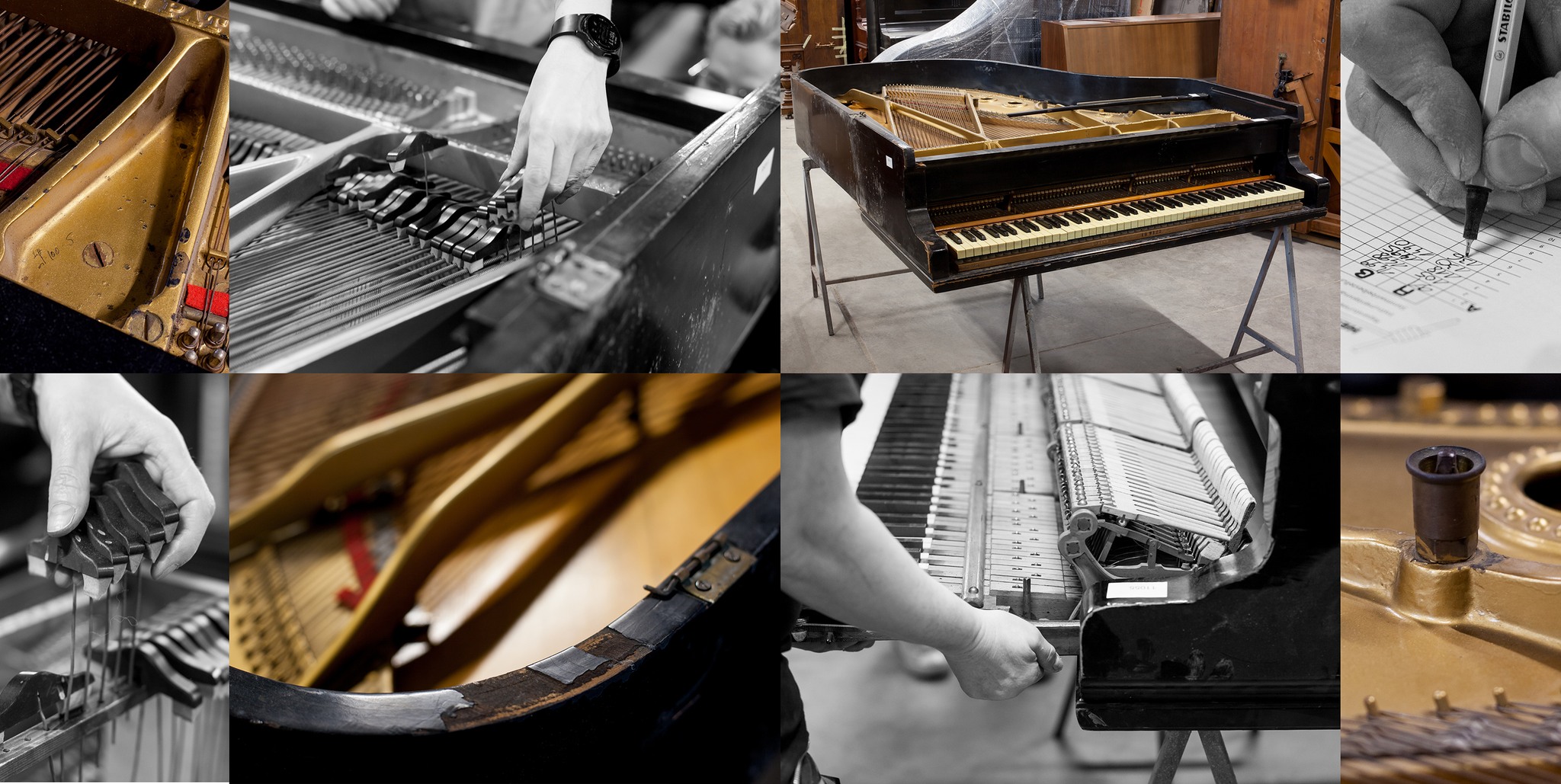
Detecting problems that a dishonest seller tries to hide under new lacquer requires years of practice and hundreds of instruments examined in different conditions. Defects in a used grand piano often concern places to which you do not have free access without partial disassembly of the case or the use of a professional endoscope. See interesting examples of restoration to realise how many hidden elements may require immediate intervention by a qualified specialist. Often, what seems to be a minor imperfection turns out to be the tip of the iceberg of technical problems whose solution is impossible in home conditions.
Among the most common traps you may encounter during your search are the following technical issues:
- Drying out of the pinblock, causing the pins not to hold the tension despite their apparent “driving in” before the sale.
- Woodworm activity, which destroys the load-bearing structure from the inside while remaining completely invisible on the lacquered surface.
- Unprofessional lacquering, which can effectively mask dangerous cracks in the cast iron frame or the soundboard.
- Wear of keyboard bushings, leading to irritating knocking and uneven resistance during fast technical playing.
- Incorrect profiling of bridges, resulting in so-called “wolves” and uneven resonance of sounds in the middle register.
Defects of this type can effectively ruin the budget of any buyer who trusted only their own senses and the previous owner’s assurances about perfect condition. You must remember that wood is a living material that reacts to every change in the environment, and mistakes in its maintenance take revenge years later.
How much wrong purchase decisions cost – real scenarios
The cost of bringing a neglected instrument into usable condition often exceeds its market purchase price, which makes such an operation completely unjustified economically. Imagine a situation in which you buy a legendary C. Bechstein grand piano at a bargain price, only to learn after a month that repairing the action will cost a fortune. Such stories happen extremely often to people who do not know exactly how to inspect a grand piano before purchase in a comprehensive and reliable way. Often, the cost of specialist transport and the first tuner’s visit is only the beginning of expenses that may grow like an avalanche with each subsequent week of use. It is better to rely on reliable technical knowledge from the outset and avoid a painful disappointment that will discourage you from sitting at the keyboard for a long time.
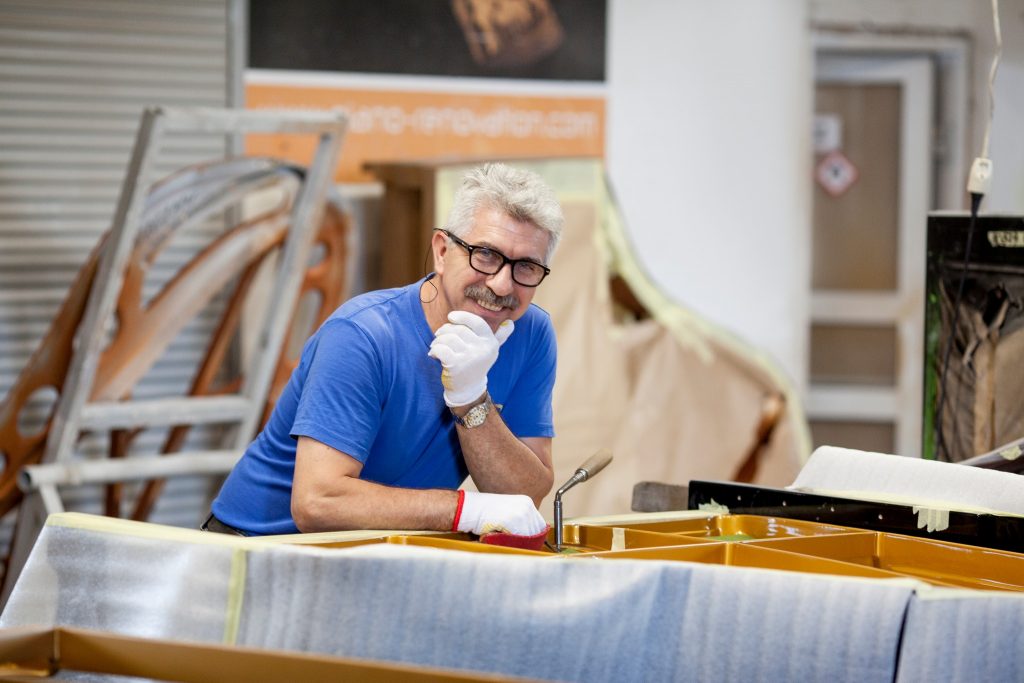
Is it worth buying a grand piano without consulting an expert?
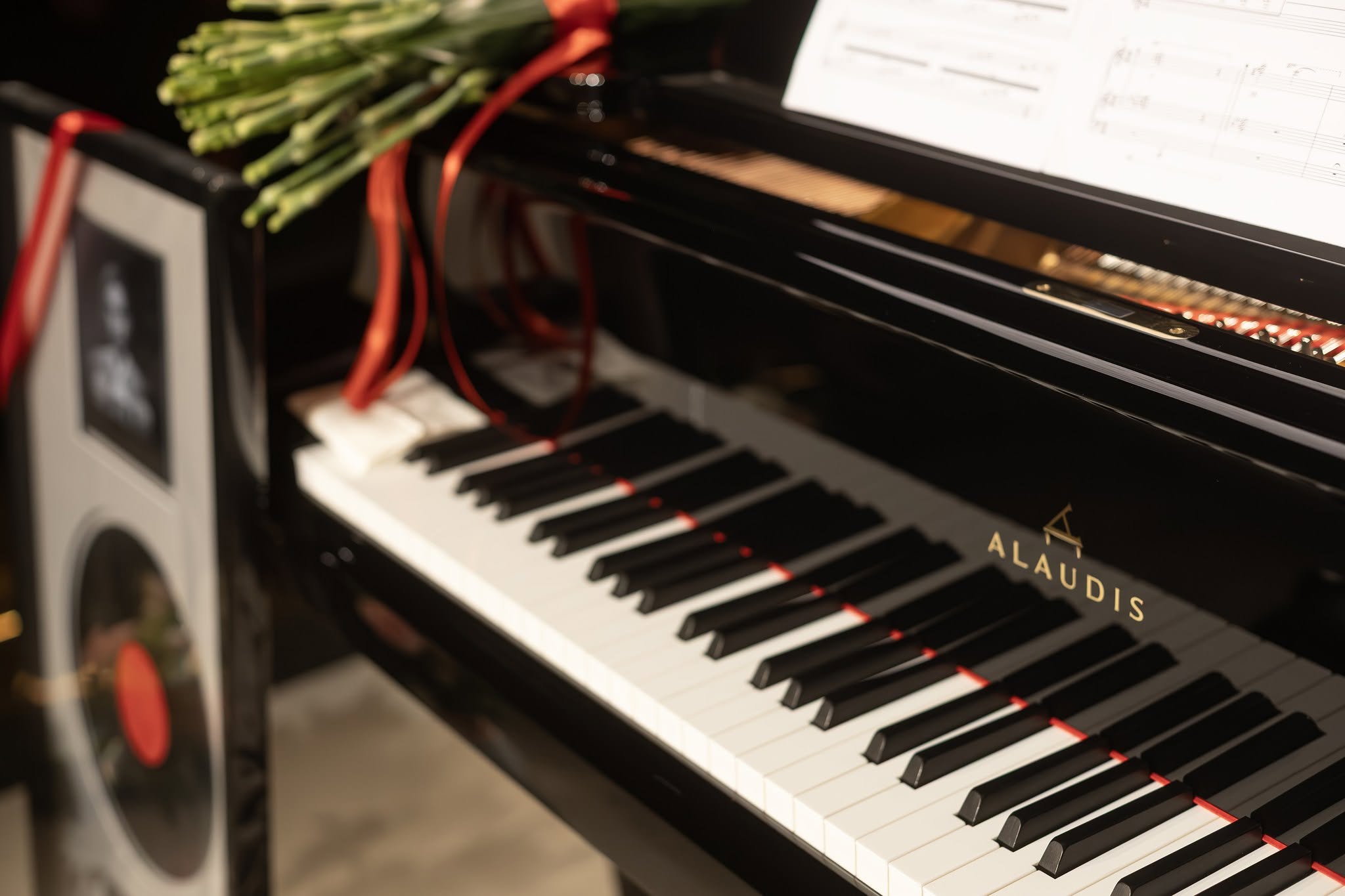
Making the decision to purchase such a complicated device on your own is an enormous risk that extremely rarely ends in complete success for an amateur. Even if you can play difficult classical works, your knowledge of the instrument’s construction may be insufficient to assess its restoration potential objectively. It is worth getting to know the modern Polish Alaudis grand piano in order to see what standards contemporary technical solutions should meet in the service of the highest musical quality. The question of whether it is worth buying a used piano without professional support usually has one logical answer: only if you are ready for costly surprises. An experienced expert acts as your advocate, evaluating the actual condition with a cool eye, without giving in to the emotions that accompany the search for the instrument of your dreams.
When is it worth commissioning a professional appraisal and how much can it save?
A professional technical opinion should be your standard whenever the transaction amount exceeds your monthly income or life savings. Thanks to it, you will know with certainty whether a given instrument is worth its price or whether you should negotiate a significant discount towards future repairs. It is worth looking at the section containing verified grand pianos for sale in order to have a solid point of reference for offers found on the secondary market. An expert can precisely estimate the cost of restoring the instrument to full concert performance, which gives you a strong bargaining card in discussions with the seller. Often, such a service pays for itself with interest already at the first attempt to lower the price, while at the same time protecting you from taking possession of a musical wreck.
Every instrument leaving a professional workshop goes through a rigorous quality control department, which gives you a guarantee of reliability and peace of mind for many years. Your path to the ideal sound should be based on solid foundations of knowledge, and not on a lucky coincidence, which rarely occurs in the world of expensive instruments. Remember that the final choice always belongs to you, but a well-informed buyer is one who enjoys music instead of fighting resistant matter.
Buying a grand piano is a fascinating journey that should bring you only satisfaction and become a real impulse for your further artistic development. Armed with reliable knowledge of the technical aspects of the instrument’s construction, you will minimise the risk of a mistake that could cost you thousands of zlotys. Do not hesitate to draw on the experience of people for whom restoration and precise diagnostics are daily work filled with a passion for music. If you have any doubts or need additional substantive support, we invite you to contact us directly so that together we can find the solution best suited to your expectations.