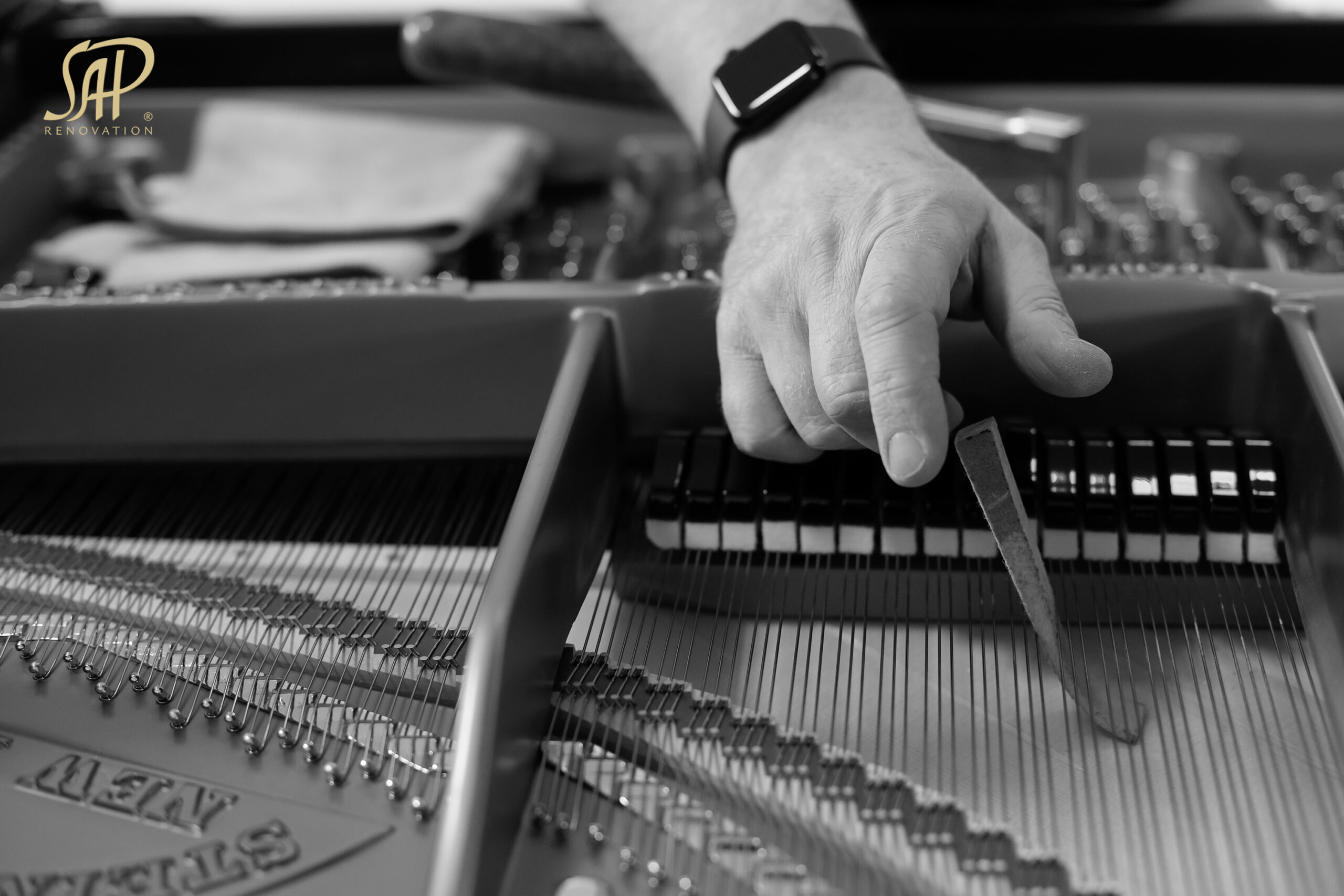
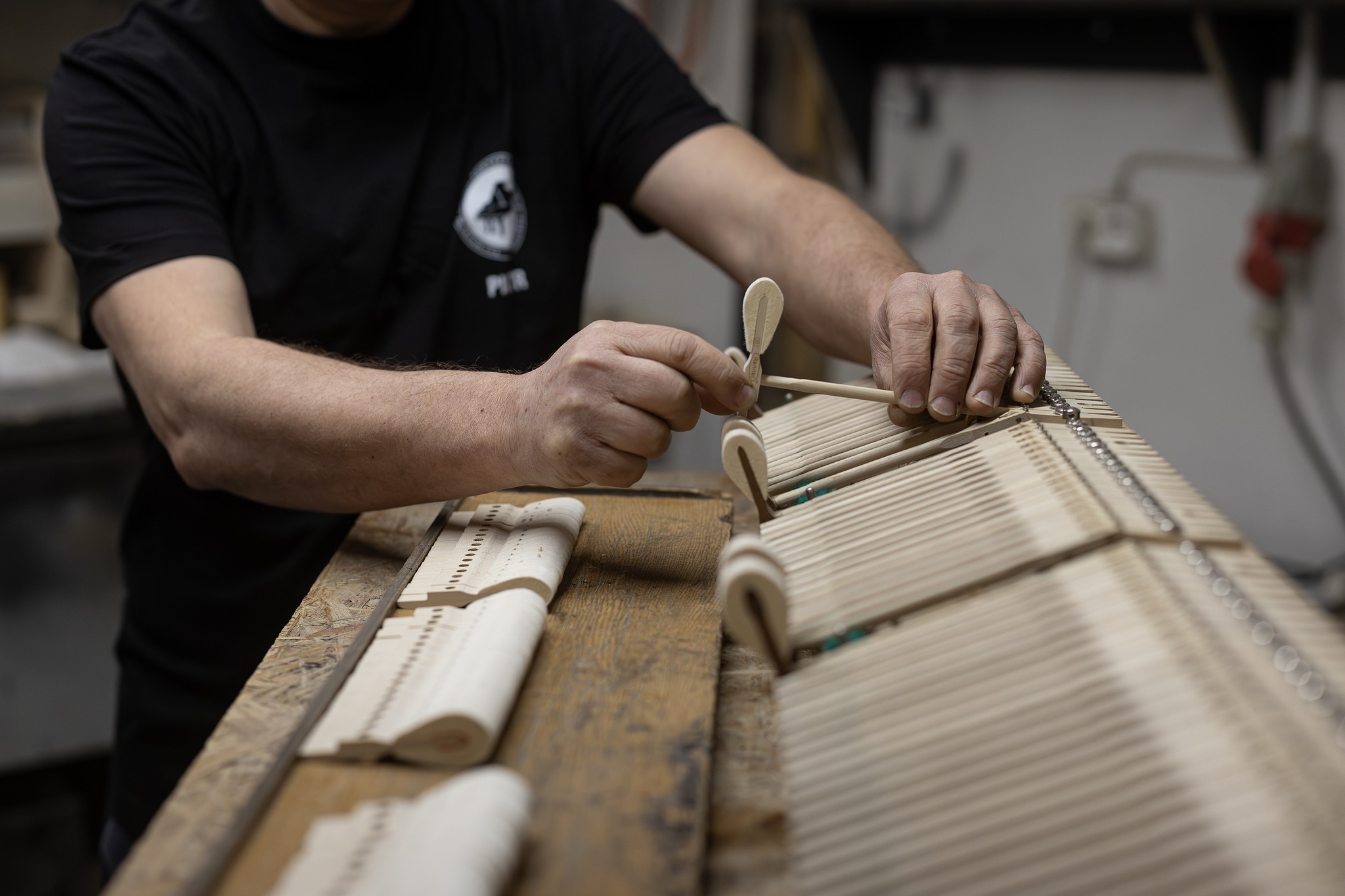
Every keyboard instrument loses its original clarity over time, and you may begin to feel that the sound produced becomes increasingly dull or, on the contrary, unpleasantly sharp. The heart of your piano beats in its complex action, where felt-covered hammers perform thousands of strikes against steel strings during every hour of practice. Understanding how to care for these critical elements will allow you not only to extend the life of the instrument, but above all to derive full satisfaction from every piece you play. The following article will introduce you to the process of hammer reshaping, which is a fundamental maintenance procedure that restores the instrument’s soul.
What piano hammers are and how they affect the sound
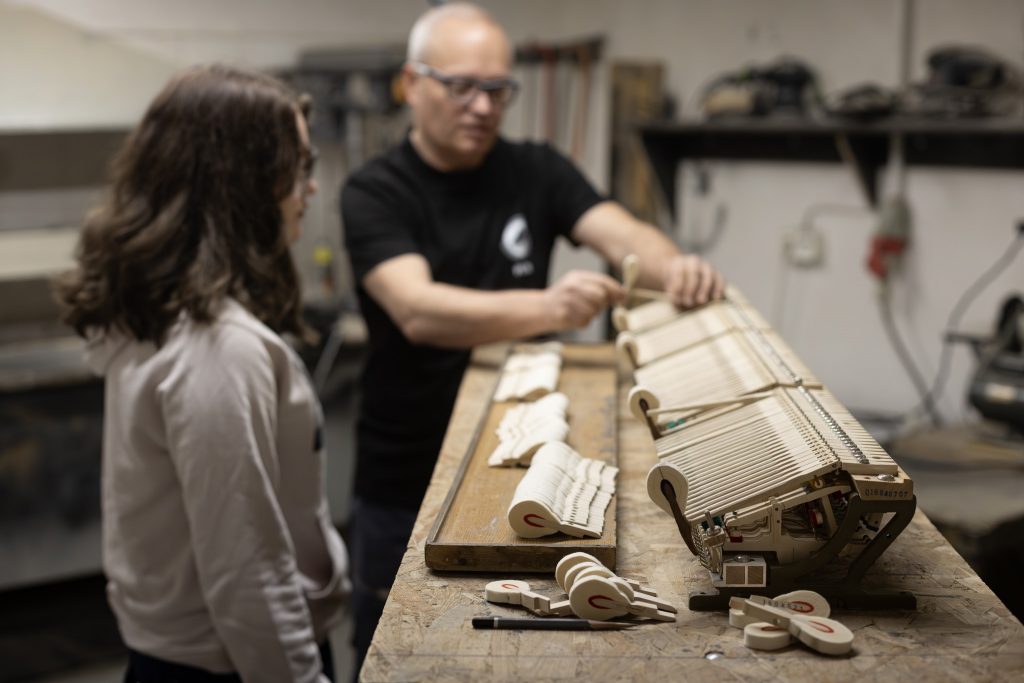
Piano hammers are precisely crafted elements made of hard wood, onto which specially prepared, dense sheep wool felt has been stretched under enormous pressure. Their role is to transfer the kinetic energy from your fingers directly to the strings, which initiates the formation of a sound wave with a specific tone colour. The influence of the hammers on the sound is difficult to overestimate, because it is precisely the hardness, elasticity and shape of the felt that determine whether you hear a singing, soft tone or rather an aggressive, percussive attack. If you want to learn more about how the repair of the piano action proceeds – explaining what happens inside the instrument – it is worth exploring the structure of the entire lever system. Properly functioning piano hammers base their operation on an ideal contact point, which must be narrow in order to excite the string into a clean vibration. Any change in the structure of the felt resulting from intensive use directly affects the harmonic quality of the sound, making it less selective.
What hammer reshaping consists of
Hammer reshaping is a precise mechanical process of removing flattening and grooves from the surface of the felt using specialised abrasive materials of varying grit. During this procedure, an experienced technician aims to restore the hammer to its original, oval shape, which becomes deformed over time due to repeated impacts on the strings. The entire operation requires great sensitivity, because sanding too deeply could irreversibly damage the structure of the felt or change the weight of the hammer, which would affect repetition. The technician must carefully control the geometry of each element, ensuring that the “tip” of the hammer is perfectly centred relative to the strings.
Signs of hammer wear – when the instrument gives warning signals
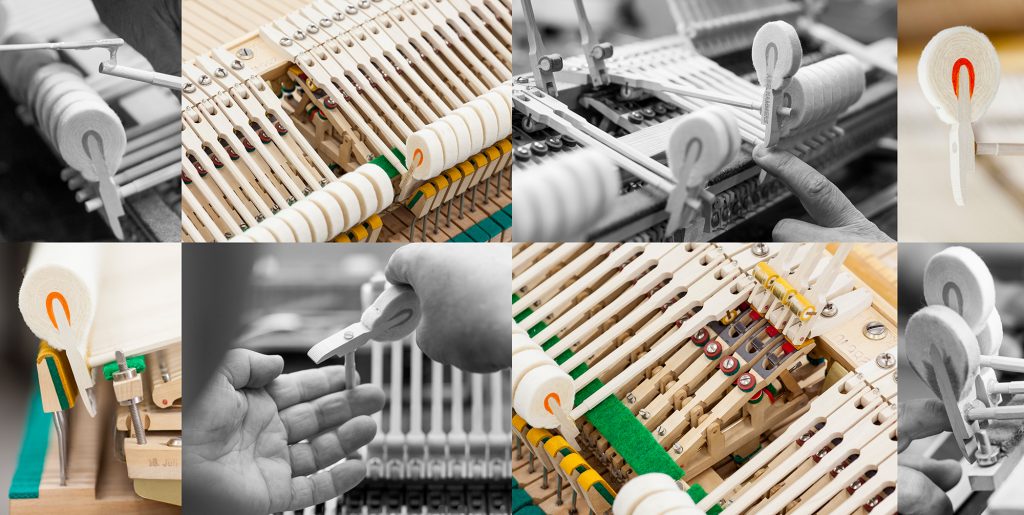
The main warning signs indicating that your instrument requires intervention are, above all, a metallic, sharp sound and visible deep grooves in the hammer felt. Over time, you will notice that hammer wear manifests itself through the flattening of their striking surface, which causes them to hit the string with a wide surface instead of a point contact. Such a situation results in the damping of higher harmonic components, making the instrument sound dull, while at the same time an unpleasant “knocking” appears in the attack. If you are wondering when piano servicing is absolutely necessary, look at the felt surface under good light – if you see clear grooves from the strings, it is time to act. Ignoring these symptoms leads to further degradation of the felt, which becomes increasingly hard and less elastic under constant compaction. Knowledge of when piano service should be carried out will protect you from costly mechanical faults in the future.
Why hammer reshaping is crucial for sound quality
Proper reshaping allows for the recovery of the ideal striking point, which directly translates into the purity and richness of overtones in every produced sound. When the hammer is flattened, it comes into contact with the string at too many points simultaneously, which physically interferes with the string’s free vibration immediately after the attack. By giving the felt the appropriate radius of curvature, you ensure that the contact is immediate and precise, allowing the string to generate a clean, sustained tone. Many pianists wonder how to improve the sound of a piano without replacing the entire instrument, and the answer often lies precisely in the geometry of the hammers. Improving this geometry makes even an older instrument regain its former brilliance and sparkle in the high registers. Without regular care of the hammer shape, even a top-class instrument will begin to sound average and unpredictable in terms of tone colour.
Reshaping vs voicing – differences and relationships
Reshaping is a preparatory stage that consists of giving the external form, whereas voicing is a subtle work on the elasticity and internal tension of the felt using special needles. These two concepts are often confused, however it is worth knowing what piano voicing actually means – it is the art of equalising the tone across the entire keyboard range. If you want to explore the details of this process, check professional voicing, which is always carried out after achieving the proper hammer profile. Without correct sanding of the felt, voicing is pointless, because the needle is not able to correct problems resulting from an improper contact surface. A good technician first restores the shape, and only then proceeds to needle the felt in order to soften overly harsh sounds or harden those that are too soft. Thanks to this harmony of actions, your instrument gains a uniform tone colour, and you can freely operate pianissimo and fortissimo.
When reshaping is not enough – the moment for deeper renovation
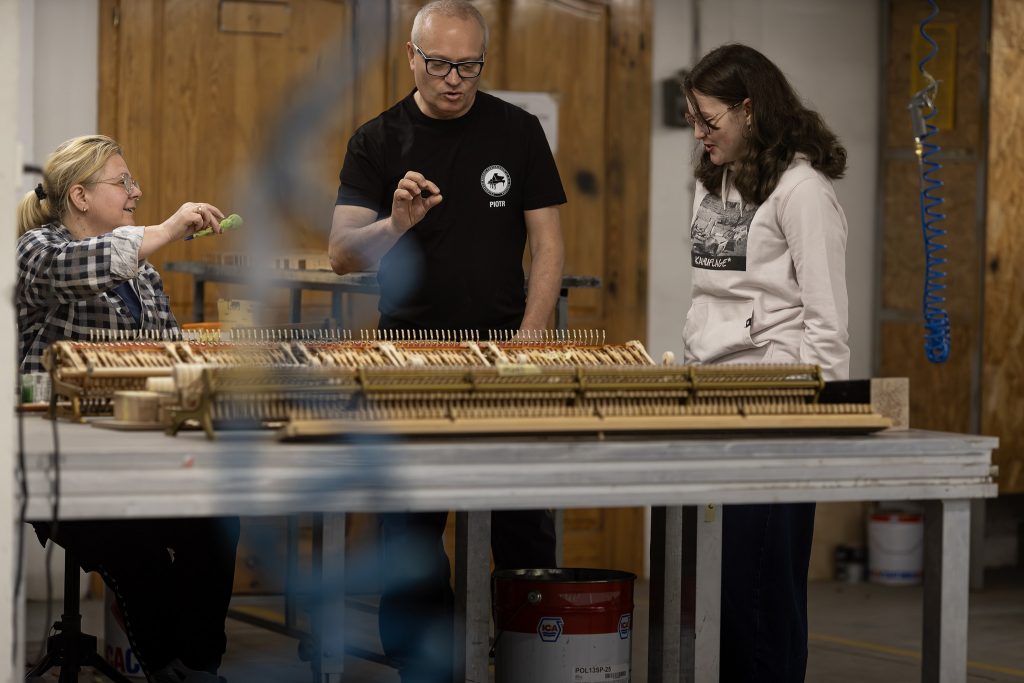
There are situations in which the felt layer is already so thin that further sanding could expose the wooden core of the hammer, which signals the need to carry out a full replacement of the elements. In such a case, a comprehensive repair of the piano hammers becomes necessary, which often involves the need to fit new parts to the existing geometry of the action. Often during inspection it turns out that sound problems result from the age of the instrument and the general fatigue of construction materials. It is then worth considering what professional restoration of historical pianos looks like – how the spirit of past eras is restored – in order to bring the instrument back to full functionality. Remember that the renovation of piano mechanics is a multi-aspect process that goes beyond mere aesthetics and touches on the fundamental laws of sound physics.
When assessing the condition of the hammers, pay attention to the following aspects:
- Remaining thickness of the felt above the wooden core of the hammer at its highest point
- Degree of contamination and oxidation of the top wool layer, which affects hardness
- Stability of the mounting of the hammers on the shanks and the condition of the flanges (centres)
- Presence of traces of moths or other mechanical damage to the fibre structure
- Symmetry of the grooves relative to the centre of the hammer, which indicates previous regulation
- How often hammer reshaping should be performed
The frequency of reshaping depends directly on the intensity of your playing and the hardness of the felt used, however it is assumed that with standard home use this procedure should be carried out once every few years. Instruments used in music schools or concert halls require much more frequent attention, sometimes even once a year, due to extreme mechanical loads. Regular servicing of upright and grand pianos allows for the removal of still shallow grooves, which minimises the amount of felt removed during a single technician visit. Thanks to such regularity, hammer sets can serve for decades while maintaining excellent acoustic properties. Too infrequent servicing causes grooves to become very deep, which during later repair forces the technician to drastically reduce the mass of the hammer.
Can hammer reshaping be done independently?
It is strongly discouraged to attempt reshaping on your own, because the lack of specialised tools and experience almost always results in the destruction of the delicate felt. Amateur sanding often leads to disruption of hammer symmetry, which results in it not striking all strings of the unison simultaneously, creating an unpleasant, “out-of-tune” sound. Professional piano service is not only the ability to use sandpaper, but above all knowledge of acoustics and mechanics that cannot be replaced by online guides. Every error in the hammer profile is difficult to correct and may require the purchase of an entirely new set of parts, which generates high costs. By entrusting this task to a professional, you can be sure that the strike angles will remain intact and the tone of the instrument will be improved in a controlled manner.
Piano service as a process – why reshaping is only one stage
Hammer reshaping is only the foundation on which further precision of the instrument’s operation is built, because every change in the shape of the felt requires subsequent correction of the settings of the entire action. After sanding the hammers, their distance from the strings and the point at which the lever is released change, which necessitates carrying out the full operation of regulating the piano action. Without proper adjustment of parameters such as let-off or drop, even perfectly reshaped hammers will not provide you with playing comfort and full control over repetition. If you want to see what regulation and voicing of a Steinway piano after rebuilding looks like – harmony in every sound – you will understand how many small elements must work together. Only the combination of reshaping, mechanical regulation and final voicing allows for full utilisation of the potential that lies in your piano. A comprehensive approach guarantees that hammer reshaping will bring the expected result and that the instrument will become your partner in musical expression.