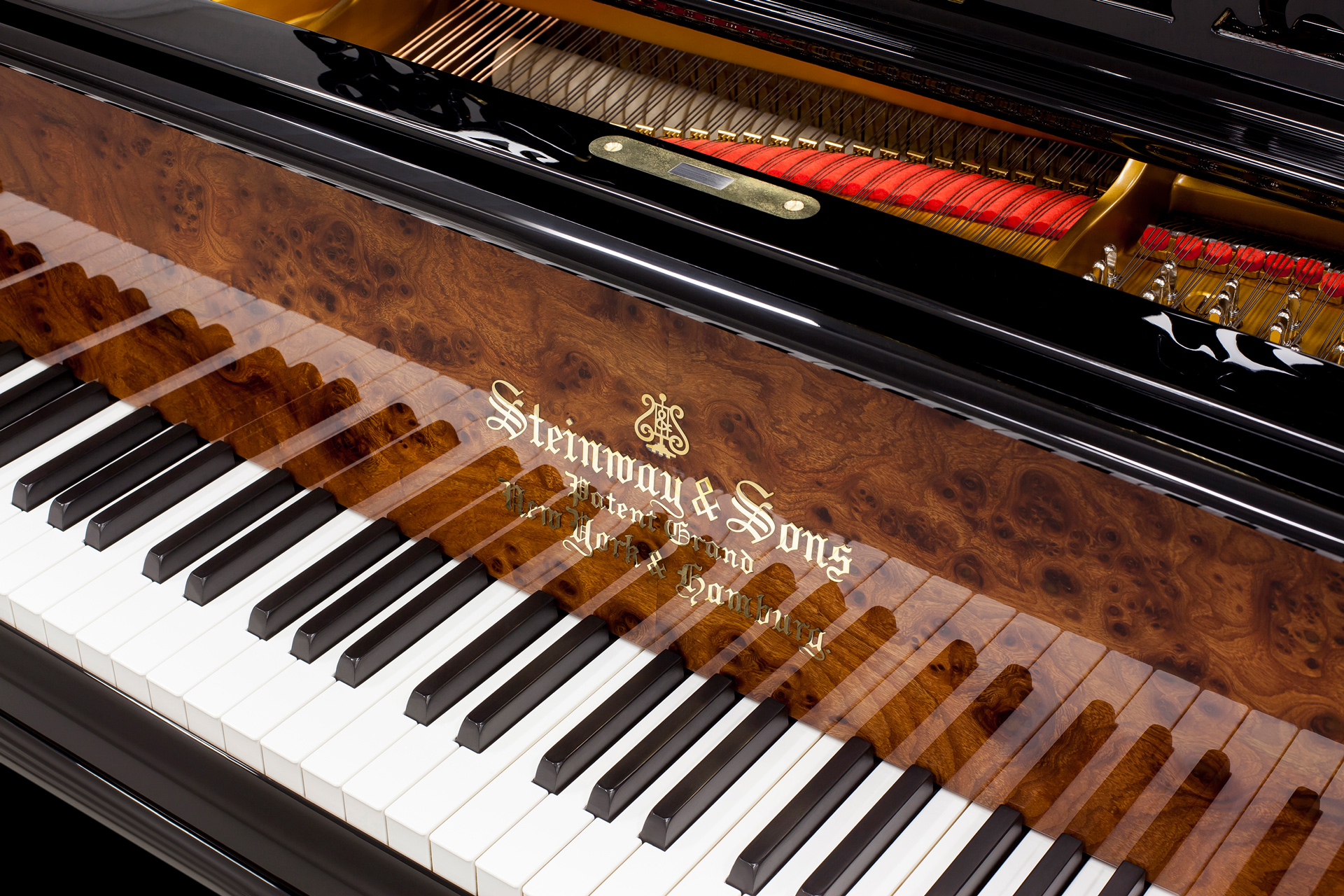
In the world of grand pianos, there is one name that needs no introduction. When you hear Steinway & Sons, you immediately think of the finest instruments ever built. If you wonder where their unique sound comes from, how each instrument is made, and why tuning and maintenance are essential – this text will guide you through the most important secrets behind these legendary pianos.
The history of Steinway & Sons – from Hamburg to New York
The story begins in the mid-19th century. Heinrich Engelhard Steinweg, a German carpenter and instrument enthusiast, began building pianos in his homeland. After emigrating to the United States, he founded a company that would become the world’s leading manufacturer of concert grands.
Why does Steinway remain a synonym for excellence?
Because it has preserved its artisanal production. Every instrument is built over many months, with each part crafted by specialists dedicated to a single stage of creation.
What defines the Steinway sound? Model differences and the Spirio series
A true Steinway is instantly recognisable: warm, full, harmonious and rich in overtones. This is the result of precise construction, a perfectly shaped soundboard and carefully selected tonewood.
Model groups:
- Concert grands (D, C): monumental sound, massive projection, complete harmonic richness.
- Medium-sized and salon grands (A, B): versatile, suitable for halls, studios and larger homes.
- Smaller models (O, M): designed for private spaces with a more intimate character.
A modern interpretation of tradition is the Steinway Spirio, capable of reproducing performances of legendary pianists in physical form.
Spirio R goes further by allowing recording, playback and editing of your own performance.
Handcraftsmanship and precision – how a Steinway is built
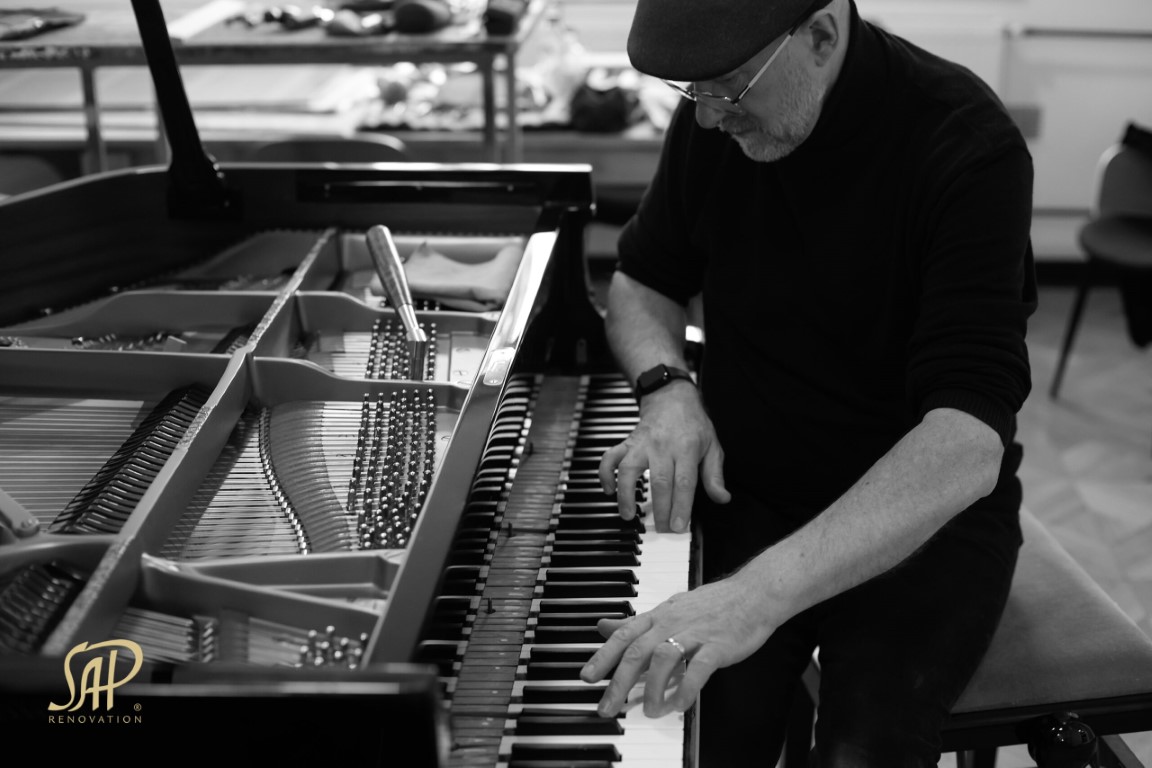
Each Steinway grand passes through the hands of many experts responsible for:
- selecting wood with ideal resonant properties,
- building a soundboard with a precisely defined crown,
- string installation and regulation,
- hammer voicing,
- meticulous keyboard action adjustment.
Every step shapes the instrument’s final tone, making each Steinway truly unique.
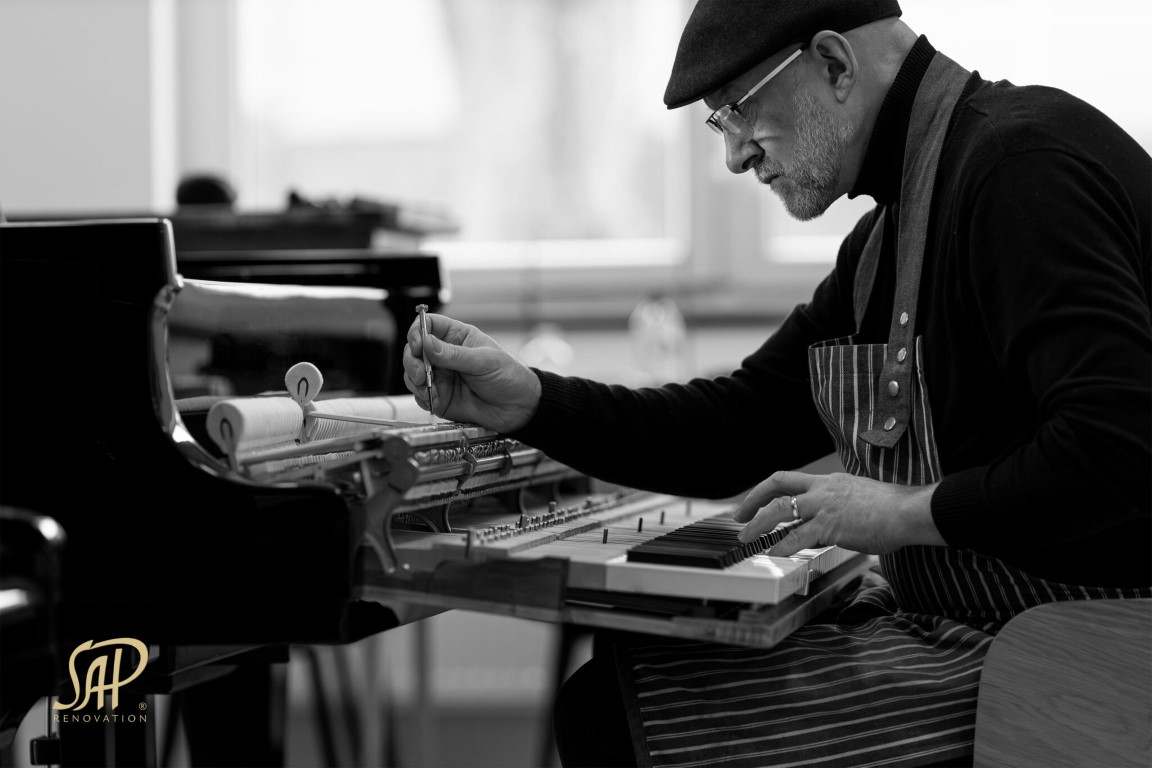
Construction features – what sets Steinway apart
Key innovations include:
- Diaphragmatic Soundboard: variable thickness for superior projection.
- Tapered Rim: multi-laminate maple case with excellent stability.
- Hexagrip Pinblock: six-layer design for unmatched tuning stability.
- Renner/Steinway Action: one of the world’s most precise piano actions.
These solutions established Steinway as the standard for concert performance.
Technological innovations – tradition meets modernity
Steinway continues to combine craftsmanship with modern technology:
Spirio advancements, resonance measurement systems, improved finishing processes and refined cast-iron frame engineering—all designed to meet the expectations of 21st-century pianists.
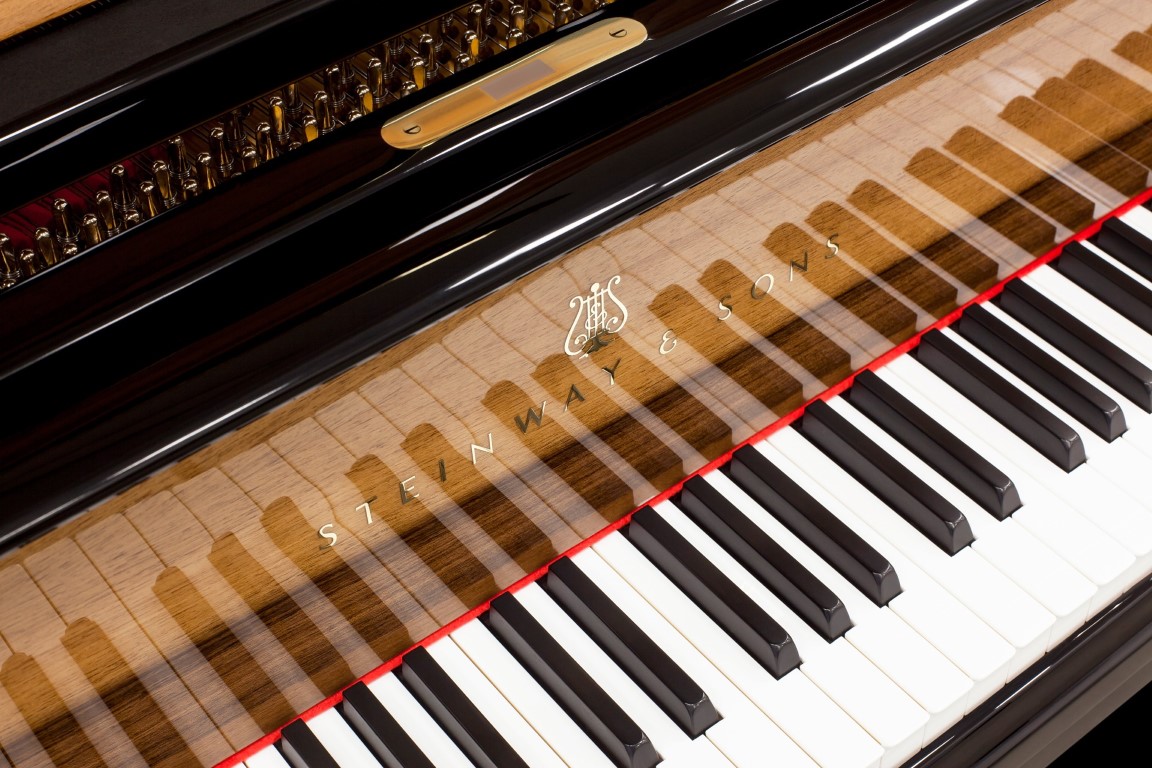
Maintenance – how to care for a Steinway
To preserve the ideal tone for years, focus on three areas:
1. Tuning:
at least 1–2 times per year, more if used intensively.
2. Environmental stability:
temperature 20–22°C, humidity 42–55%.
3. Action care:
lubrication of friction points, action regulation, hammer voicing.
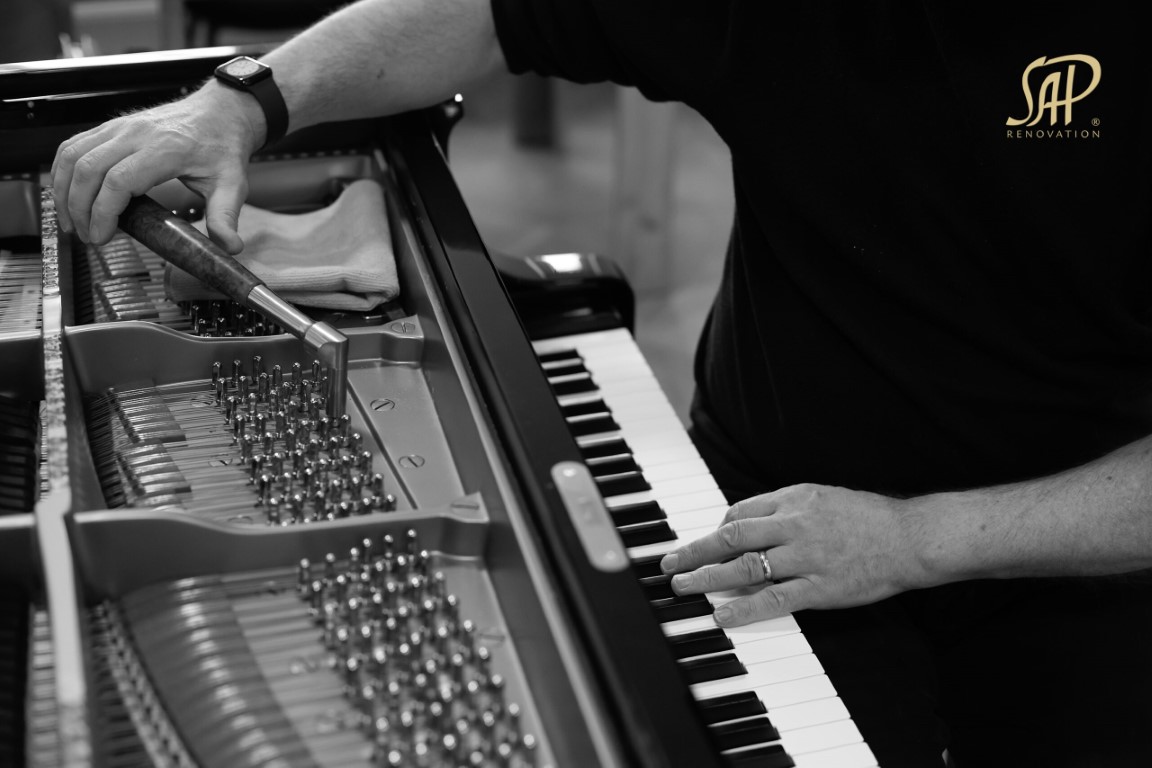
Even if you own tuning tools, actual tuning should always be entrusted to a professional.
Sap Renovation – a trusted Steinway specialist in Poland
If you are considering purchasing a Steinway, especially a fully restored instrument, working with a dedicated restoration workshop is invaluable.
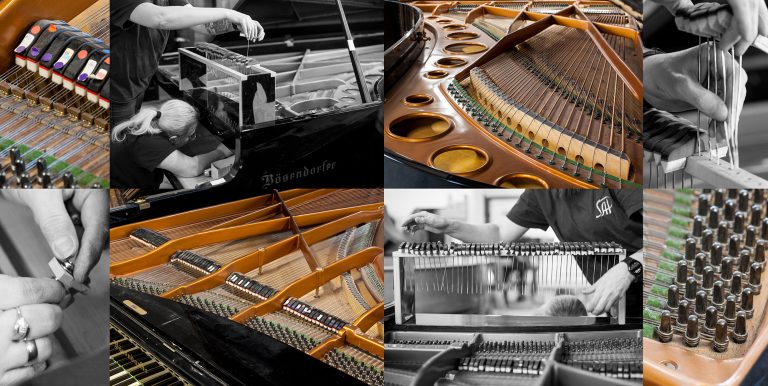
Sap Renovation is one of the most reputable restoration studios in Europe and a direct seller of Steinway pianos in Poland. You can expect:
- original instruments from verified sources,
- expert consultation,
- full restoration following Steinway standards,
- complete service – from selection to delivery and tuning.
Want to see an example? Visit our offer to view a restored Steinway grand!