Extracting a deep, noble sound from an old instrument resembles restoring the soul of a forgotten work of art. If you own an antique instrument at home that has lost its former brilliance, you are probably wondering how to restore its former glory. This procedure requires a combination of knowledge in physics, acoustics and artistic craftsmanship. By discovering the successive stages of piano restoration, you will quickly understand that it is a fascinating journey into history and technique, allowing musical heritage to be preserved for future generations.
Piano restoration is not repair – where does the whole process begin?
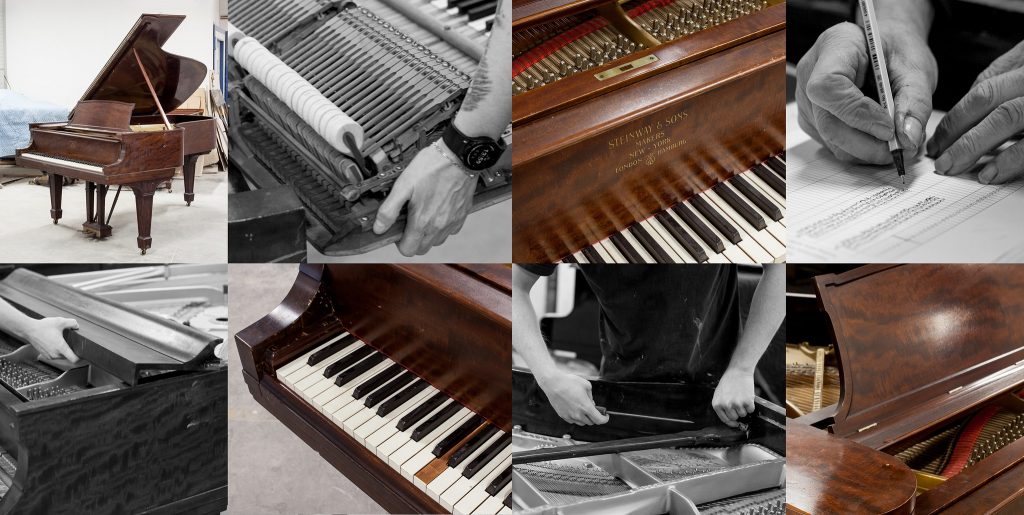
The entire undertaking begins with an extremely thorough technical assessment, allowing one to determine which elements require complete replacement and which can be preserved. When you make such a decision, you must know that professional piano restoration is much more than ad hoc fault removal, because it involves a comprehensive reconstruction of the instrument’s original parameters. When reviewing a comprehensive restoration offer, you will notice that specialists first disassemble the piano into its smallest parts, documenting every detail in the process. Your task at this initial stage is to precisely define sound and visual expectations, which makes it easier to plan the schedule of work.
Soundboard – the invisible foundation of tone
The soundboard is the most important acoustic element, responsible for amplifying the vibrations generated by the stretched strings. If you notice cracks or a loss of the necessary crown, professional repair of the piano soundboard and its careful sealing will be necessary. Many people wonder whether it is better to glue the old wood or opt for replacing the soundboard entirely with a new one made of high-altitude spruce. This decision depends on the degree of material degradation and your priorities regarding the preservation of the original substance of the instrument. Specialists working in professional acoustic workshops ensure that the wood has the appropriate humidity and a dense grain structure.
Cast iron frame and structure – stability that determines durability
The cast iron frame serves as the skeleton and must withstand enormous string tension forces, which can reach up to several tons. Proper repair of the piano’s cast iron frame includes sandblasting, thorough removal of old coatings and precise varnishing in a classic gold colour. It is worth checking how professional restoration of piano frames is carried out, because any oversight in detecting microcracks may threaten the safety of the structure. During these works, the seating of tuning pins and the overall stability of the wooden body are also verified.
Strings and tuning pins – the heart of tension and sound
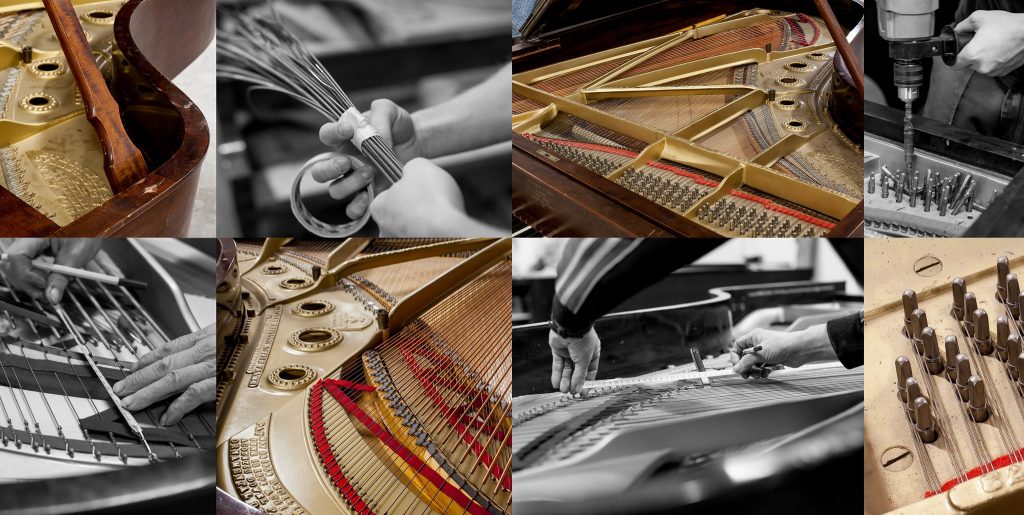
Strings and tuning pins are directly responsible for the purity and tone colour of the generated sound, which is why their condition is subject to strict control. Comprehensive replacement of piano strings becomes necessary when old wires become dull, corroded or begin to break during intensive playing. New bass strings are usually hand-wound with copper, which allows for achieving a deep and rich tone in the lowest registers.
Piano action – precision that creates music
The instrument’s action consists of thousands of small parts, whose proper functioning allows the pianist full control over dynamics and expression. Professional restoration of the piano action is a task for patient craftsmen capable of replacing worn felts, leathers and small springs. During work on this complex element, a number of precise activities are performed:
- Replacement of hammers with new ones matched to the characteristics of a specific brand
- Cleaning and polishing all metal parts of the moving action
- Replacement of dampers so that the sound does not sustain too long after releasing the key
- Installation of new pins and bushings, eliminating unnecessary play and knocking
- Checking the condition of levers and their possible detailed reconstruction
By looking into sections describing precise regulation of the action, you will see how many details influence the final experience of the musician.
Keyboard and touch – comfort that determines quality
The keyboard is your direct connection with the piano, so its technical condition determines whether playing becomes pure pleasure. When considering how to restore a piano, you should focus on levelling the keys and their perfect balancing. Old ivory often requires whitening or filling visible defects, and in its absence modern mineral substitutes are used. By browsing restoration examples, you will quickly notice how much aesthetic difference a refined keyboard makes.
Voicing and regulation – final shaping of the instrument’s character
This stage gives the instrument its final refinement, making it begin to sing with its own unique and pure voice. Precise regulation of the piano involves setting all distances in the action, which directly translates into repetition speed. Professional voicing, on the other hand, is the process of needling the felt of the hammers, thanks to which the sound becomes brighter or more velvety. You can read about how regulation and voicing are performed to understand that it is a true art of listening.
Case restoration – varnish, wood and visual details
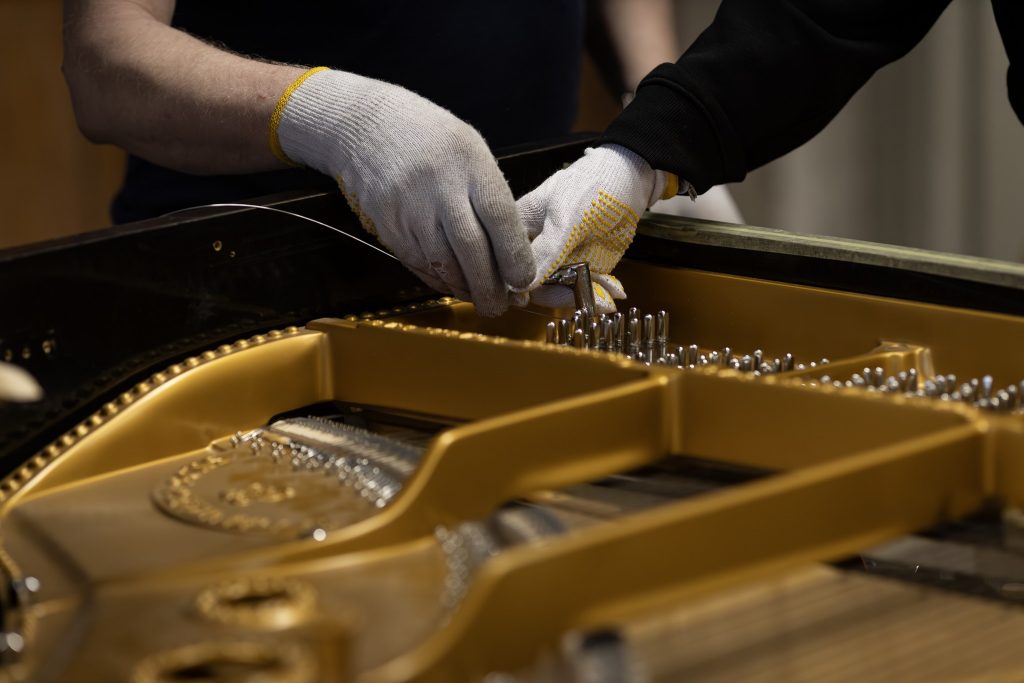
The external appearance of the piano is just as important as its interior, especially when it serves as a decorative element in an elegant living room or prestigious hall. Professional piano varnishing takes place under specialised conditions, where multiple layers of polyester or traditional shellac are applied. When comprehensive restoration of the piano case is commissioned, experts remove deep scratches, dents and losses in the fragile veneer. It is worth seeing how varnish and wood restoration is performed to appreciate the depth of black or the natural grain of noble walnut. This process requires angelic patience, as each layer must be perfectly sanded before polishing.
Marquetry and details – craftsmanship that distinguishes premium instruments
Artistic decorations made of exotic wood species or brass give the instrument a unique character and significantly increase its value. If your instrument has rich decorations, professional piano marquetry requires the craftsman to precisely recreate missing fragments of patterns. Sometimes a complete reconstruction becomes necessary, especially when original motifs have been worn away by time. You can admire such works by looking at exceptional models or restoration examples.
How long does piano restoration take and what determines the scope of work?
The duration of the entire process depends primarily on the degree of damage to the action and the availability of specific materials needed for reconstruction. Usually, you must be patient, because the answer to how long piano restoration takes most often ranges from three to six months. Some complex projects may take up to a full year. It is worth contacting a workshop to obtain a realistic quote and schedule.
When restoration makes sense and when it is better to give up
The decision should depend on sentimental value, history or unique sound quality. You must realistically assess the cost, which may exceed market value for lesser-known brands. However, for renowned manufacturers, restoration is almost always worthwhile.