A piano is a complex organism in which thousands of components must work in perfect harmony to create emotion. Over the years, however, instruments lose their brilliance and become only a shadow of their former glory. In many cases, simple tuning is no longer sufficient the real problem lies in worn materials and mechanisms. Only a precise internal restoration allows forgotten tonal colours to re-emerge. This process requires the intervention of a craftsman who understands the soul of the instrument and knows how to carry out true piano restoration.
Piano strings under the microscope – how string repair affects purity and resonance
The piano string is undoubtedly the beating heart of the instrument. Its physical condition determines whether the sound will be singing, resonant and full of life. Corrosion and natural metal fatigue mean that even a perfectly tuned instrument may fail to produce the rich overtones expected by a pianist. Steel and copper age naturally, severely limiting the dynamic potential of the soundboard across all registers.
Discover how professional string repair restores tension and tonal fullness
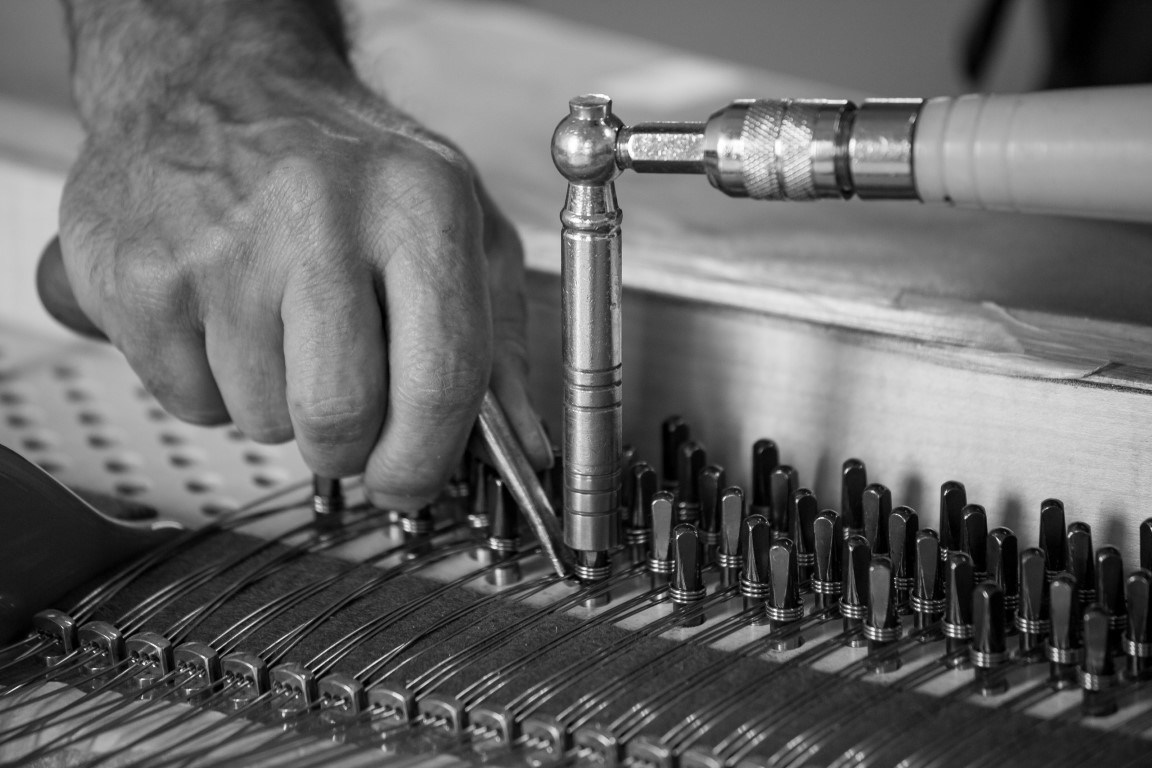
Professional string repair goes far beyond surface cleaning. It involves the precise restoration of correct string tension – essential for proper resonance. Through advanced restoration procedures, the sound regains its original power: bass registers become deep and focused instead of dull and muted. Properly treated strings reward the listener with crystalline clarity and long, singing sustain.
Replacing piano strings – when it becomes necessary and how it revives the instrument
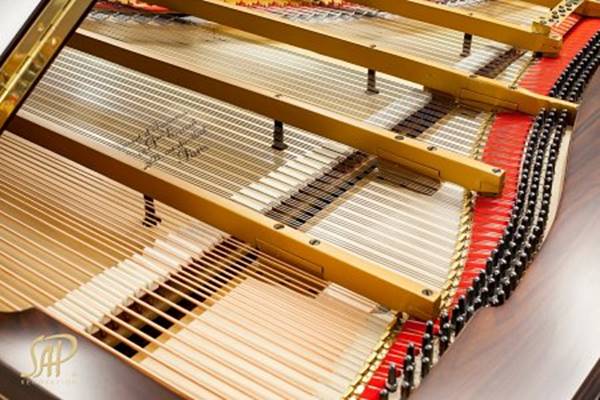
Sometimes regeneration is no longer enough, and full string replacement becomes the only effective solution. Warning signs include strings breaking during tuning or clearly audible metallic buzzing that destroys playing comfort. Installing new, high-quality string sets gives the instrument a second life, as fresh steel transfers vibrations far more efficiently to the bridge and soundboard.
How to recognise when string replacement is essential
New copper windings in the bass section can radically transform the piano’s character, restoring depth and power lost over decades of use. Such work demands advanced lutherie knowledge to avoid damaging the delicate cast-iron frame during restringing. After replacement, the instrument regains clarity and harmonic definition once thought lost forever.
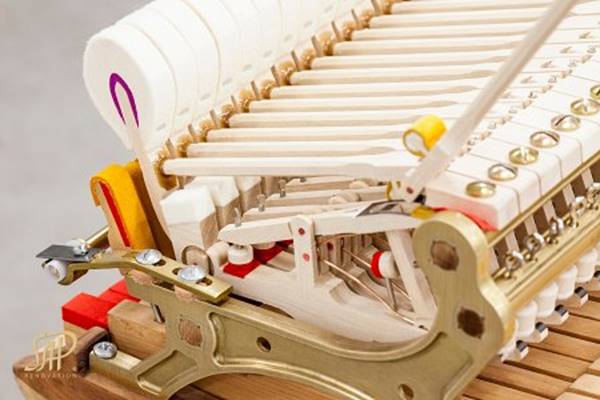
Hammer restoration and tone colour – how voicing and shaping redefine character
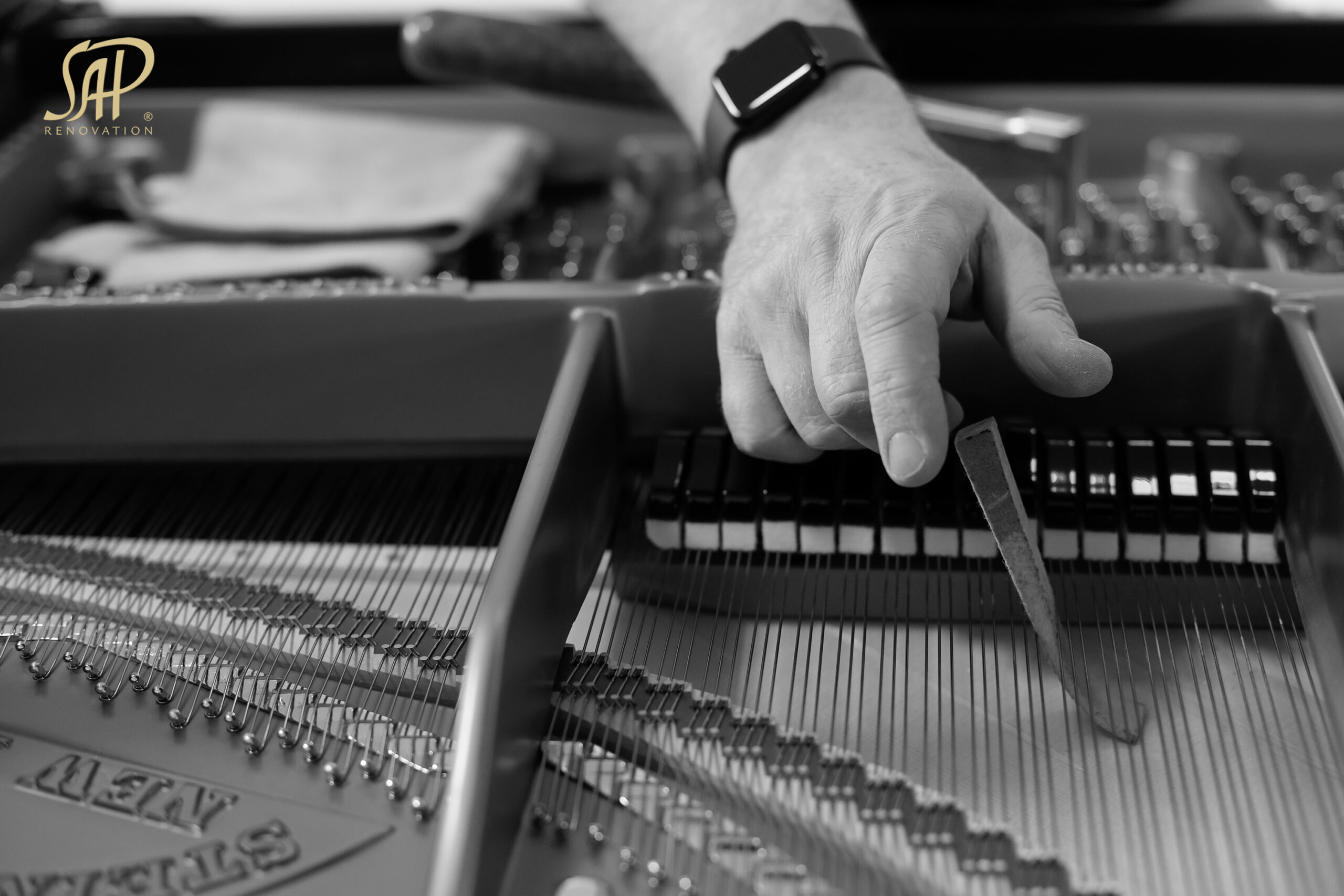
The hammer head is the point of direct contact with the sound source. Over time, felt becomes compacted and hardened, producing harsh, metallic tones devoid of nuance. Through careful shaping, the technician restores the hammer’s original oval profile, ensuring optimal point contact with the string.
How voicing and needling give the piano a new personality
Voicing – the controlled needling of hammer felt – softens the structure and releases warm, rounded tones prized by concert pianists. These subtle procedures determine whether a piano sounds lyrical and singing or sharp and percussive. Through voicing, the instrument can be tailored to even the most demanding artistic expectations.
From delicate pianissimo to powerful accents – why hammer regulation is essential
A responsive action is crucial for full dynamic control. Worn hammers disrupt energy transfer from finger to string, causing unpredictable jumps in volume. Proper restoration restores linear response and expressive freedom, allowing the piano to become a true extension of the performer’s hands.
Damper repair – the hidden weapon against unwanted resonance
Often underestimated, damper restoration is fundamental to tonal clarity. Aged damper felt loses elasticity, failing to stop string vibration cleanly and creating background noise after key release. Replacing felt and regulating damper springs restores immediate response and absolute control over silence — as vital in music as sound itself.
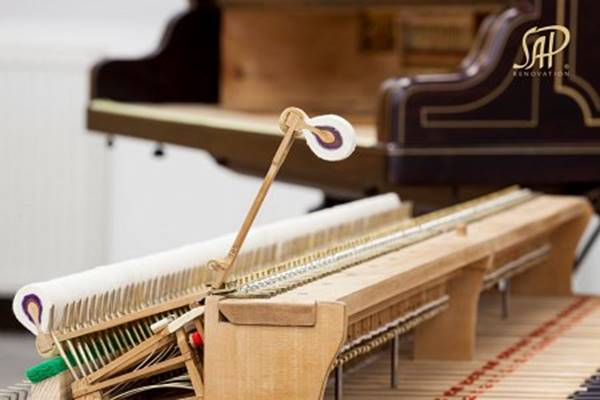
Hammer action after restoration – recovering the full harmonic spectrum
Comprehensive piano restoration involves thousands of microscopic adjustments that together restore rich harmonic content. Neglecting any of these elements results in a narrow, lifeless tone incapable of moving a discerning listener.
Perfect cooperation of strings, hammers and dampers
True restoration success depends on flawless interaction between all acoustic and mechanical components. Only a holistic approach guarantees tonal consistency across the entire keyboard.

Benefits include:
- seamless register balance
- full dynamic control
- exceptional harmonic richness
- precise damping
- long-term tuning stability
Restoring a piano to life requires both technical mastery and artistic sensitivity. Each renewed element from steel string to soft damper felt contributes to a living harmony that will inspire generations.