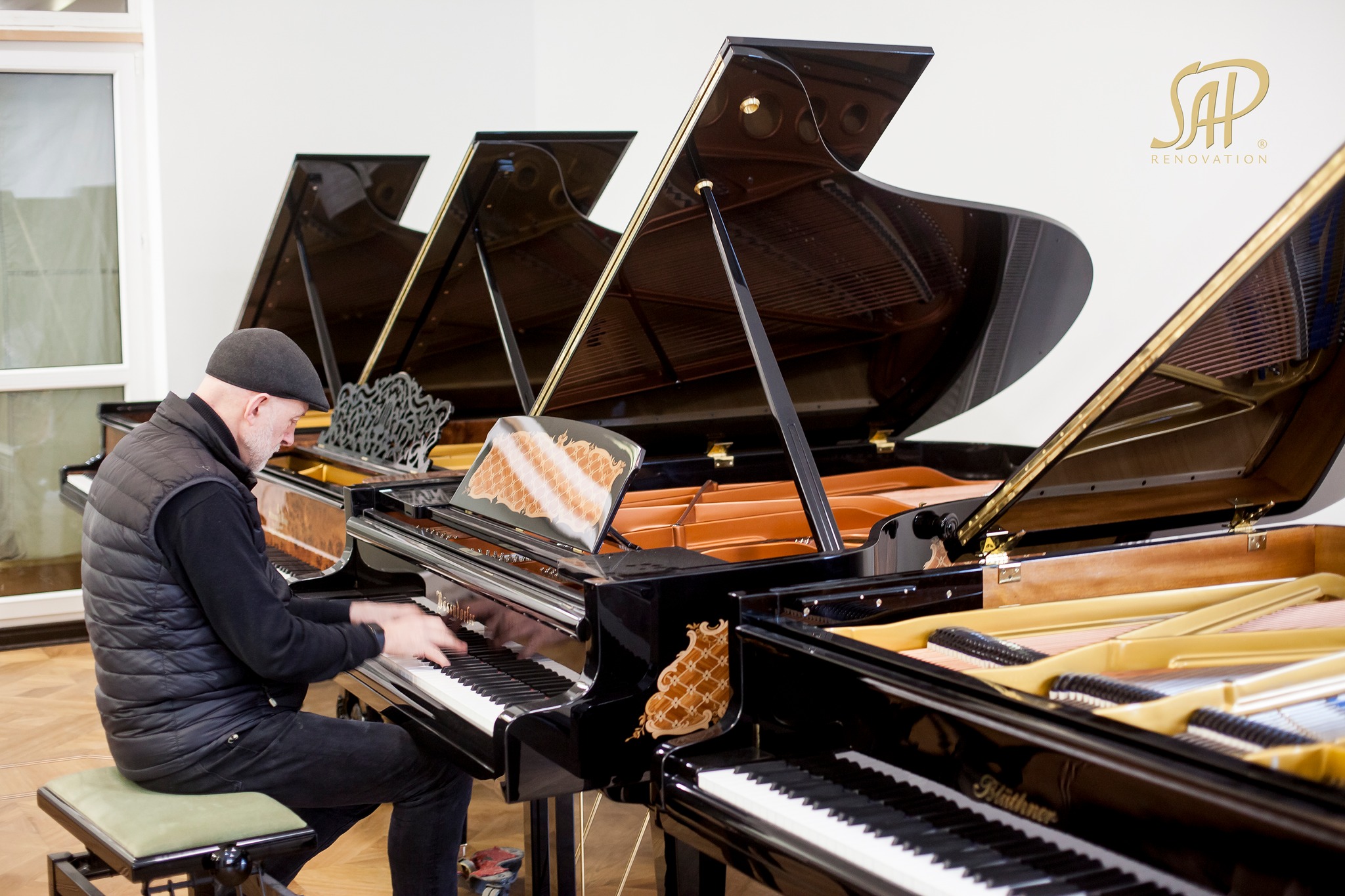
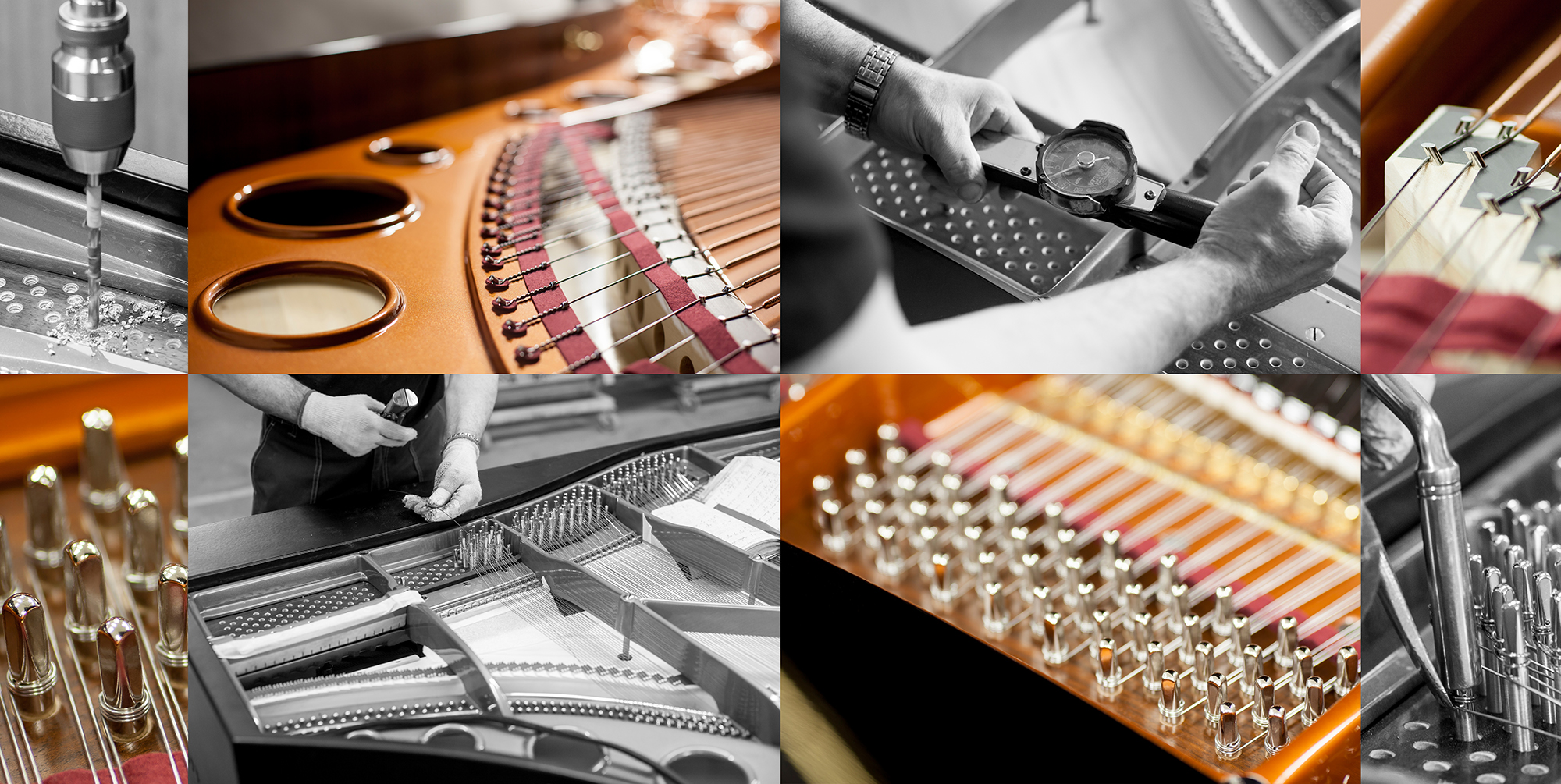
When sitting at a grand piano keyboard, we rarely think about the complex engineering hidden inside the case. Every sound produced is the result of thousands of components working together within a fraction of a second. Unfortunately, the passage of time and fluctuating humidity gradually reduce the precision of these delicate elements. To restore the instrument’s original responsiveness, the intervention of an experienced craftsman is essential – a process combining technical expertise with artistic sensitivity to materials.
Grand piano repair – the heart of the instrument in expert hands
Why does piano action repair require specialised craftsmanship?
Effective piano repair demands a master technician with deep knowledge of wood and metal behaviour. Each instrument reacts differently to environmental changes and long-term mechanical stress. Even microscopic inaccuracies can lead to uneven touch or disturbing mechanical noise. Upright piano actions differ structurally from grand piano actions, requiring broad and versatile technical expertise.
Diagnosis and disassembly – exploring the interior of the piano action
How specialists assess felts, wood, springs and action geometry
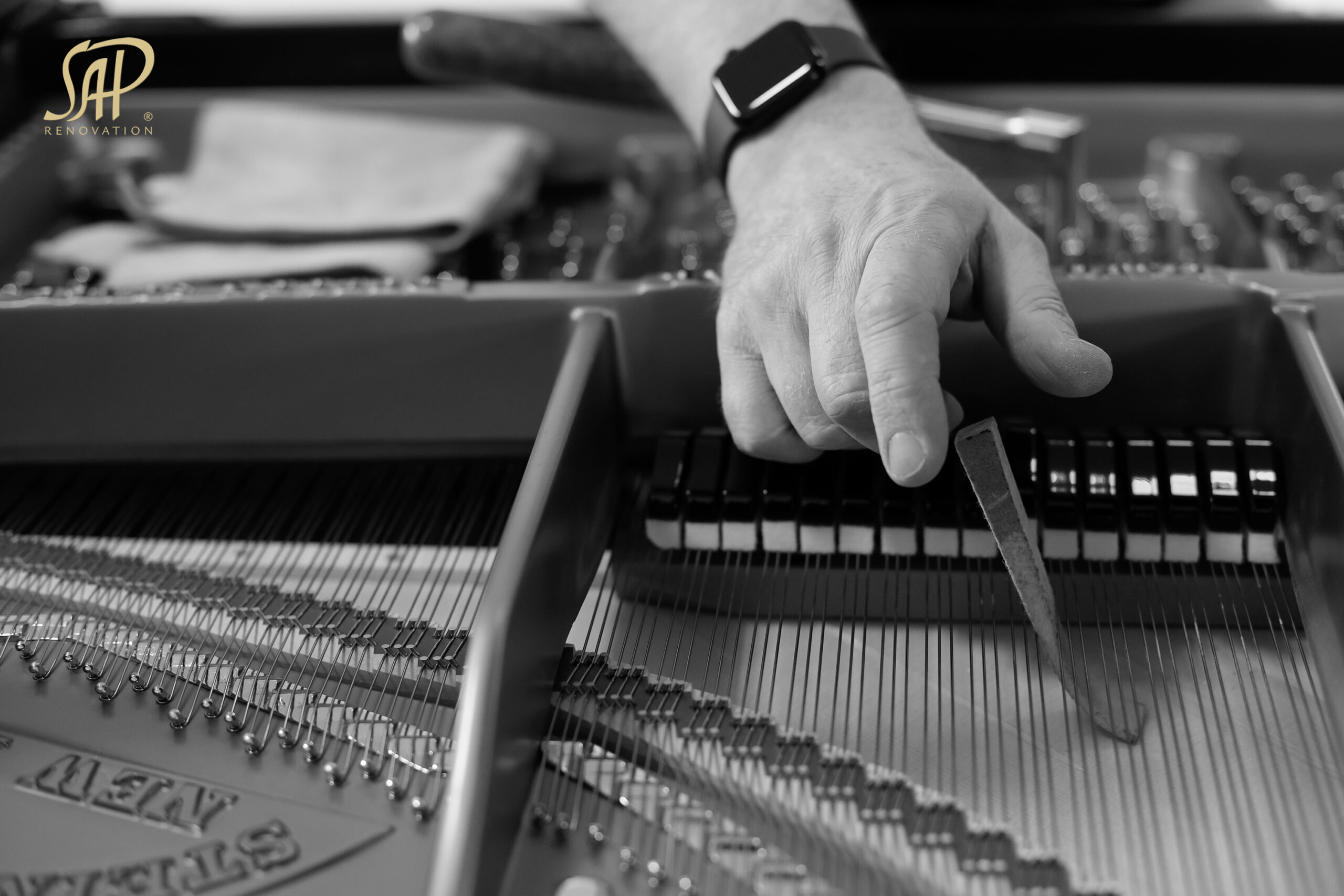
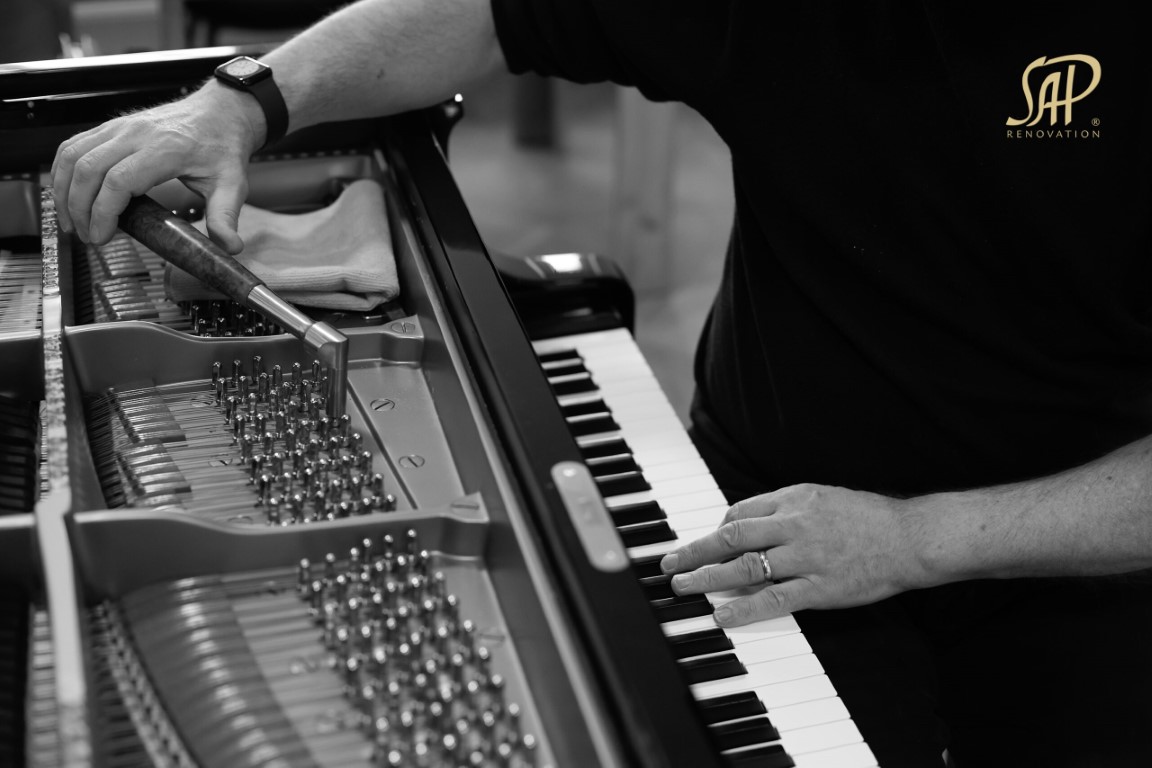
The restoration process always begins with careful disassembly and detailed inspection of every component. Technicians examine the piano action for cracks, looseness and degradation of damping materials. The elasticity of springs – responsible for the hammer’s rapid return – is also tested. This precise diagnosis allows the workshop to plan each restoration stage accurately.
Restoration of wooden components – key repair and reconstruction
Wood is a living material that dries and moves over time, directly affecting playing comfort. Keyboard restoration involves precise gluing of cracks and reconstruction of damaged lever structures. Professional restoration includes detailed woodworking procedures that restore the instrument’s original integrity. Key weighting using lead weights ensures consistent touch resistance across the entire keyboard.
Replacement of consumable materials – felt, leather and springs
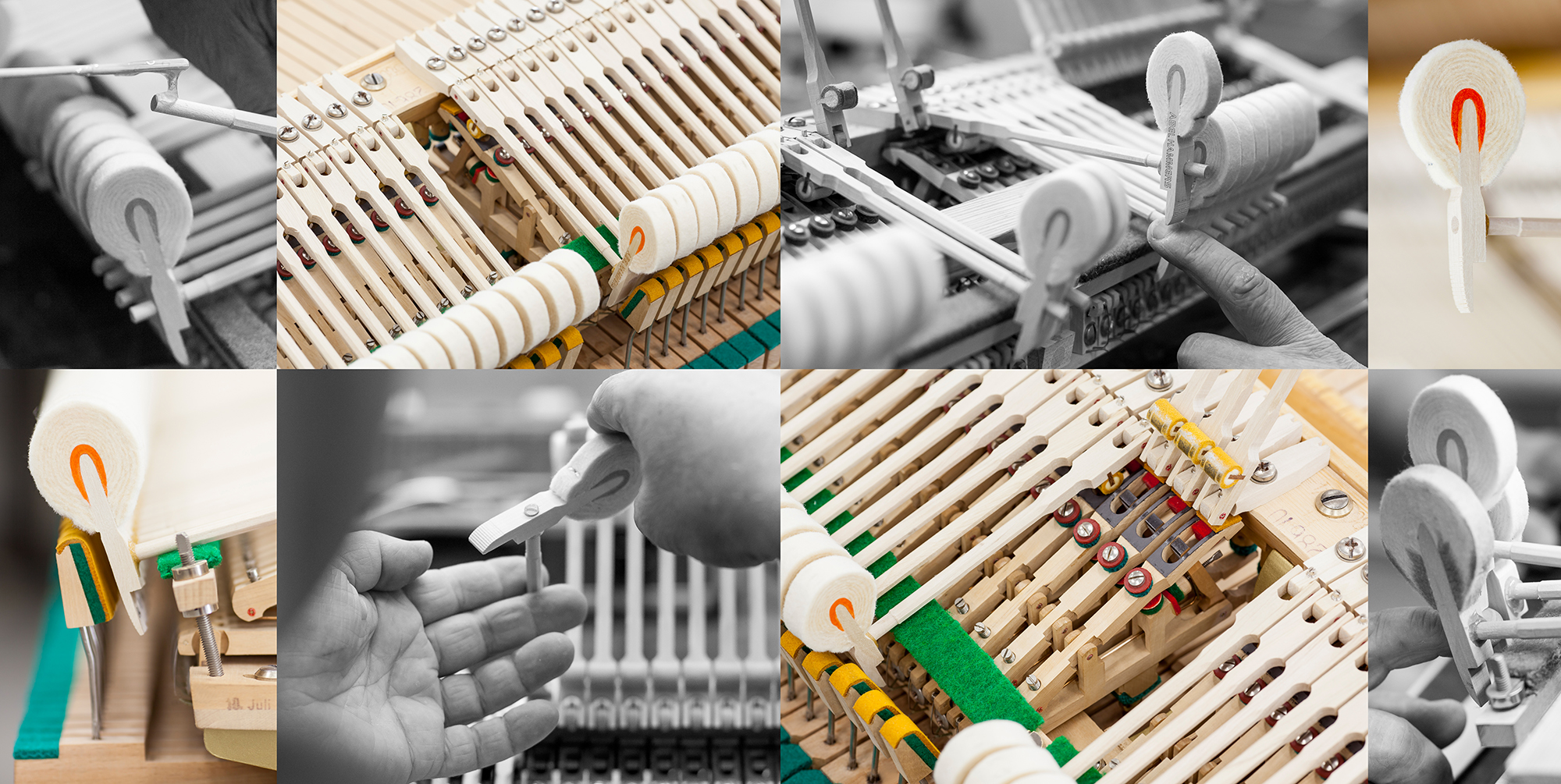
Soft components naturally wear during years of intensive playing. Piano action repair requires replacing damping materials with new components of factory-grade density. New leather on the hammer catchers ensures silent hammer stopping after string impact. As a result, the action operates smoothly, eliminating unwanted noise and resistance.
Action regulation – precise alignment and key response
Regulation involves setting the escapement point – a critical parameter determining pianissimo control. The regulation must be perfectly consistent across all 88 keys. Accurate alignment restores precision, control and expressive sensitivity
Restoring action geometry – preserving the original playing character
Action restoration recreates the factory geometry of the lever system, often altered over decades. Technicians regulate key dip depth with millimetre-level precision. Correct angles ensure optimal transfer of finger energy into hammer motion.
Damper restoration – control of sustain and tonal clarity
A properly functioning damper system guarantees clean articulation without unwanted resonance. Restoration includes installing new felt and adjusting damper timing so that dampers return simultaneously to stop string vibration immediately after key release.
Voicing – shaping the piano’s tonal character
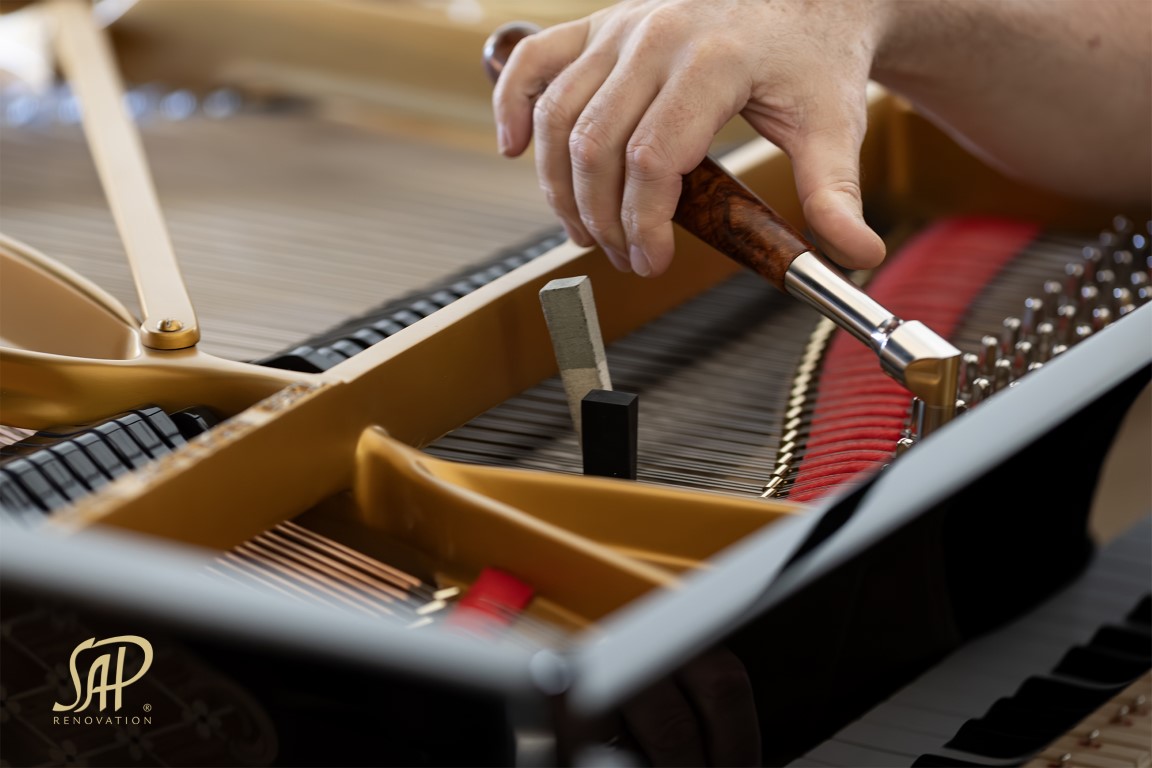
After mechanical regulation, artistic voicing begins. Hammer voicing involves needling compressed wool felt to modify tonal colour. By selectively loosening felt density, technicians achieve warm, singing tones.
Main voicing goals:
- Even tonal colour across the keyboard
- Wide dynamic range from pianissimo to fortissimo
- Enhancement of the instrument’s unique character
- Elimination of harsh, metallic overtones
The piano ready to play – precision and harmonic balance restored
Completion of the restoration marks the return of full technical and acoustic performance. Every component from key to hammer – now operates in perfect harmony. Professional action restoration allows the piano to inspire musical creativity once again.