When you stand before the choice of an instrument that is to become your companion for years, you enter a fascinating world where craftsmanship meets pure emotion. The choice between tradition and modernity is not only a matter of aesthetics, but above all a fundamental decision concerning the way in which you will communicate with music. Every piano carries within it a different story, written into the grained wood of the soundboard and into the precise details of the action. Understanding these subtleties will allow you to find the tone that resonates best with your sensitivity and artistic needs.
What historical instruments are and what contemporary ones are – definition and context
Historical instruments are objects built in accordance with the technology and sonic aesthetics of past centuries, whereas contemporary models are based on the constructional standardisation developed at the turn of the nineteenth and twentieth centuries. When you think of a historical piano, you should see before your eyes an evolution that lasted for hundreds of years, adapting itself to changing concert halls and the requirements of composers. These older constructions often have wooden frames or only partial metal reinforcements, which gives them a completely different physical character. Contemporary instruments, by contrast, are powerful sound machines, designed to withstand enormous string tensions and fill large auditoriums with sound. When analysing the topic of historical instruments vs contemporary piano, you will notice that the boundary between them often runs around the 1880s, when the design of the piano reached its current, mature form.
The sound of historical instruments – subtlety, colour and dynamics
The sound of historical instruments is characterised by extraordinary clarity, tonal differentiation between individual registers and a much faster decay of sound than in the case of modern constructions. You may get the impression that each register – from the deep bass to the pearly upper range – has its own unique character, which allows for the building of multi-layered textures. If you are interested in historical instruments, classical music takes on a completely new dimension in their case, becoming more intimate and more selective. While listening to such performances, you will notice that the sounds do not blend into one mass, but remain distinct even in very dense passages. Such a historical piano owes its tone to lighter hammers, often covered with leather instead of thick felt, which translates into a more direct contact with the listener’s ear.
Why historical instruments “play less and narrate more”
This expression refers to the fact that old instruments force the performer to focus on articulation and rhetoric instead of pure sound volume. When you play such a piano, you discover that you must handle your touch more precisely in order to bring out from it the entire palette of colours hidden in the structure of the wood. This instrument does not forgive lack of precision, but in return it offers the possibility of “speaking” with the musical phrase in an almost vocal way. It is often said that a nineteenth-century piano vs a contemporary one is a clash of two different philosophies: one relies on intimate dialogue, the other on a monumental declaration. By choosing an older model, you decide in favour of subtlety that, in appropriate acoustic conditions, can move more deeply than the loudest strike on modern keys.
The sound of contemporary instruments – power, stability and repeatability
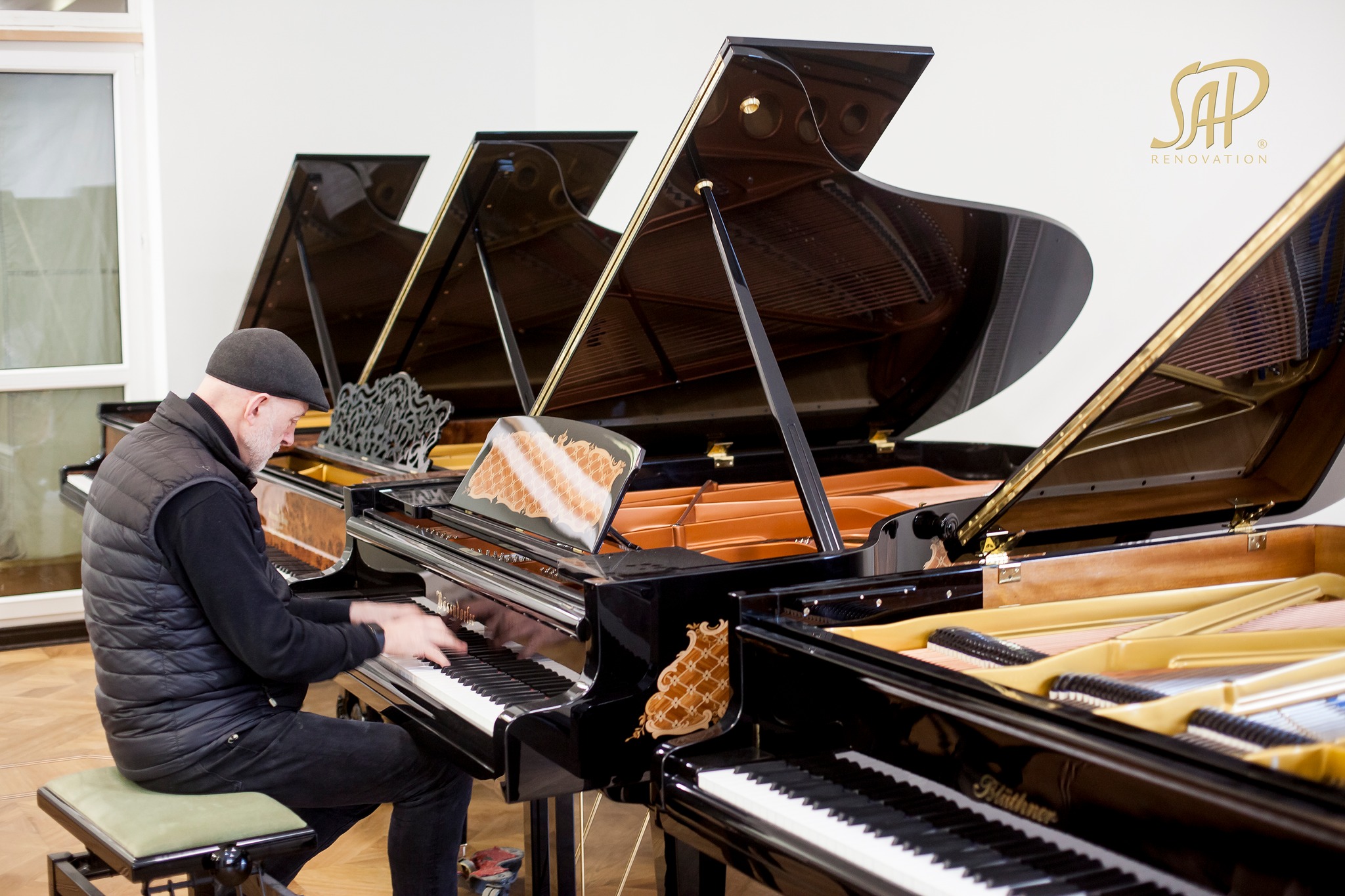
Contemporary instruments focus on generating a powerful, even tone across the entire scale and on ensuring enormous tuning and mechanical stability. Your touch on a modern keyboard meets with a predictable response, which allows you to build huge dynamic climaxes without fear of overdriving the sound. These constructions are designed with durability in mind, using full cast-iron frames capable of withstanding enormous string tensions. If you are looking for an instrument that will provide you with masterful C. Bechstein grand piano tone, you will notice that modern models of this brand combine traditional nobility with incredible sound projection. Thanks to this, you can play accompanied by a large symphony orchestra and still remain perfectly audible in the last row of the concert hall.
The action of old pianos – Viennese precision and limitations
Old action, such as the famous Viennese action, offered the performer extraordinary lightness and sensitivity of touch, yet they had significant limitations in terms of force and speed of repetition. When playing such an instrument, you will feel that the keys are shallower, which favours fast, pearly playing, but requires from you a completely different finger technique. When analysing the action of an old piano vs a contemporary one, you will quickly understand that older systems did not have a double-escapement lever, which made very rapid repetition of the same note more difficult. Despite this, the Viennese piano vs the contemporary one still finds its enthusiasts, because its structural simplicity allows for an extremely direct control over the moment when the hammer strikes the string. Very often it is precisely this closeness to the sound that makes interpretations of works by Mozart or Schubert sound so authentic on such instruments.
Contemporary action – repeatability, repetition and control
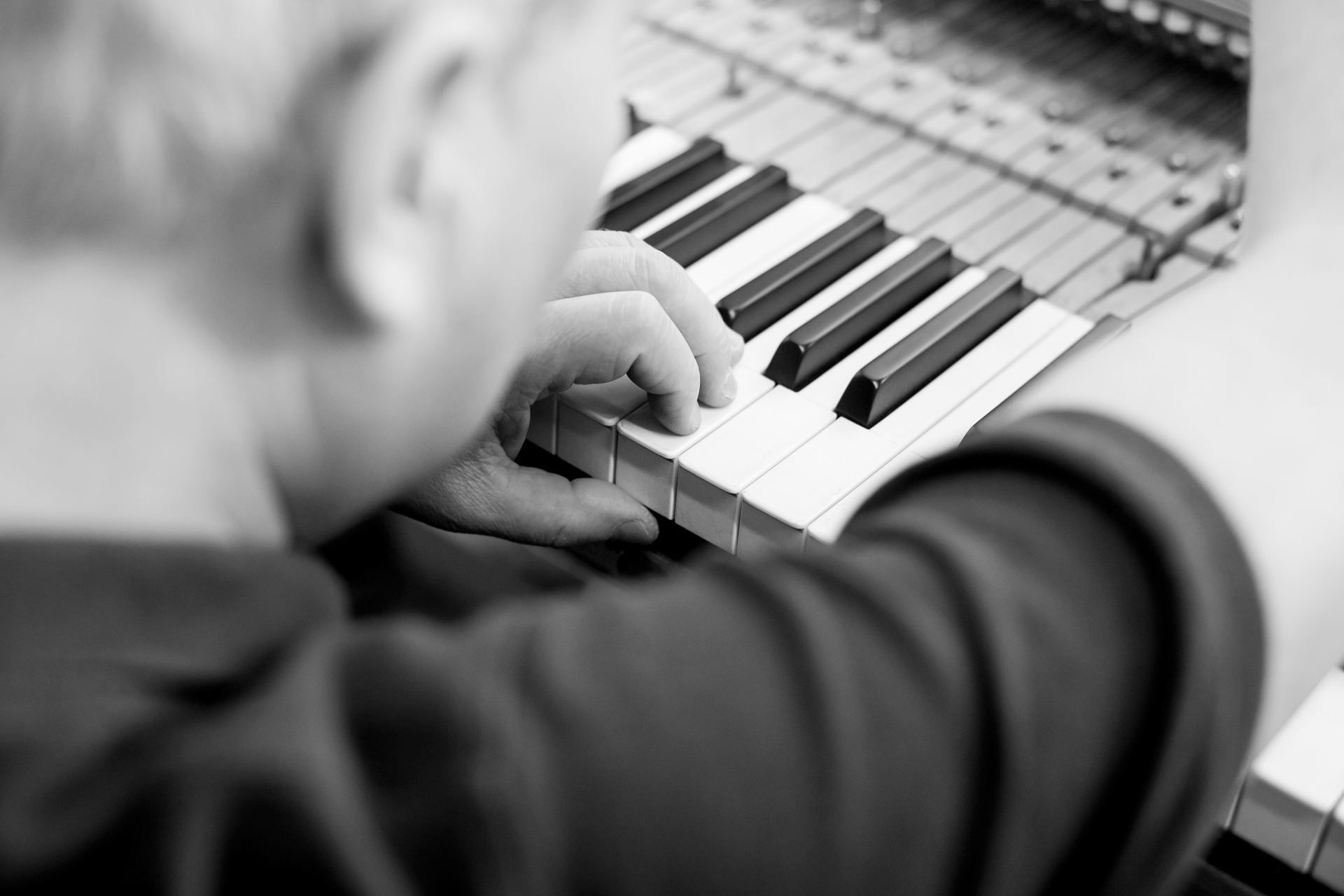
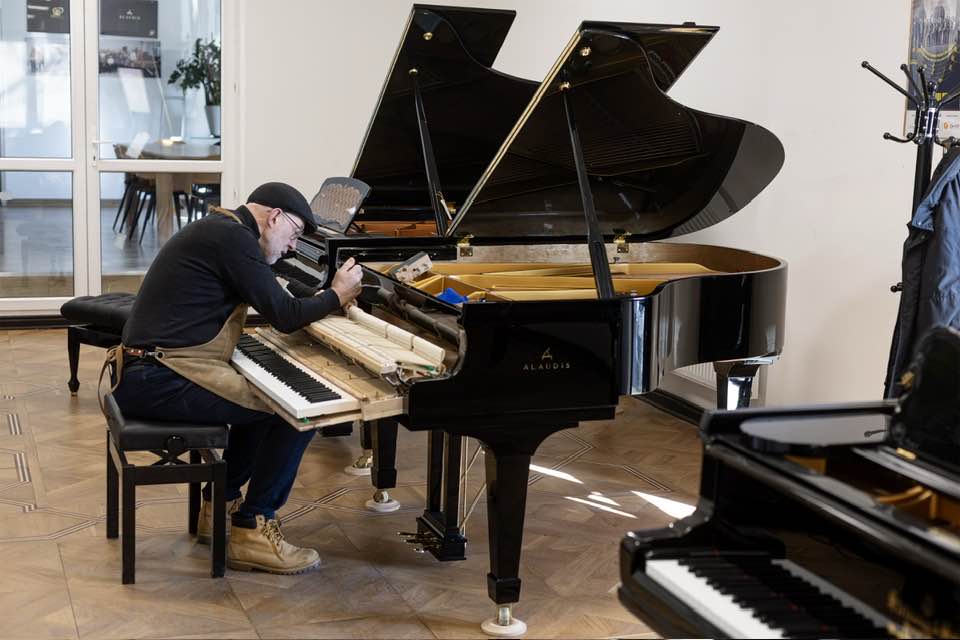
The contemporary action is based on the principle of double repetition, which allows the key to be struck again instantly without the need for it to return fully to its initial position. This innovation revolutionised piano technique, making it possible to perform the most formidable works by Liszt or Rachmaninoff with complete freedom. If you are interested in the development of piano action, you must know that today’s systems are the result of decades of refinements intended to eliminate all resistance and friction. For such a actiom to work perfectly, professional restoration of the grand piano keyboard is sometimes necessary, restoring to it factory precision and lightness of action. Thanks to this, you can be sure that the instrument will not limit your technical possibilities, regardless of the degree of difficulty of the repertoire.
Here are the most important technical aspects that distinguish both types of instruments:
- String tension: In old instruments it is much lower, which preserves the wooden structure, but gives a quieter sound.
- String arrangement: Older pianos often have a parallel arrangement, whereas contemporary ones have a cross-stringing layout, which lengthens the bass strings.
- Hammer materials: The transition from leather and thin felt to thick, hard layers of compressed wool.
- Case and frame: Evolution from light wooden constructions to massive cases with a cast-iron skeleton.
- Pedalling: Modern instruments offer greater precision in operating the dampers and the sostenuto function.
Soundboard and construction – differences that can be heard
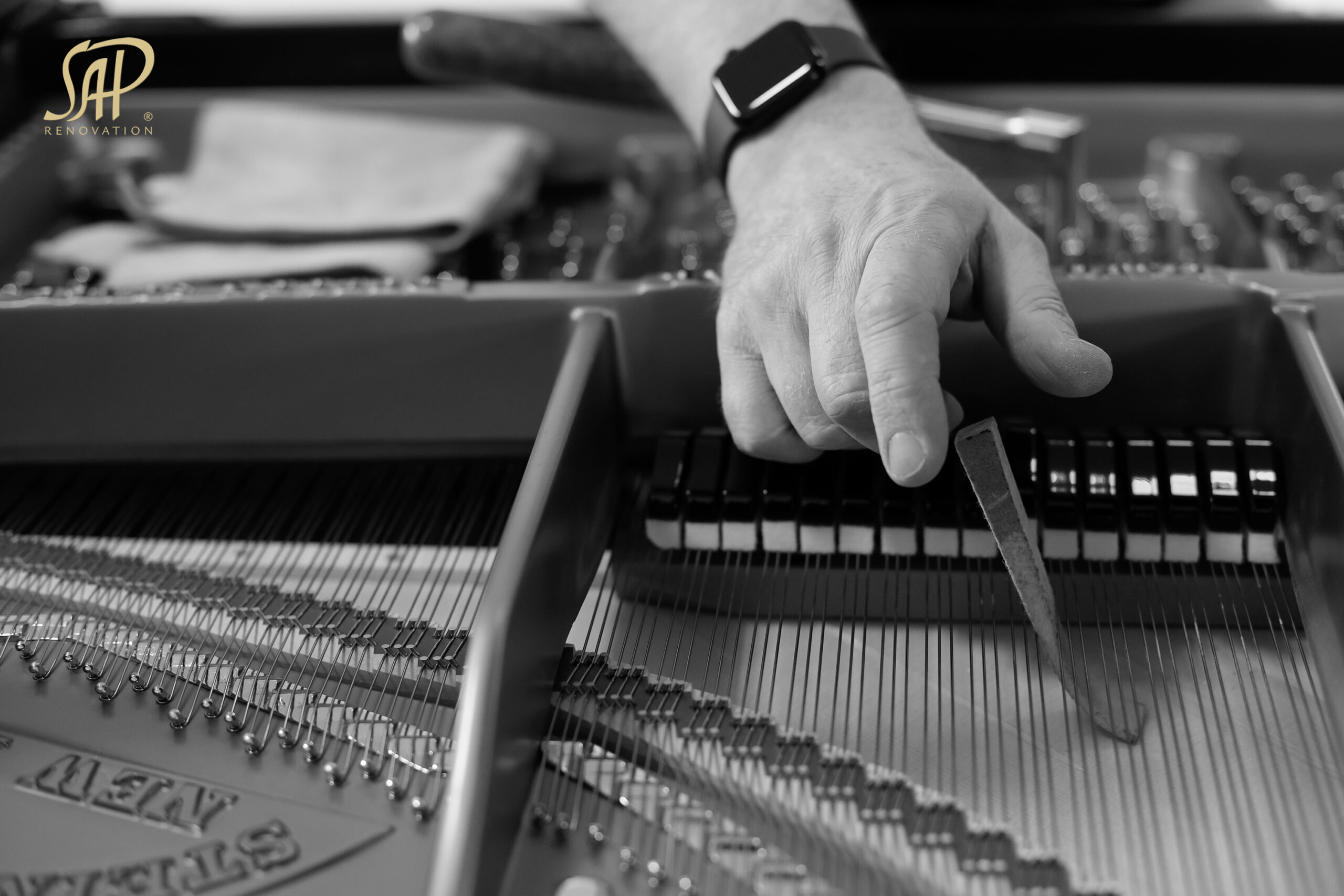
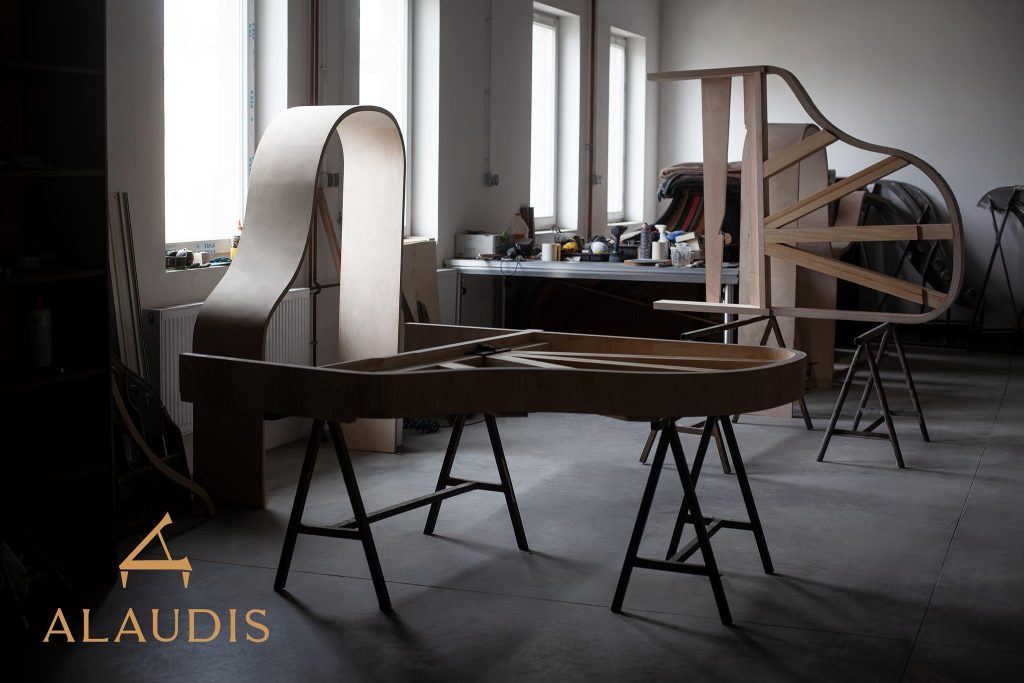
The main structural differences lie in the use of full cast-iron frames and heavier soundboards in modern units, in contrast to more delicate, wooden constructions in older examples. The soundboard of your old piano may be thinner and more susceptible to vibration at low sound intensity, which creates that characteristic “wooden” colour. It is worth paying attention to the Alaudis brand, which represents a high standard of workmanship, showing how important the quality of the structural materials used is for the final effect. Modern technology makes it possible to calculate tensions precisely, which means that the contemporary piano is almost indestructible in comparison with its predecessors. Yet it is precisely this “imperfection” and lightness of old soundboards that gives them that unique, singing soul which is hard to find in serially produced models.
Do old instruments sound better? Myth or reality
Whether older instruments sound better is a subjective matter and depends to a large extent on what repertoire you intend to perform on them and what your aesthetic expectations are. If you are looking for an answer to the question of whether old pianos sound better, you must take into account their state of preservation and whether they have undergone reliable workshop care. An old instrument that has not been serviced will sound dull and out of tune, losing its original qualities. On the other hand, a well-maintained period example can enchant with a depth that newer products, sometimes too sterile in sound, lack. The differences between an old and a new upright piano are also significant, where in the case of smaller instruments age often works to their disadvantage due to material fatigue, unless we are talking about the premium class.
Restoration of historical instruments – restoring character or compromise?
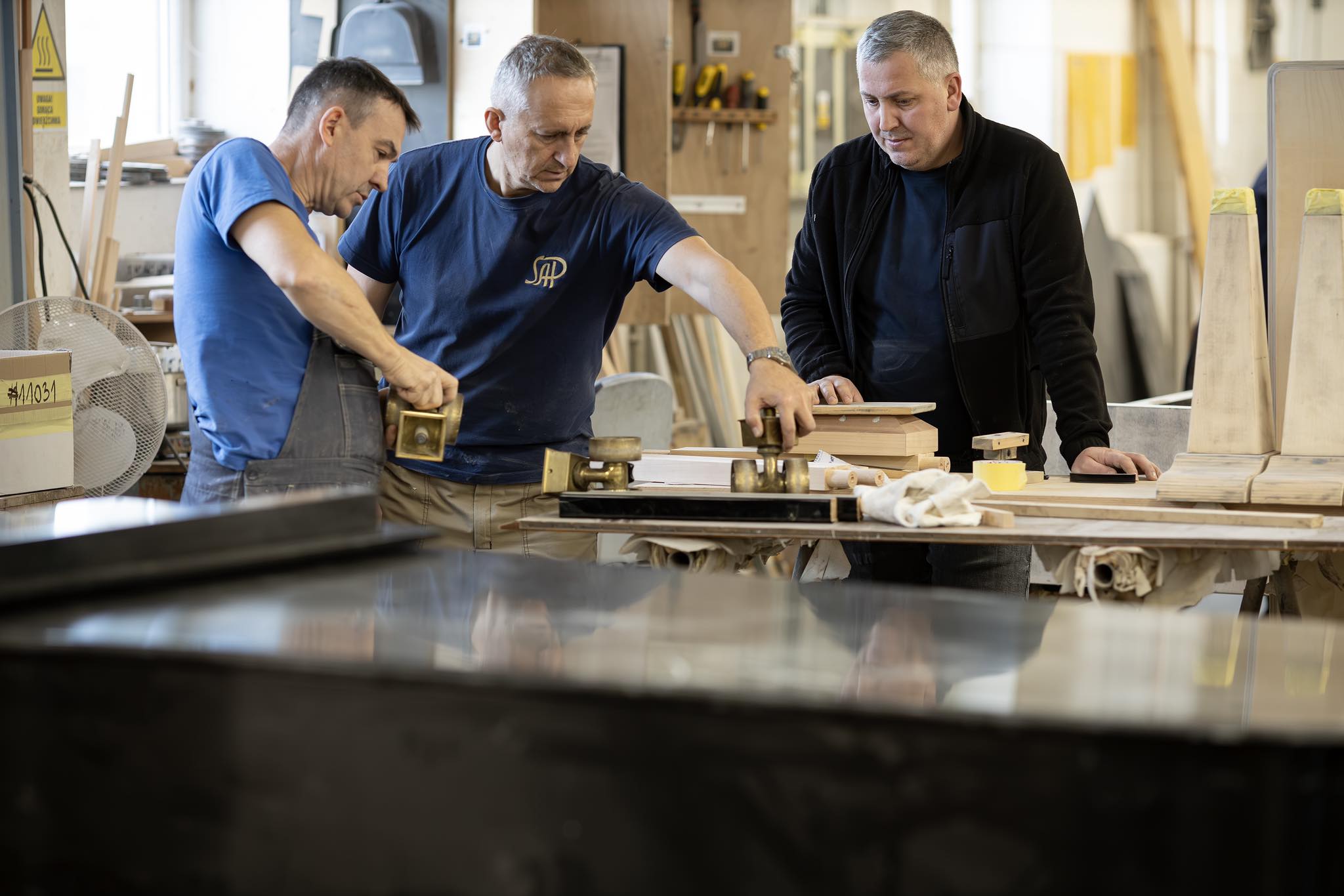
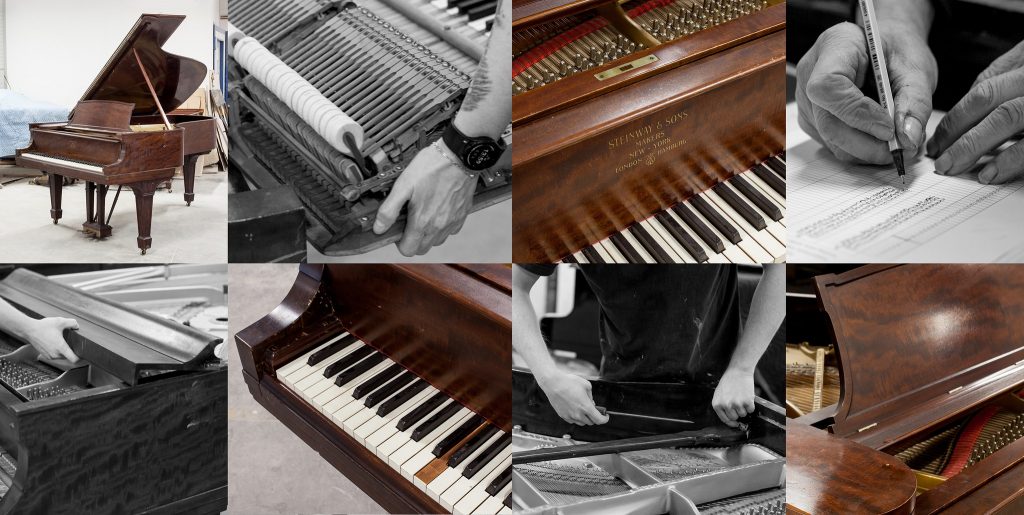
Professional restoration of historical instruments aims to restore their original tonal properties while ensuring structural stability for the coming decades. It is not merely a repair, but an artistic process that requires deep knowledge of old construction techniques. By deciding on the restoration of antique pianos, you give a second life to a work of art that otherwise would have faded into oblivion. It is important that you remember that the restoration of antique pianos should be carried out using materials close to the originals, so as not to kill the unique spirit of the era. Only then can you enjoy a sound that truly reflects the intentions of composers from two hundred years ago.
Throughout the entire restoration process, an enormous role is played not only by the interior, but also by the external appearance of the instrument. If your piano is to decorate a living room, professional restoration of lacquer and wood will make it regain its former splendour and become the central point of the room. It is worth checking what a comprehensive restoration offer includes in order to understand how many stages make up the final success. Refreshing the polish, repairing cracks in the case or restoring shine to brass details are measures that raise the aesthetic and historical value of the object.
For whom is a historical instrument, and for whom a contemporary one?
The choice between a historical and a contemporary instrument depends above all on your artistic goals and the space in which you intend to make music. If you are passionate about historically informed performance and want to explore the secrets of the music of the Baroque, Classicism or Romanticism in their original sound, an older piano will be a perfect choice. If, on the other hand, you need a tool for everyday practice, learning technique or playing popular and modern music, a contemporary model may prove to be the better choice. You must consider what differences an old and a new upright piano will introduce into your daily practice – whether you prefer the struggle with the resistant matter of history, or the smoothness of modern engineering.
Is it worth investing in a historical instrument?
Buying an instrument with a soul is a decision that brings not only musical, but also emotional and cultural benefits. Owning an object with a history makes you a custodian of tradition, and every sound you produce connects you with generations of former masters. Although maintaining such a piano may require more attention and more frequent visits from the tuner, the joy of contact with its unique tone is often beyond price. It is worth looking for examples that have documented provenance or have been restored by renowned workshops, which guarantees their efficiency. Choosing such an instrument is your personal declaration of love for art and care for details which, in the modern mechanised world, are sometimes pushed into the background.