When choosing a grand piano, the first specification that usually catches the eye is its length in centimetres. In piano making, however, size is about much more than fitting an instrument into the available floor space. Each change in length brings a different stringing geometry, a different balance of the action and a different response from the soundboard to your touch. Understanding these subtleties allows you to consider the acoustics from the perspective of both an engineer and a pianist seeking the ideal tone. The following analysis explores the physical principles and craftsmanship that give each type its identity.
Parlour, semi-concert and concert grand — what do these terms actually mean?
These terms define distinct categories of construction, differing in case length, soundboard profile and acoustic purpose. A traditional parlour grand generally measures around 170–190 cm and is a familiar choice for homes and smaller teaching rooms. A semi-concert grand is approximately 200–225 cm long, with tonal qualities suited to small concert halls and recording. At the top of the range stands the powerful concert grand, whose case exceeds 270 cm, enabling it to produce a sound that can carry over a full symphony orchestra. As you explore the different types of grand piano, you will quickly see that these names primarily reflect dynamic range and the proportions of the components.
Size is the starting point, not the whole answer — how do string scaling, projection and dynamic reserves change?
As an instrument grows larger, it gains substantially longer bass strings, a larger soundboard area and different leverage at the keyboard. A longer string can use thinner copper winding while maintaining the required pitch, greatly reducing inharmonicity and providing a clear, deep bass foundation. A larger soundboard moves more air, giving the sound natural carrying power without forceful playing. At the same time, longer key levers offer much better control over the point of hammer escapement, making the action’s response more predictable. This dynamic reserve allows powerful chords to open up a rich spectrum of overtones rather than overwhelm the instrument.
The parlour grand — when is a compact design a deliberate choice rather than a compromise?
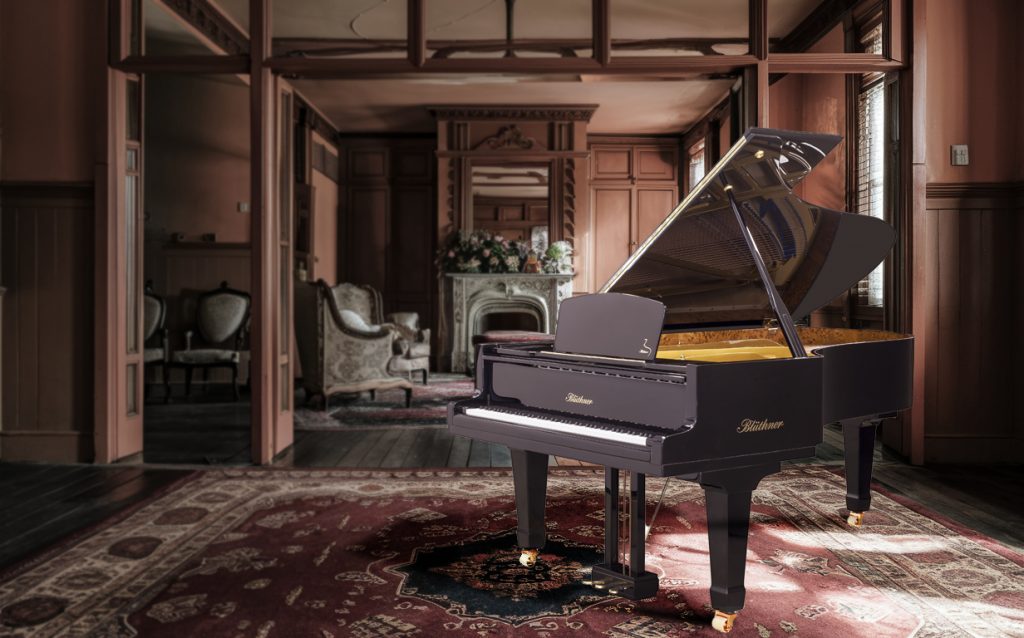
A compact parlour grand is a deliberate choice wherever intimacy of expression and precise tonal control in a medium-sized room are the priorities. In a domestic setting, it avoids excessive resonance and helps prevent rapid listening fatigue during daily practice. Its smaller string scale gives a gentle response, allowing fine nuances to be shaped in Baroque and Classical repertoire. Many people worry about the limitations of a small grand, yet a meticulously crafted instrument can offer remarkable clarity, as this accomplished example of grand piano restoration demonstrates. A discerning pianist chooses this class for its even tone across the range, without having to tame an overpowering wave of sound.
The semi-concert grand — why is this category so versatile?
The semi-concert grand is regarded as the most versatile category because it combines the fullness of a stage instrument with proportions that suit a variety of spaces. This format offers impressively deep bass and a singing treble that remains clear even in dense polyphonic textures. It is a popular studio choice, where microphones expose every distortion caused by excessively short strings. Its key levers are already long enough to give a playing feel very close to that of a full concert instrument. It is therefore no surprise that teachers and professional chamber musicians regard it as an ideal balance for their everyday artistic work.
The strengths of the semi-concert design lie in its balanced technical specifications:
- Well-judged proportions between treble and bass string lengths ensure an even timbre in every register.
- Longer key levers provide a stable fulcrum, making complex passages easier to play.
- The soundboard has the right degree of flexibility to respond quickly to subtle changes in articulation.
- The instrument is equally at home in solo recordings and chamber music with violin or cello.
- Excellent tuning stability makes it easier to prepare the instrument regularly for demanding recording sessions.
The concert grand — what does an instrument for a major stage demand of its construction?
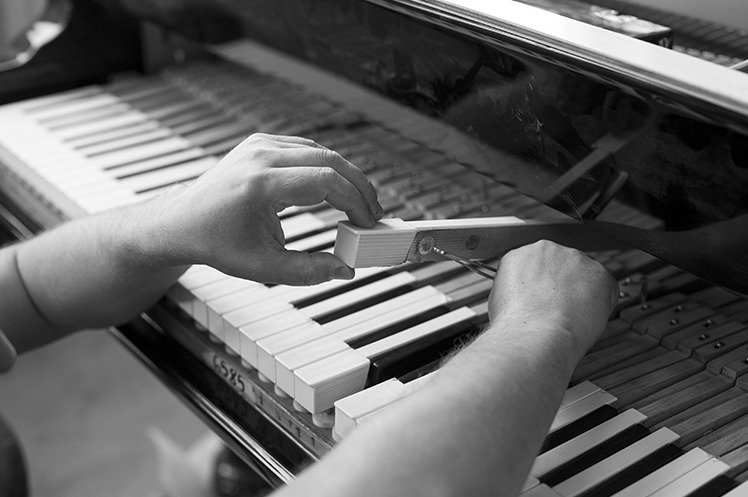
An instrument for a major stage requires an exceptionally rigid rim, a cast-iron frame capable of withstanding many tonnes of tension, and faultless hammer voicing. Every concert-hall grand must withstand the substantial mechanical demands of long stage rehearsals. Its vast soundboard requires selected spruce with regular grain so that vibrations can travel freely along the fibres. Makers use very hard woods for the bridges and pinblock, ensuring precise transfer of vibrations from the strings to the soundboard. If you are interested in how stage and domestic instruments differ in use, read the comparison A grand piano for the home versus a music school, which discusses component durability in detail.
Projection, pianissimo control, repetition and stability under intensive use
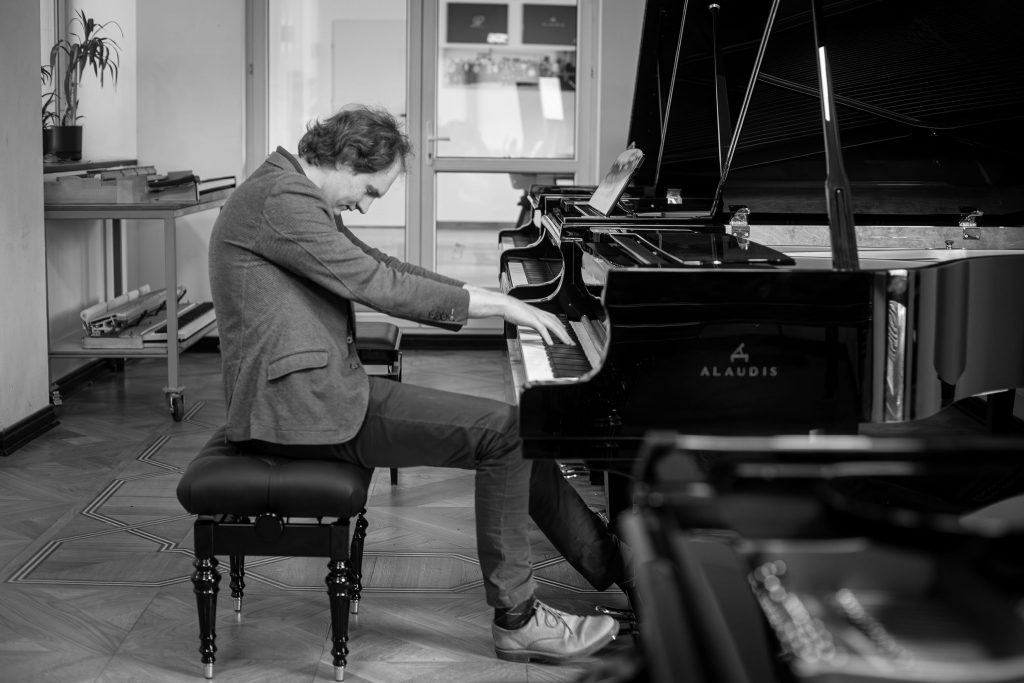
The extreme dynamic demands of the stage require an action with immediate repetition, allowing a note to be repeated reliably even when the key is only partly released. An instrument’s true quality is revealed not by the power of its fortissimo, but by its ability to sustain a carrying, velvety pianissimo that reaches the back row of the balcony. Long strings generate a rich harmonic spectrum, so even a gentle attack delivers a full tonal palette. Reliability under challenging stage lighting conditions depends on the precision with which the centre pins, flanges and felts are fitted throughout the action. Only uncompromising assembly quality allows a virtuoso to forget the instrument’s physical limitations when interpreting the most demanding Romantic concertos.
The room matters — how do volume and acoustics influence the choice of instrument?
A room’s volume determines how much acoustic energy it can accommodate, and whether you hear a clear tone or an uncomfortably harsh wash of sound. Placing an overly powerful model in a small room results in boomy bass and standing waves that mask subtleties of articulation. Conversely, an instrument that is too modest for a spacious hall will sound dry and dull, losing its natural resonance. When planning the interior, consider the finishing materials, carpets, glazing and ceiling height. The article on grand pianos in public spaces explains in detail how the surroundings affect the components and is worth reading before you decide where to place your instrument.
Home, studio, school, hotel or concert hall — how do you match the instrument to its use?
The right choice depends on the character of the venue, the level of activity and the expectations of those listening to live music. A compact parlour grand is an excellent fit for a private apartment, enhancing the interior and allowing enjoyable music-making without disturbing the household. In a professional recording studio or a medium-sized music school, the versatile semi-concert design remains the optimal choice, offering flexibility across recording applications. Hotels and luxury residences favour instruments that combine mechanical reliability with an impressive case finish. A prestigious concert hall, meanwhile, requires a full concert grand capable of meeting the expectations of world-class soloists.
Alaudis 178, 214 and 275: three sizes for different uses
The Alaudis 178, 214 and 275 models show how thoughtful engineering responds to different performing needs and spaces. The Alaudis 178 represents the premium parlour category, combining surprising tonal depth with a compact form ideal for private music rooms. The 214 cm version exemplifies semi-concert versatility, offering the action precision needed in chamber halls and studios. The flagship 275 cm Alaudis is an uncompromising stage instrument, created to command the great concert platforms. Comparing these grand piano sizes makes it easy to appreciate how different dimensions translate into distinctive experiences of touch and sound.
Choosing between a parlour, semi-concert and concert grand means making a decision informed by acoustics, action geometry and your own artistic ambitions. Each of these three designs was created for a different acoustic environment, offering a distinctive relationship between power and subtlety. Length is only an outward indication of the instrument’s capabilities; beneath it lies a precisely designed system of strings and levers. By matching the specifications to the volume of your interior, you gain an instrument that inspires you to keep developing your piano technique. An informed choice makes every moment at the keyboard a direct encounter with the living art of sound.