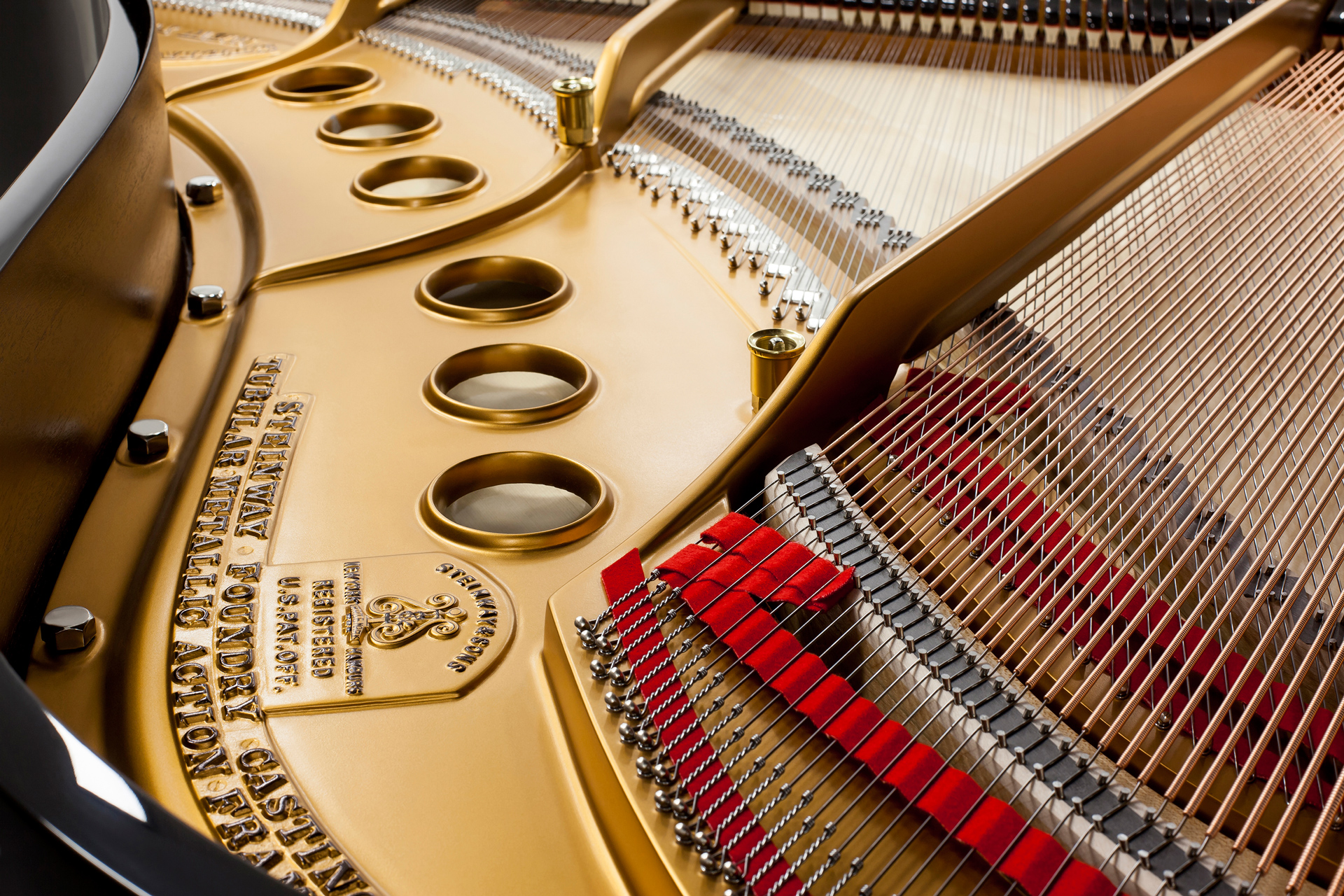

Playing an instrument is an intimate dialogue between the artist’s sensitivity and the soul hidden in wood and metal. Over the years, however, this conversation can be disrupted by mechanical imperfections that appear gradually and often go unnoticed. Uneven touch, unwanted noises, or aesthetic defects diminish the pure joy of making music and affect a pianist’s technique. We often do not realize how much the technical condition influences our interpretation until we touch a perfectly regulated keyboard. It is worth knowing when our instrument is calling for help and when professional intervention in a master craftsman’s workshop becomes necessary.
Piano keyboard restoration – when does key wear begin to affect playing comfort?
Every pianist, regardless of skill level, eventually senses subtle changes in the instrument’s response to finger pressure. At first, it may only feel as though producing the desired sound requires slightly more effort than usual. Professional piano keyboard restoration becomes worth considering when we notice uneven key height at rest. Another warning sign is keys sinking too deeply or returning slowly to their original position after being pressed.
This happens because felts and cloths, which act as cushioning elements, naturally compress or wear out during thousands of hours of practice. The loss of precision in the “feel” of the instrument makes playing pianissimo more challenging, and fast passages lose clarity. If these early symptoms are ignored, degradation will progress, leading to faster wear of the cooperating hammer mechanism components. Restoring original parameters requires precise measurements and replacement of worn materials with high-quality components. Only an experienced restorer can assess whether minor adjustments will suffice or whether a comprehensive overhaul of the entire keyboard assembly is needed.
Sticking keys in upright and grand pianos – signs of worn bushings and lateral play
One of the most frustrating problems musicians face is the lack of smooth movement in the key lever. Sticking piano keys can effectively discourage playing, and their cause is often changes in humidity and natural material wear. The wood from which these elements are made reacts to atmospheric conditions, swelling or shrinking depending on the season. The main culprit is usually worn bushings in the guide holes, which should provide stability but instead become a source of friction.
When the bushings (garnierings) wear out, lateral play appears, causing keys to rub against each other during performance. This can be heard as unpleasant knocking, and under the fingers one feels instability and wobbling. In extreme cases, moisture may cause the wood to swell so much that a key becomes permanently stuck in the lowered position. Repair then requires precise recalibration of the holes and insertion of new, high-quality cloth of appropriate density. It is also worth servicing the mechanism at the same time, as resistance in the keyboard is often linked to problems in the upper part of the instrument.

KlPiano keys under a master’s eye – cracks, detached keytops, and loss of aesthetics
The visual aspect of an instrument is inseparably connected with its functionality and tactile comfort. Piano keys are covered with keytops that, over time, may yellow, crack, or completely detach from the wooden base. In antique instruments, these are often made of ivory—a noble but highly temperature-sensitive material. Cracks in the surface not only look unsightly but also collect dirt and may have sharp edges that can injure fingertips.
Detached keytops usually result from the aging of natural adhesives, which lose their binding properties after decades. In modern instruments, where plastics are used, deep scratches and surface dulling caused by aggressive cleaning are common. Restoration in this area involves not only repairing damage but also restoring snow-white color and perfect smoothness. Caring for the aesthetics of the keyboard is also a sign of respect for the instrument’s history and its future users.
Cleaning and regeneration of keytops – ivory, plastic, and wood in the restoration process
The process of restoring the shine of keytops depends on the material they are made from. In the case of ivory, it is a multi-stage procedure requiring chemical whitening and precise sanding of each plate individually. Care must be taken not to erase the unique grain pattern that proves the authenticity and nobility of the material. Keytops made of plastics such as celluloid or galalith are polished on special wheels, which removes fine scratches and restores gloss.
Black keys, traditionally made of ebony, require a different approach involving staining, oiling, or varnishing the wood. In less expensive instruments, where black keys are made of stained pearwood, reapplication of a protective coating is often necessary. The restoration process includes the following workshop stages:
• disassembly and thorough cleaning of all surfaces from long-accumulated dust and deposits,
• filling gaps in ivory or replacing damaged plastic keytops,
• chemical whitening using UV lamps to remove age-related yellowing,
• multi-stage mechanical polishing to achieve a final mirror-like finish,
• impregnation of the wooden black keys to protect them from sweat and moisture.
Each of these steps must be carried out with the utmost care to preserve the instrument’s historical character. A comprehensive restoration plan should be consulted with specialists who can select appropriate methods for the piano’s age.
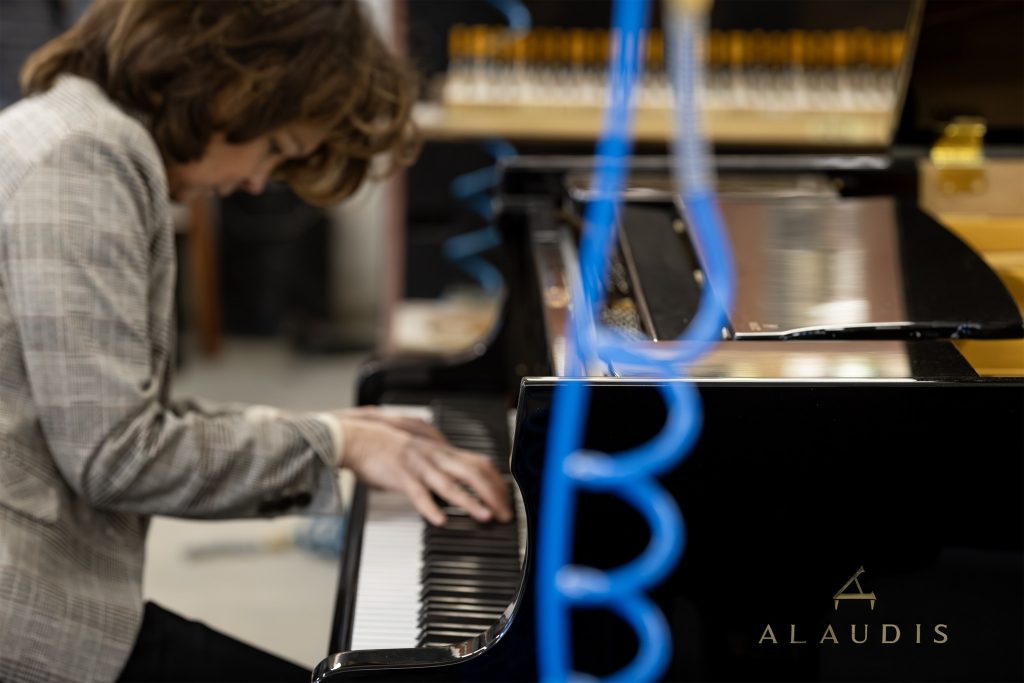
Regulation of key leveling and precision of guidance – the foundation of smooth and quiet keyboard operation
For a keyboard to function silently and evenly, each key must be perfectly leveled relative to its neighbors. This process, professionally known as key leveling, is performed using paper shims of varying thickness placed on guide pins. Even a fraction of a millimeter difference in height can be noticeable to a pianist and affect the certainty of the attack. Equally important is setting the key dip—the distance a key travels from rest to its lowest point.
During restoration, felt washers beneath the keys are also replaced, as they harden over time and stop damping the sound of keys striking the keybed. Guide pins—both balance pins and front pins—must be perfectly smooth and free of corrosion so as not to hinder movement. They often require polishing or replacement, which significantly improves the overall keyboard action. Proper regulation makes the instrument an extension of the artist’s hands, responding to the slightest nuances of articulation.
Assembly, mechanism adjustment, and stabilization after piano keyboard restoration
After restoration work on individual components is completed, the keyboard is reassembled and stabilized within the instrument. This is the stage where comprehensive piano restoration enters the phase of precise engineering and static and dynamic balancing. Each key must have the appropriate weight so that the resistance felt by the fingers aligns with the standard of a given brand and the pianist’s expectations. For this purpose, holes are drilled in the wooden key bodies and filled with lead weights to precisely calibrate the touch.
This process, known as weighting, is essential for achieving an even keyboard where each note—from bass to treble—requires an appropriate amount of force. It is also necessary to ensure the perfect adjustment of capstans or abstract levers that transfer key motion directly to the hammer mechanism. Too much slack will cause a delay in sound, while overly tight fitting may lead to mechanism blockage. Only after many hours of testing and corrections is the instrument ready to be returned to the hands of a demanding virtuoso.
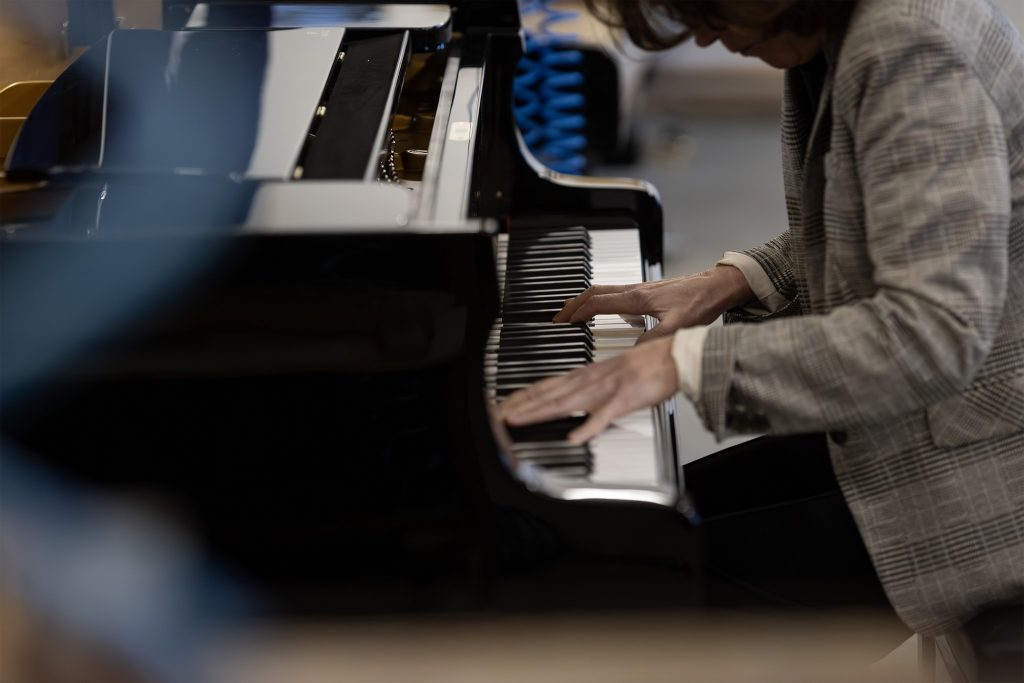
From keyboard to full instrument functionality – when keyboard restoration requires broader intervention
Restoring the keyboard alone is often just the tip of the iceberg of technical issues affecting an old instrument. The keyboard is interconnected with the mechanism, and their cooperation must be perfect; repairing one element often necessitates intervention in the other. If the key wood is heavily deformed or damp, it may indicate poor storage conditions that have also affected the soundboard. In such cases, partial repairs may prove unsatisfactory and short-lived.
It is worth looking at the instrument holistically, checking the condition of the cast-iron frame and tuning stability, which are essential for the viability of the entire investment. Sometimes a thorough restoration of the frame and replacement of strings is necessary for the refurbished keyboard to fully realize its potential. Decisions about the scope of work should always be preceded by a thorough assessment that estimates the instrument’s tonal potential and historical value. Only a comprehensive approach guarantees that the piano will regain its soul and serve future generations of musicians.
A well-maintained keyboard is not only an aesthetic hallmark of an instrument but above all a guarantee of technical freedom for every pianist. Investing in professional restoration pays off in unmatched playing comfort and the beauty of the resulting sound. Whether we own a historic grand piano or a sentimental family upright, restoring the functionality of the keys is an act that brings music back to life.