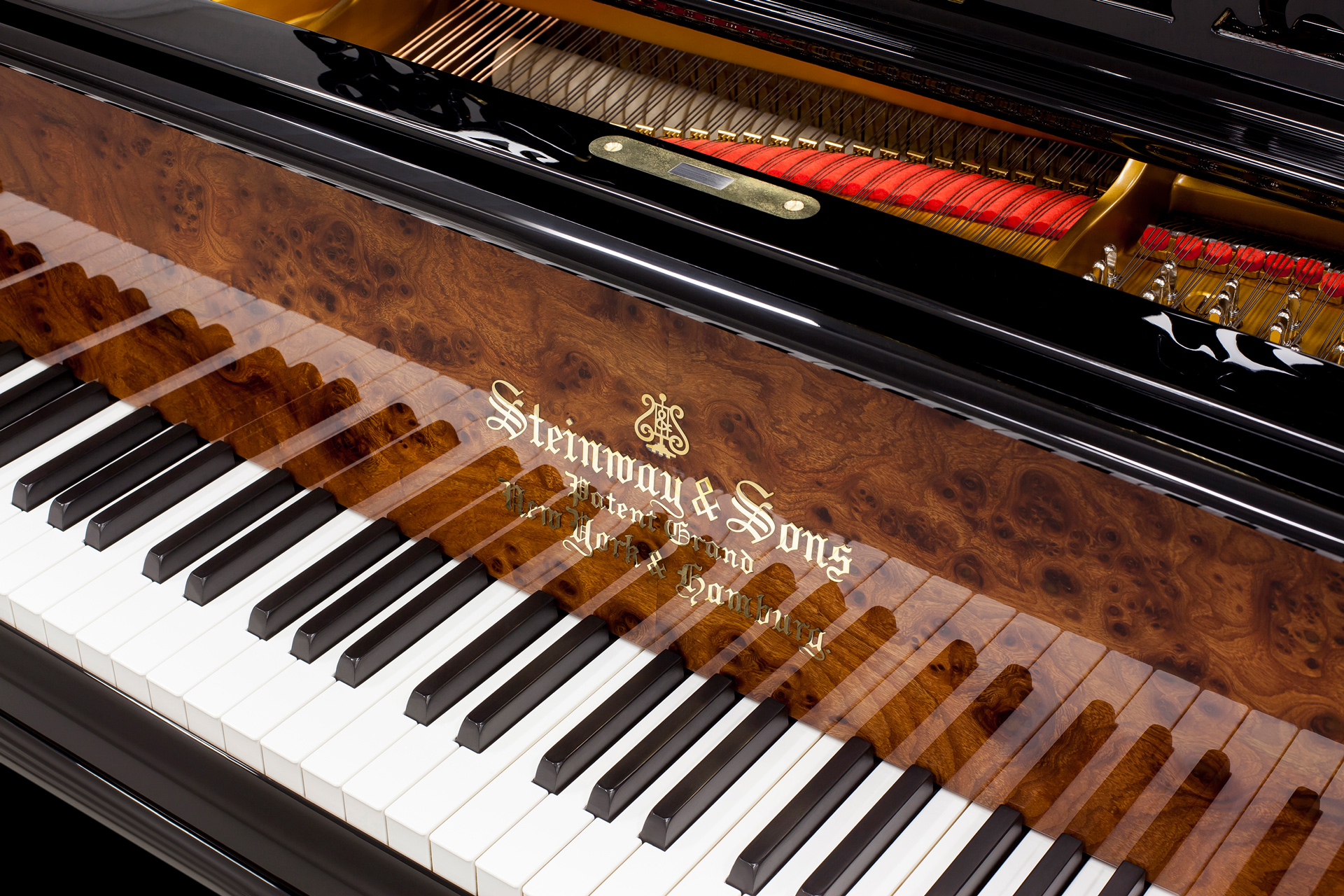
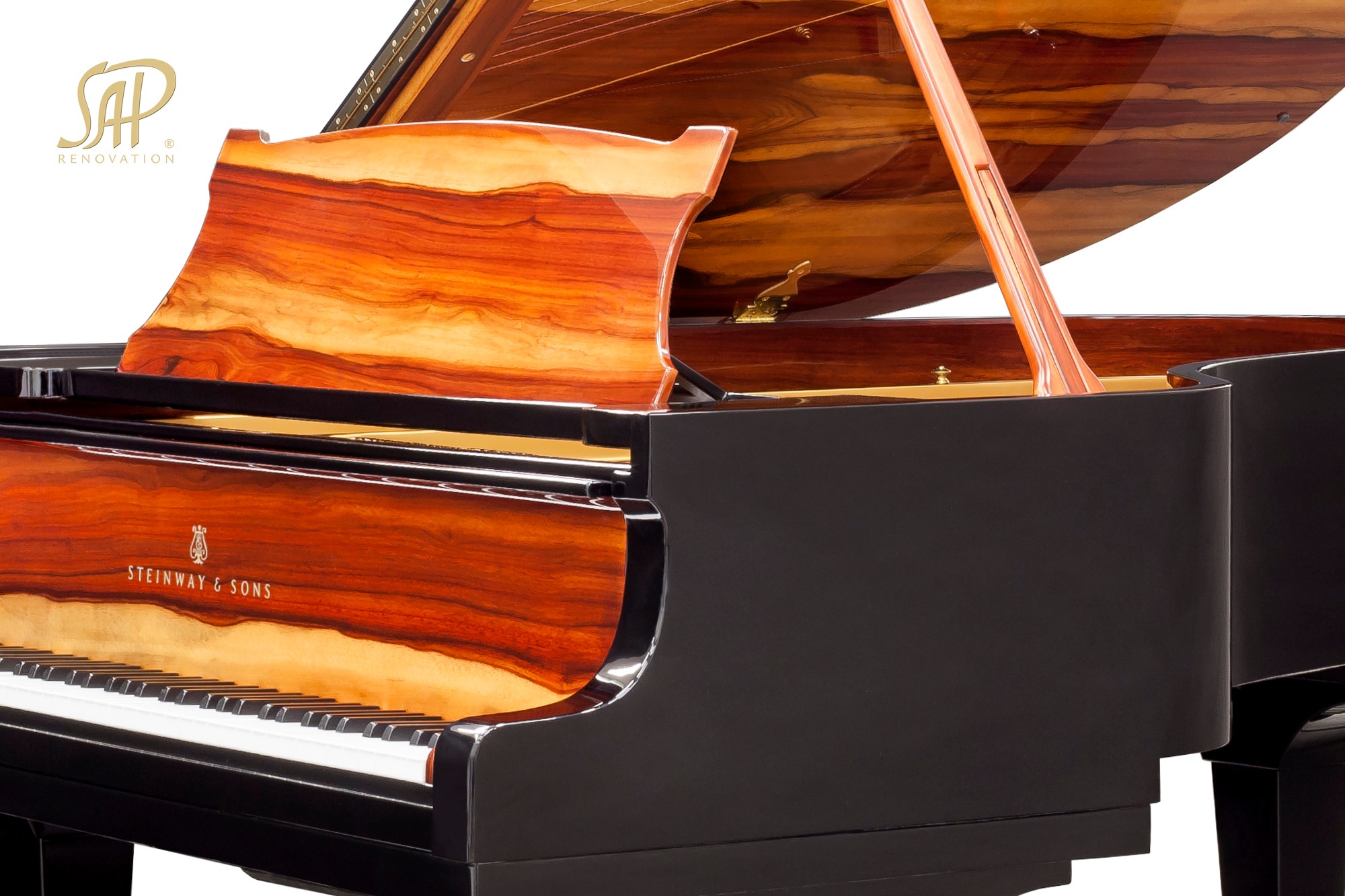
The restoration of keyboard instruments is an extremely demanding process that combines a passion for music with advanced knowledge of traditional fine craftsmanship. Every stage of work on the piano case aims to restore its former splendour while simultaneously protecting the delicate wooden structure from external factors.
Professional piano restoration – restoring original beauty
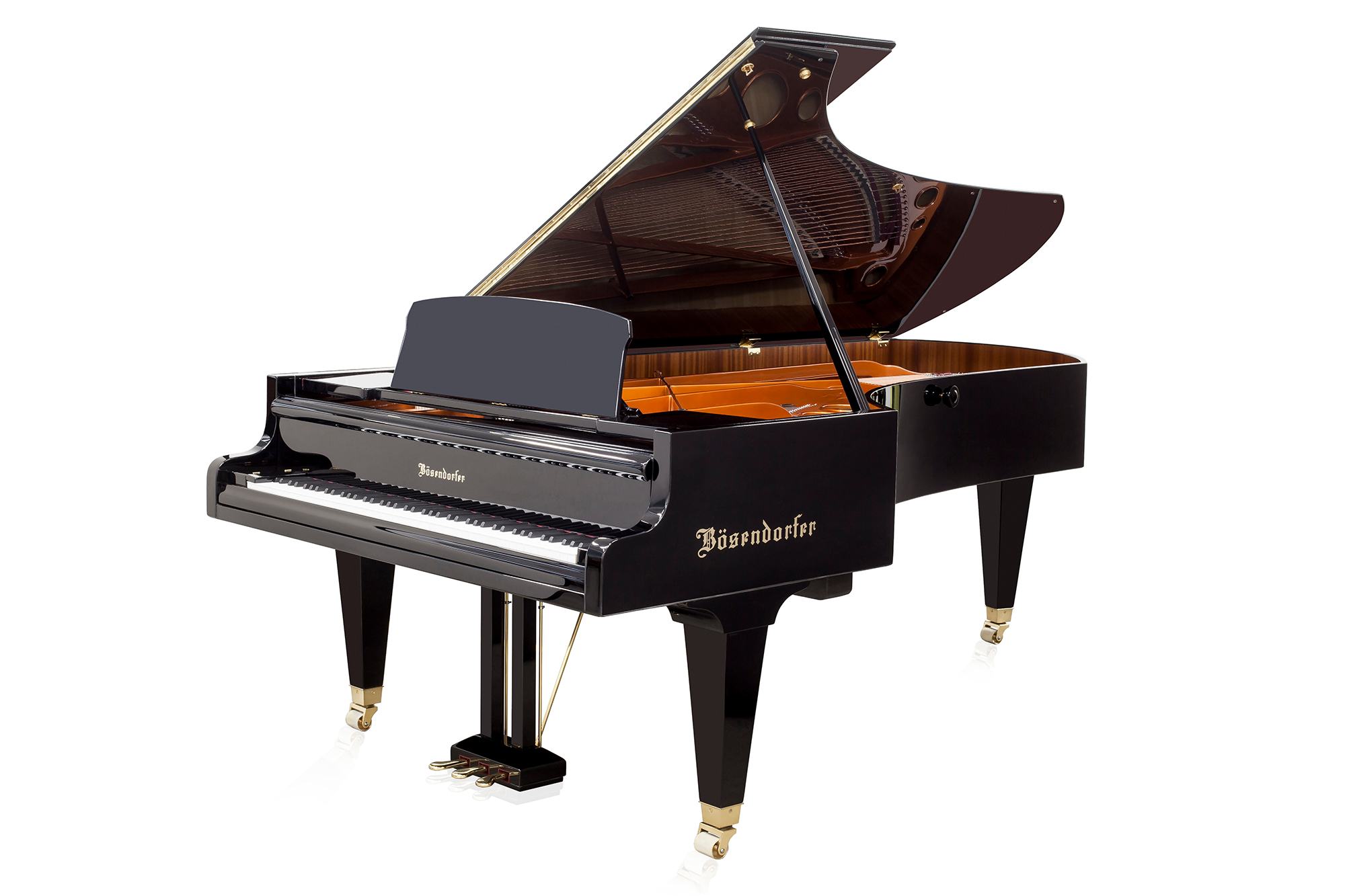
Professional piano restoration begins with a thorough assessment of the technical condition of the case in order to precisely determine the scope of necessary conservation work. The craftsman must possess extensive knowledge of the history of instrument construction to select techniques appropriate to the era in which the instrument was built. This process requires great patience and the use of the highest-quality materials to ensure durability for decades to come. It is also important to understand the key differences between upright pianos and grand pianos, as these significantly influence the approach to restoring their wooden outer structure.
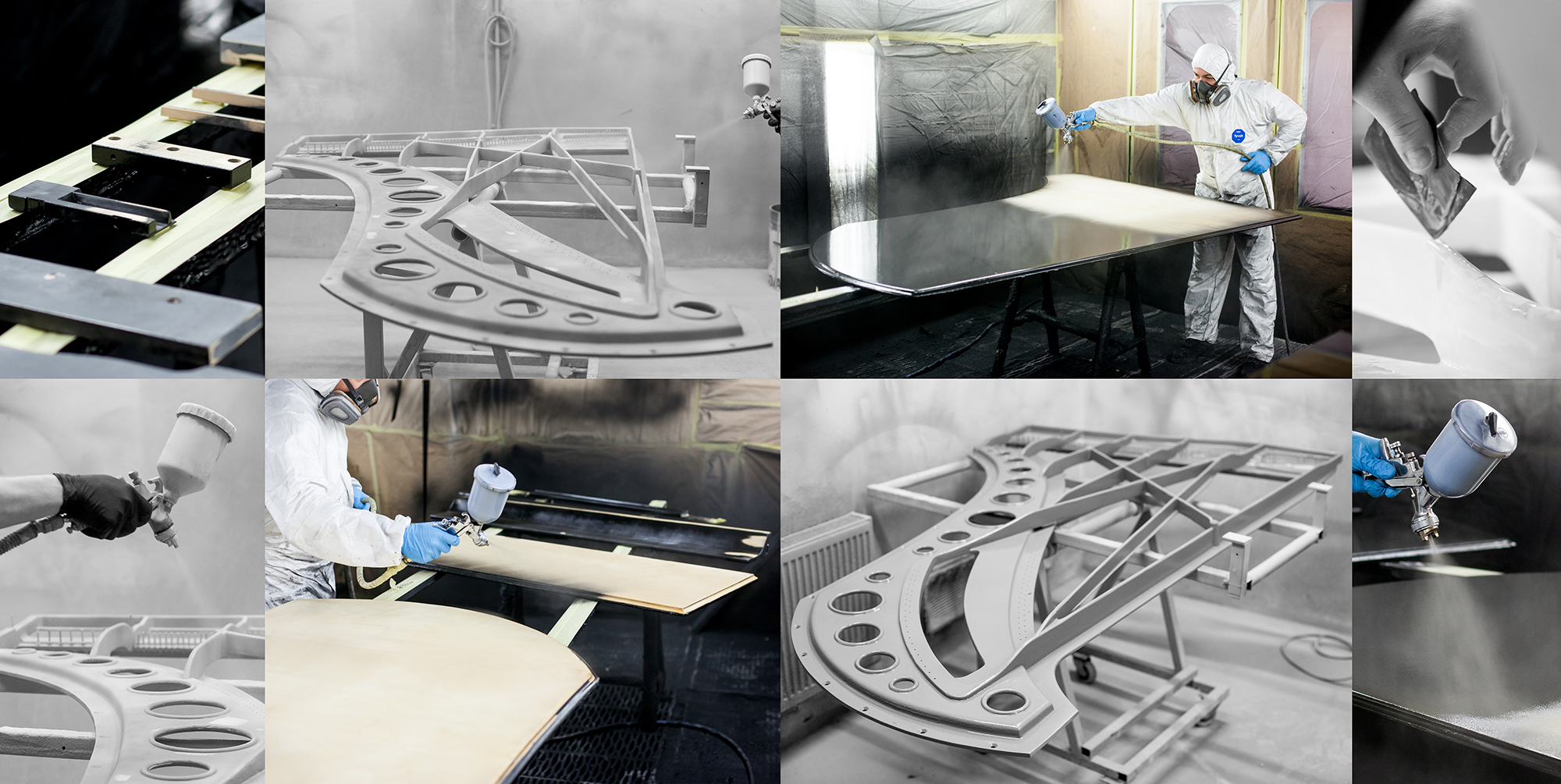
Why lacquer and wood restoration requires specialist knowledge, precision and experience
A specialist must thoroughly understand the physical properties of various wood species to avoid the risk of cracking new finish layers due to changes in humidity. Piano lacquer finishing allows no margin for error, as any imperfection becomes highly visible once a high-gloss surface is achieved. Experience enables the craftsman to instinctively determine the exact moment when the surface is perfectly prepared for applying another thin protective lacquer layer.
Surface assessment and preparation – the first step in piano lacquer polishing
The initial phase involves meticulous cleaning of all elements and removal of old, often flaking and dulled coatings. This laborious stage requires specialised tools and agents that do not damage the delicate veneer beneath the lacquer. Every centimetre of the surface must be rigorously inspected to ensure the substrate is stable and free from signs of wood pests. Numerous restoration examples clearly demonstrate how crucial this preparatory stage is for the final result.
How to properly assess and prepare a piano surface before lacquer polishing
Lacquer polishing will not achieve a mirror-like finish if any dust particles, irregularities or invisible grease residues remain beneath the surface. Preparation involves repeated sanding with progressively finer abrasives until a silky smooth base is achieved. Thorough degreasing of the entire instrument is essential to ensure perfect adhesion of new lacquer layers to the natural wooden substrate, including intricate elements such as legs and lyre.
Filling losses – repairing scratches, dents and wood damage
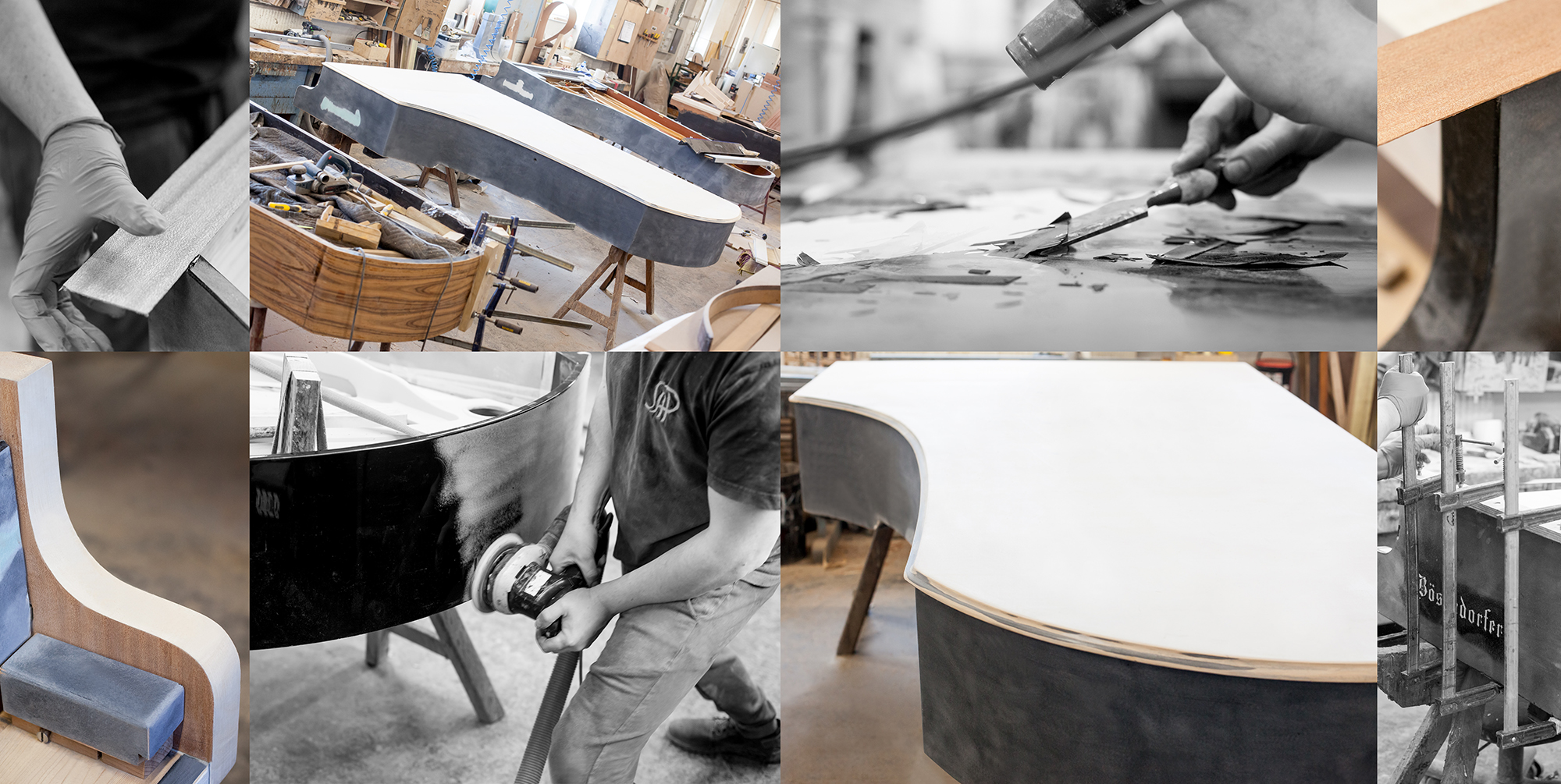
Historic instruments often bear traces of intensive use in the form of deep scratches, edge damage and dents requiring professional woodworking intervention. Precise case repair allows these defects to be eliminated completely without leaving visible traces of interference in the original material. Specialist fillers and resins are used, which, once cured, exhibit physical properties nearly identical to natural wood. The entire process must be carried out under controlled conditions.
How to effectively fill cracks and losses in piano wood
Successful filling requires exceptional sensitivity to colour and grain structure so that repaired areas blend seamlessly with the surrounding surface. Larger mechanical damage often necessitates inserting wood of the same species with matching grain and density. After gluing, the insert is levelled precisely using sharp chisels and specialist planes. Final colour retouching renders even extensive former damage invisible to the untrained eye.
French polishing – a traditional method of achieving deep lustre
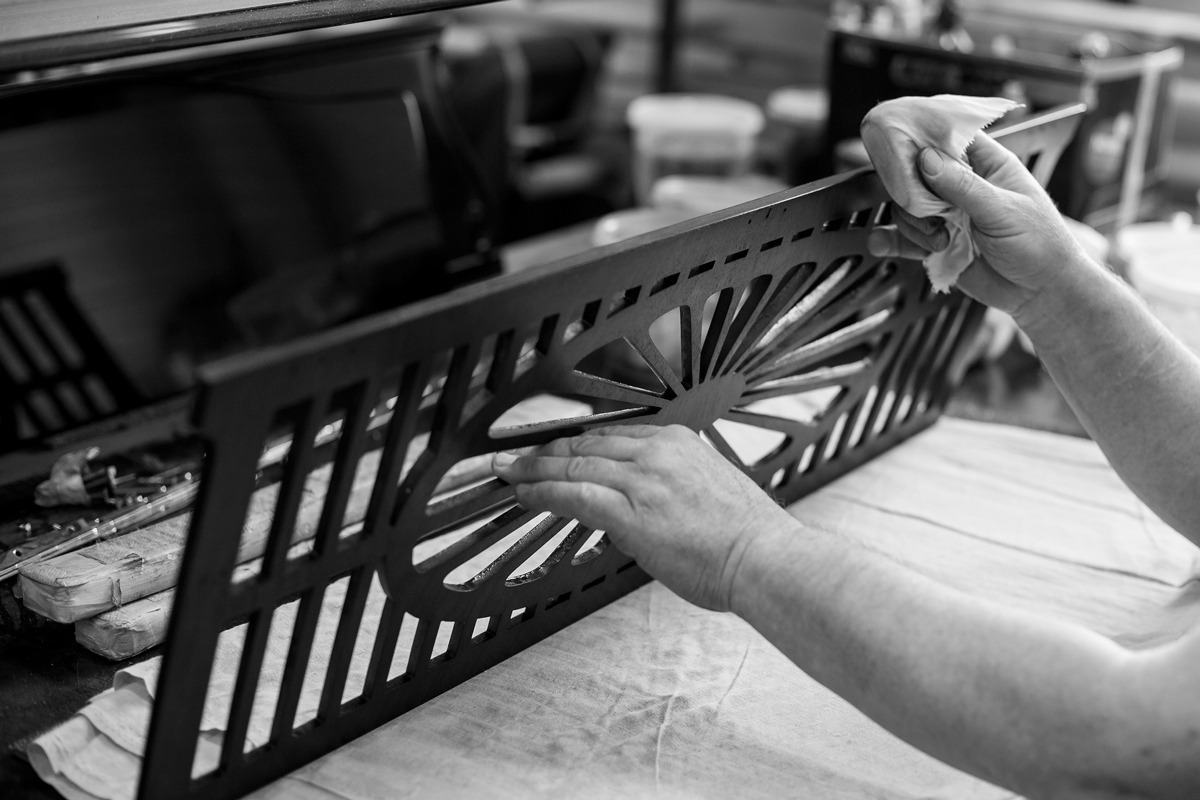
For enthusiasts of classical finishes, the traditional application of natural resins remains unrivalled in both aesthetic and acoustic qualities. French polishing is an art requiring near-masterly precision in handling a pad saturated with shellac solution. Hundreds of microscopic layers gradually build an exceptional depth and warm sheen characteristic of the finest museum-quality instruments.
Modern lacquers – only where originality does not need to be preserved
Modern lacquer systems are primarily recommended for instruments subjected to intensive use in music schools or concert halls. Contemporary piano lacquers offer significantly higher resistance to mechanical scratches and UV radiation. The choice of synthetic lacquer must always be preceded by an analysis of the instrument’s historical value.
Reconstruction of details – inlays, ornaments and decorative elements
Richly decorated instruments require carving and gilding expertise to restore all ornaments and inlays. Missing decorative elements are recreated based on surviving fragments or photographic documentation using traditional techniques and natural materials such as brass or mother-of-pearl.
Alternative lacquering methods – modern gloss and durability
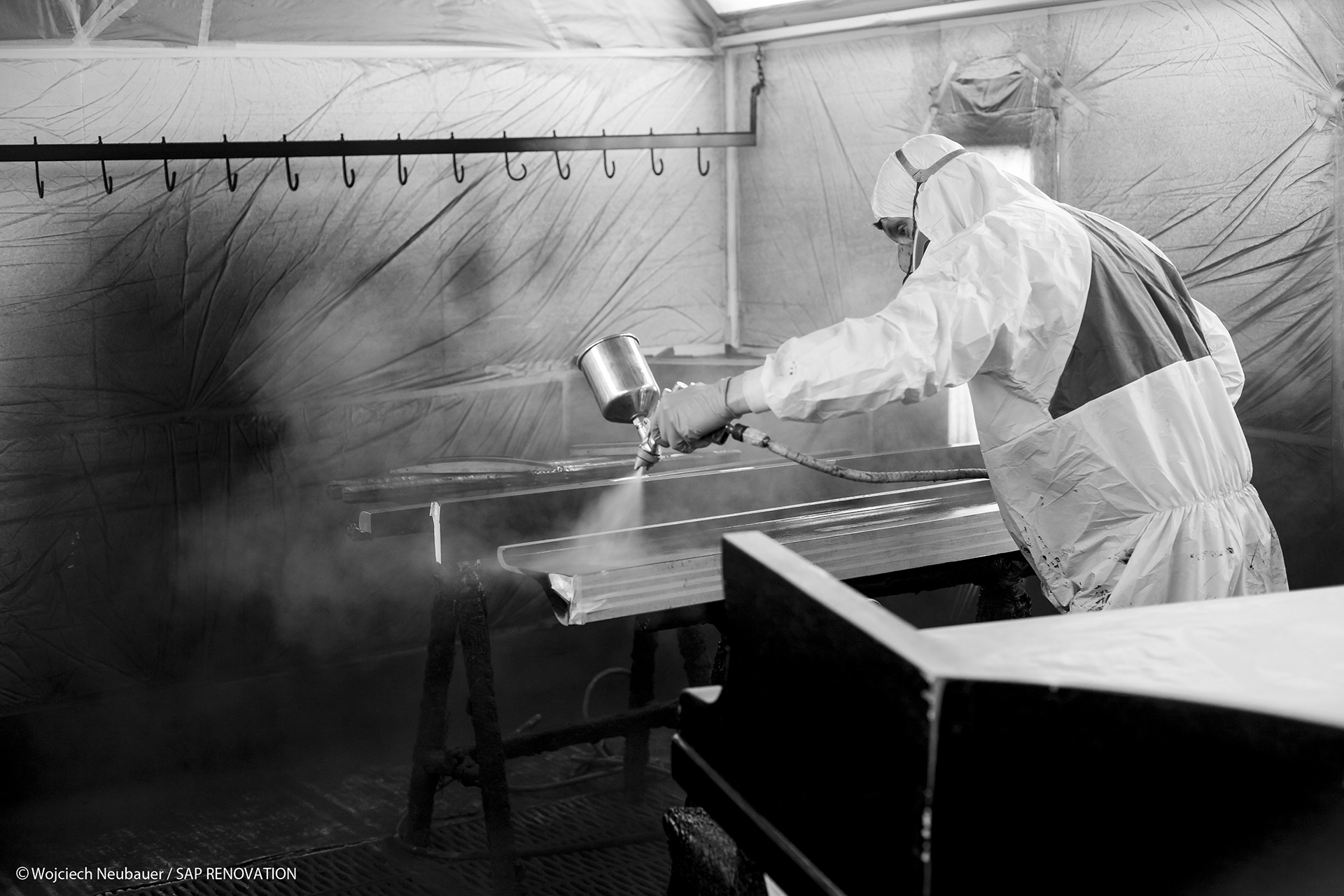
Modern technology allows mirror-like finishes to be achieved far more quickly than traditional methods. Polyester lacquers applied by spray in sterile conditions create extremely hard coatings that protect wood from moisture and everyday wear.
Differences between modern lacquers and shellac finishes
Shellac finishes are reversible and natural, while synthetic lacquers form a hard, nearly indestructible coating that is more difficult to restore in the future. Modern systems offer a wide range of gloss levels, from deep matte to high gloss, requiring advanced technical facilities and precision spray booths.
Wood and veneer restoration – stabilisation, retouching and colouring
The aesthetic quality of an instrument depends on the condition of its veneer, which often requires comprehensive structural reinforcement. Complete veneer reconstruction restores continuity of wood grain even in areas of extensive loss or cracking.
How to restore piano wood and veneer to their original condition
The process begins with re-gluing loose veneer using traditional hide glues. Colour retouching follows, with stains and dyes carefully selected to match the original finish of the instrument’s era.
Protecting the instrument’s character – the role of the professional
The conservator’s role extends beyond polishing to educating the owner on proper care and environmental conditions. Each instrument is treated individually to preserve its character and longevity.
Why professional piano restoration combines craftsmanship and modern conservation knowledge
Contemporary restoration harmoniously combines historical techniques with modern scientific achievements. This approach ensures the instrument retains its soul while remaining protected in modern living environments.