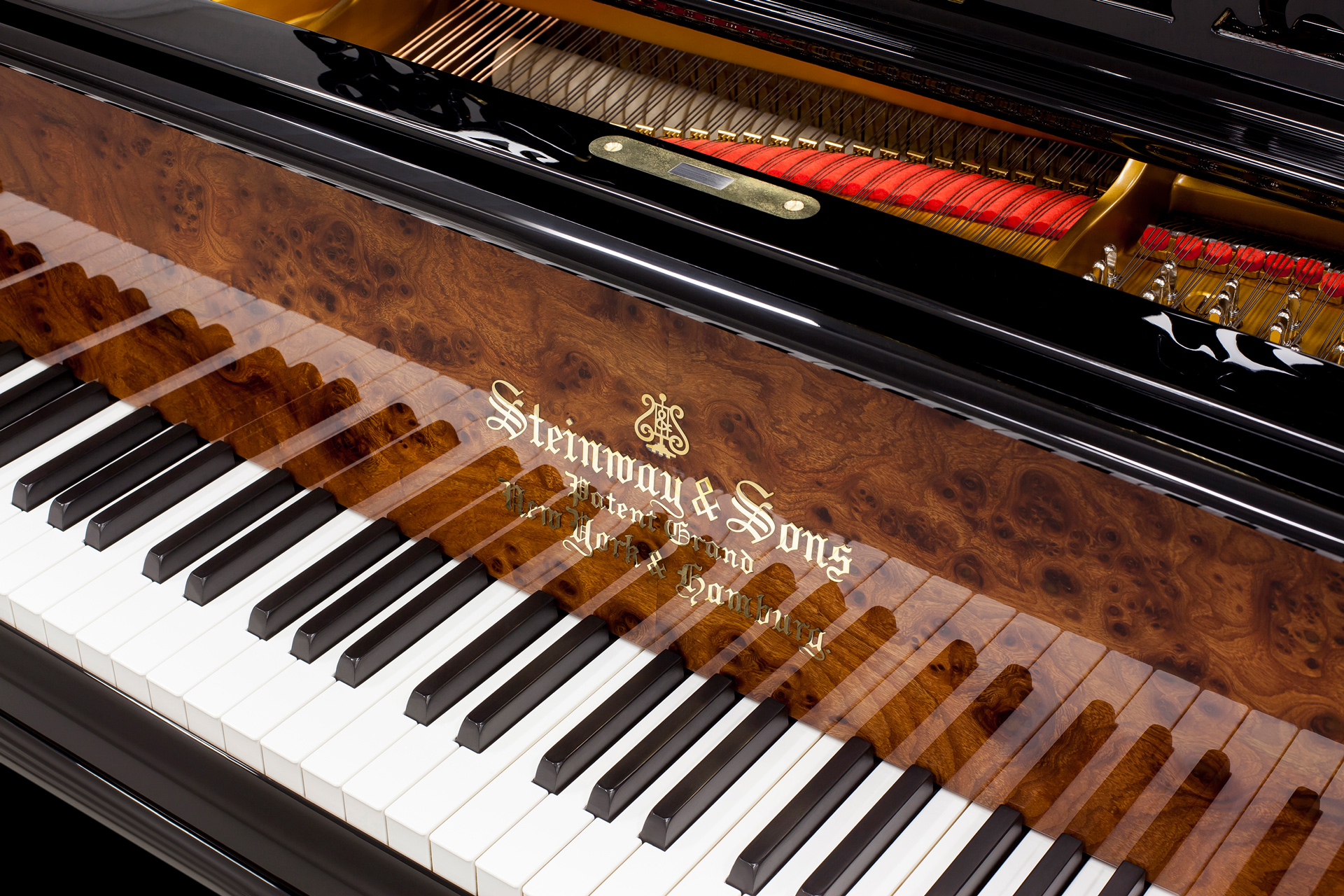
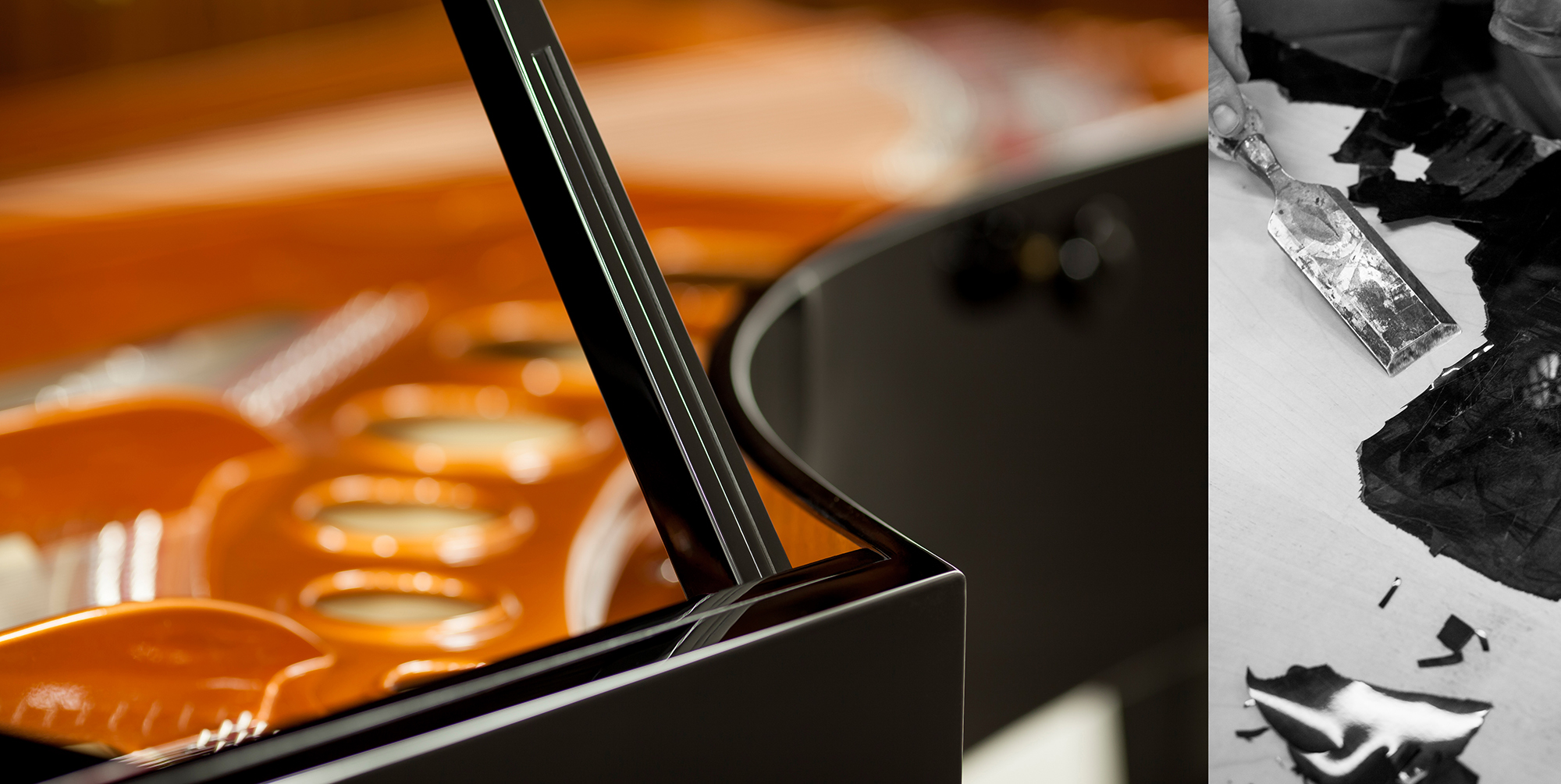
The restoration of historic grand pianos is a process that goes far beyond standard instrument repair. Here, you are working with material that carries decades or even centuries of history, technological changes, different string tensions and an entirely different philosophy of sound construction. If you play an old instrument, you know that its character cannot be replaced by a modern equivalent. This is not about “restoring functionality”, but about preserving identity – tonal, structural and aesthetic.
Why do historic grand pianos require a completely different approach than modern instruments?
Modern piano repair is based on unified solutions, repeatable components and predictable parameters. In the case of historical instruments, every piano is an individual entity. Different scale design, different resonant wood, hand-glued components and action mechanisms designed for a specific musician or hall.
A grand piano damaged by time, humidity or unskilled interventions does not forgive simplifications. Restoring a piano from this period requires knowledge of instrument-building history, acoustics and craftsmanship that is no longer widely taught. This applies both to brands such as Steinway, Bechstein or Blüthner, as well as to lesser-known regional manufacturers.
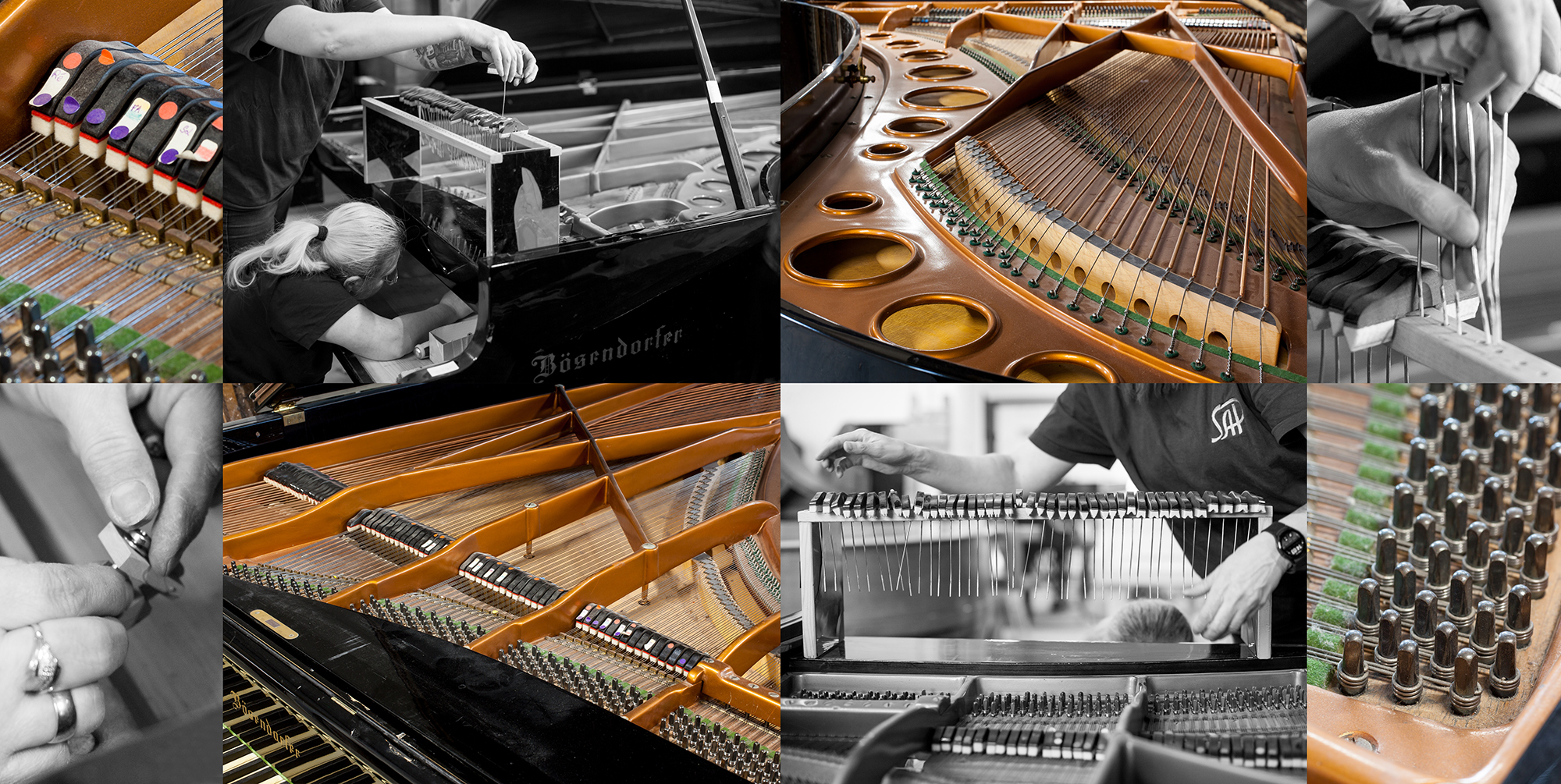
Condition assessment and documentation – the first step in historic piano repair
Before any restoration begins, the instrument must be thoroughly examined. This is not only about identifying “what does not work”, but about understanding what is original, what has already been replaced and which changes have influenced the sound.
How experts diagnose damage and identify original elements in a used piano
Work begins with disassembly and photographic documentation. The following are analysed:
- the construction of the frame and soundboard;
- the condition of the pinblock and bridges;
- wear of the action and keyboard;
- the type of strings and their layout.
In the case of used pianos, identifying non-original interventions that may have disturbed the original balance of the instrument is crucial. Often, only at this stage is the decision made whether full restoration of a 19th-century grand piano is possible, or whether it should be preserved in a partially conservative form with limited intervention.
Mechanics of past eras – where craftsmanship meets watchmaking precision
Historic piano actions differ fundamentally from modern ones. Different geometry, different materials and different assumptions regarding articulation.
Discover how hammer, felt and keyboard repair restores the piano’s original response
Felt hammers often require reconstruction rather than replacement. The felt is shaped by hand according to the original hardness and profile. The keyboard is regulated in terms of key depth and resistance characteristic of a given era. It is precisely here that piano repair determines whether the instrument “breathes” under the fingers or remains merely a museum exhibit.
The life of sound – precise restoration of the acoustic system
Without a healthy acoustic system, even the best-preserved action is meaningless. The soundboard, bridges and strings form a system that must function as a whole.
Cracked bridges, an unstable pinblock or improperly selected strings can completely destroy the character of the instrument. Proper restoration of Steinway, Bechstein or Blüthner grand pianos takes original string tensions, wire diameters and bass winding methods into account. This is not a place for compromise.
In practice, this often means hand-making strings and performing adjustments that later allow for precise voicing, as described in discussions of regulation and voicing of a Steinway grand piano after rebuilding, where every detail affects the final tonal result.
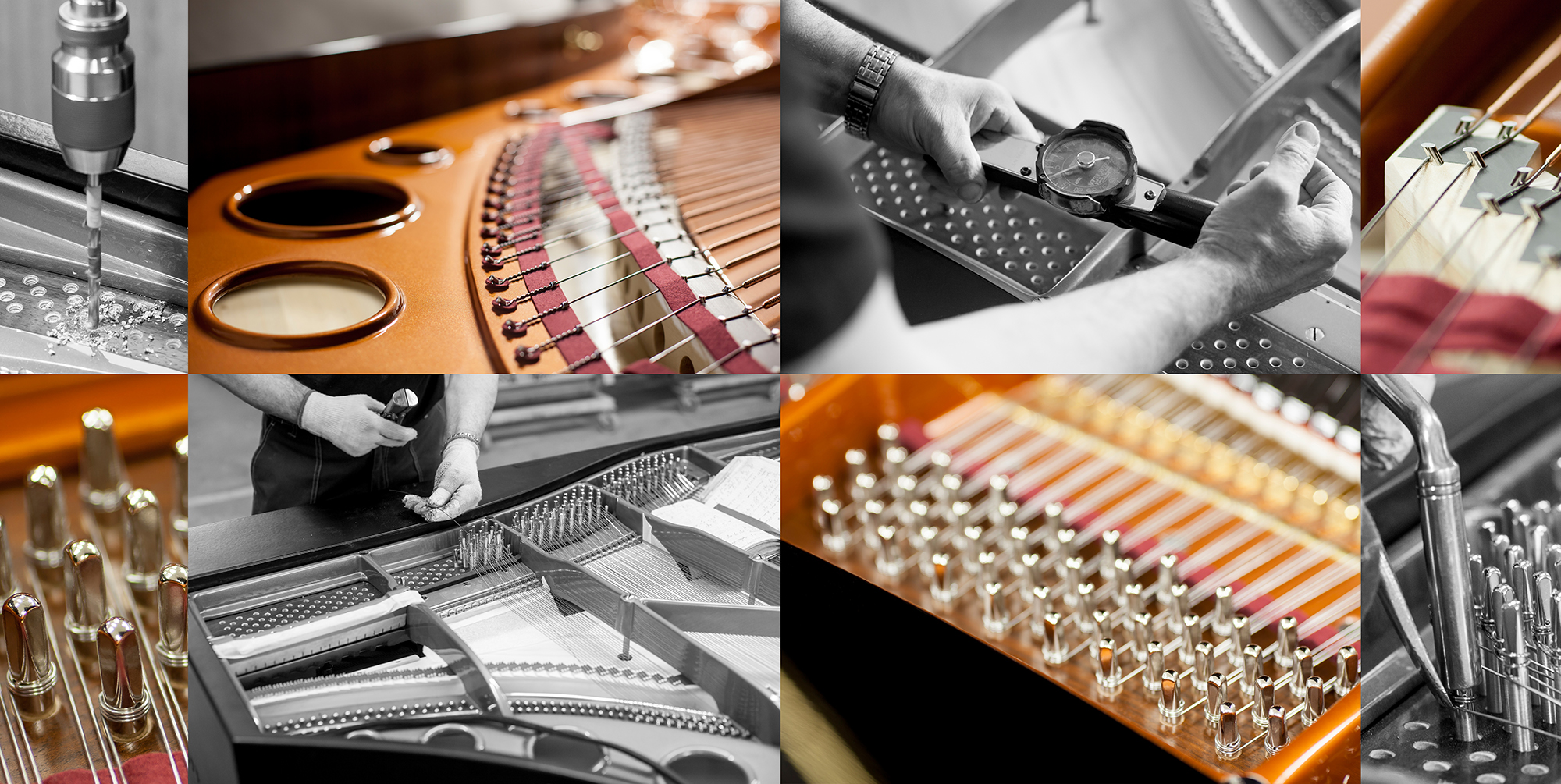
Tuning and voicing – refining the character of the sound
Tuning a historic grand piano is not merely about “bringing it to A=440”. Historical temperaments are often used, or tuning is adapted to the instrument and repertoire.
How experts give the instrument its unique, historical sound
Hammer voicing, work on dynamics and tonal colour allow the restorer to reveal what the original builder intended. At this stage, restoring the historical value of the piano becomes a reality rather than just a slogan.
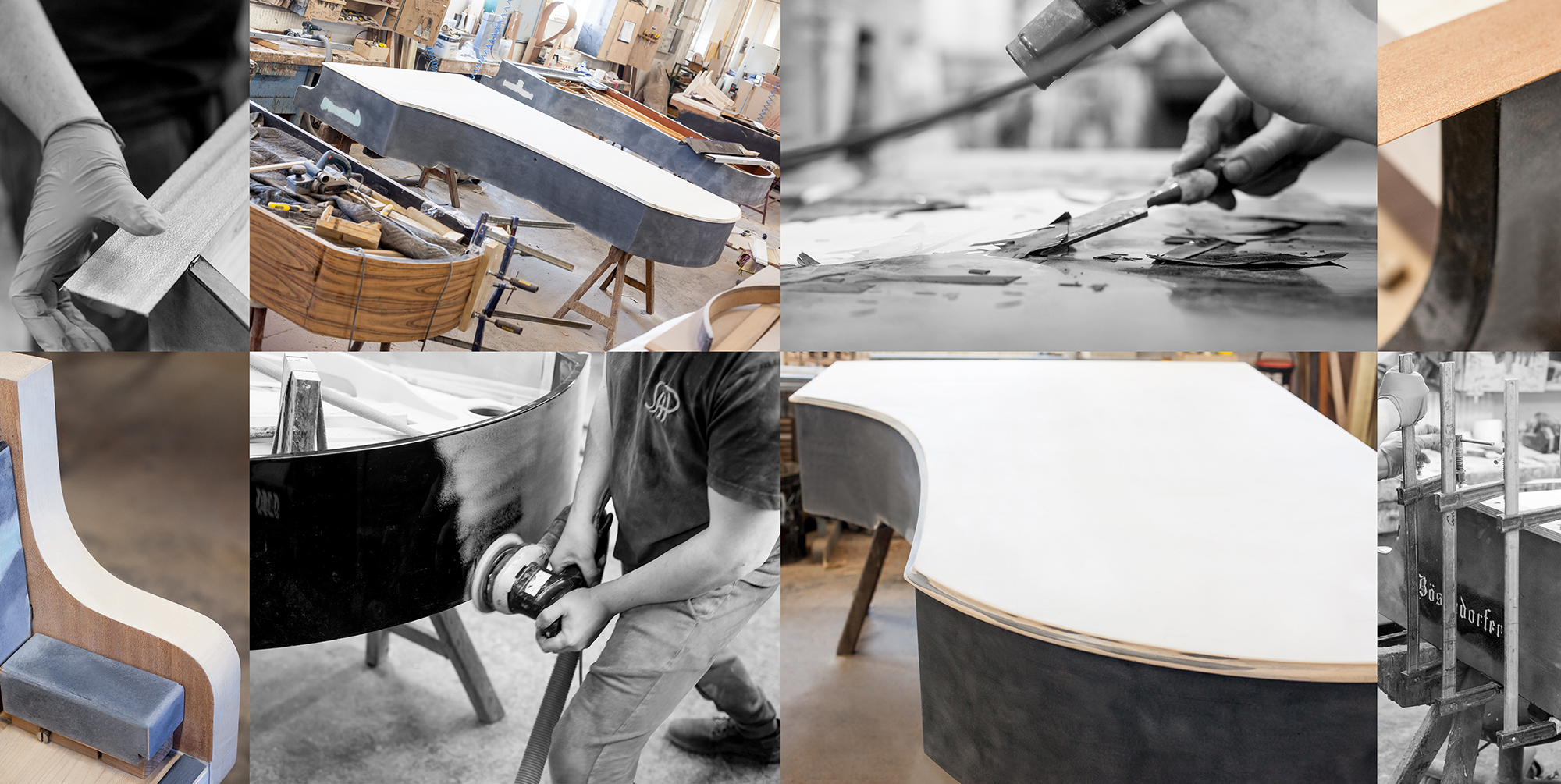
Traditional finishes, noble materials – the final stage of restoration
The final stage involves aesthetic work that should never dominate the function of the instrument.
Shellac polishing, spirit varnish or hand-applied veneers restore an appearance consistent with the era. This is the moment when historic grand piano restoration completes the entire process – from structure, through sound, to form.
If you are wondering how to save a historic grand piano from destruction, it is essential to understand that not every intervention is a repair. Sometimes less means more, and a well-executed piano repair begins with respect for the instrument’s history.