When an exceptional instrument arrives at the workshop, the fascinating process of restoring its former glory begins. Every piano brings a distinctive voice, a rich history and the marks of time. Each stage of restoration demands extensive craft knowledge and musical sensitivity. Discover how considered decisions and expert workmanship breathe new life into a historic grand piano, and follow this instrument’s journey behind the scenes of world-class piano restoration.
The story of a particular Steinway: where does it begin?
The story of any exceptional piano begins with its origins, identity and the events that have shaped its sound. This instrument exemplifies the craftsmanship and tradition of a legendary maker. Its technical characteristics and its journey before reaching our specialists are an essential starting point. Examining records and identifying marks helps reconstruct its early history. Our Steinway restoration examples offer a closer look at this specialist work.
Model, year of manufacture and serial number
The instrument is a Model B grand piano, 211 cm long, with a full 88-key keyboard. The records cited for it give serial number 136708 and a production year of 1963. The period is associated with piano building of remarkable tonal depth. The model’s dimensions make it well suited to chamber music venues and private music rooms alike. Explore the full scope of available work in our restoration programme.
Place of manufacture: Hamburg or New York
A Steinway’s tonal identity depends in part on whether it was built in Germany or the United States. This particular instrument follows the European piano-building tradition, with its singing, precisely defined tone. Specific construction details confirm its Hamburg origins. Correct identification helps determine the appropriate restoration techniques. Discover more about the individual stages of grand piano restoration.
Its history of use and repair
Decades of music-making had left natural signs of wear on the instrument’s components. Frequent use and fluctuations in humidity had taken their toll on essential parts. Earlier, poorly executed adjustments had also diminished its acoustic performance. Assessment established the need for a comprehensive, step-by-step Steinway restoration. Visit our work to see what distinguishes our professional grand piano restoration.
The piano’s condition on arrival at SAP Renovation
Receiving an instrument involves a detailed assessment of its structural and mechanical condition. Specialists inspect every component and produce a comprehensive initial report. This allows the budget and schedule to be planned accurately and brings hidden structural defects to light. A Steinway restoration organised in this way preserves the instrument’s distinctive character.
Initial assessment of the case
The exterior showed pronounced scratches, discolouration and small areas of missing wood. The old finish had lost its clarity, and the brass fittings were heavily tarnished. The legs and pedal lyre required careful checks for alignment and stability. The dull surface obscured the instrument’s natural elegance, making restoration of the piano case a priority.
Condition of the acoustic structure
Visible cracks in the soundboard were affecting projection and tonal clarity. The strings carried surface rust, and their tension was unsatisfactory. The bass and treble bridges showed cracks along the bridge pins. Carefully planned soundboard restoration was essential to recover the instrument’s former dynamic range. Our specialist acoustic restoration workshop explains this work in detail.
Action and keyboard performance
The action worked unevenly because of extensive wear in its felt and leather parts. Years of striking the strings had left the hammer felt deeply compressed and worn. Noticeable lateral play in the keyboard made precise passagework difficult. A comprehensive restoration of the Steinway action was required, addressing all moving parts. Discover how a restored action improves control of the sound.
Evidence of previous interventions
Inside the case, we found traces of earlier makeshift repairs. Unsuitable adhesives and non-original replacement parts had disrupted the original geometry. Some wooden repair shims had been glued in without regard to grain direction. Removing these defects was necessary before the main restoration could begin. A complete Steinway rebuild required all poorly executed modifications to be addressed.
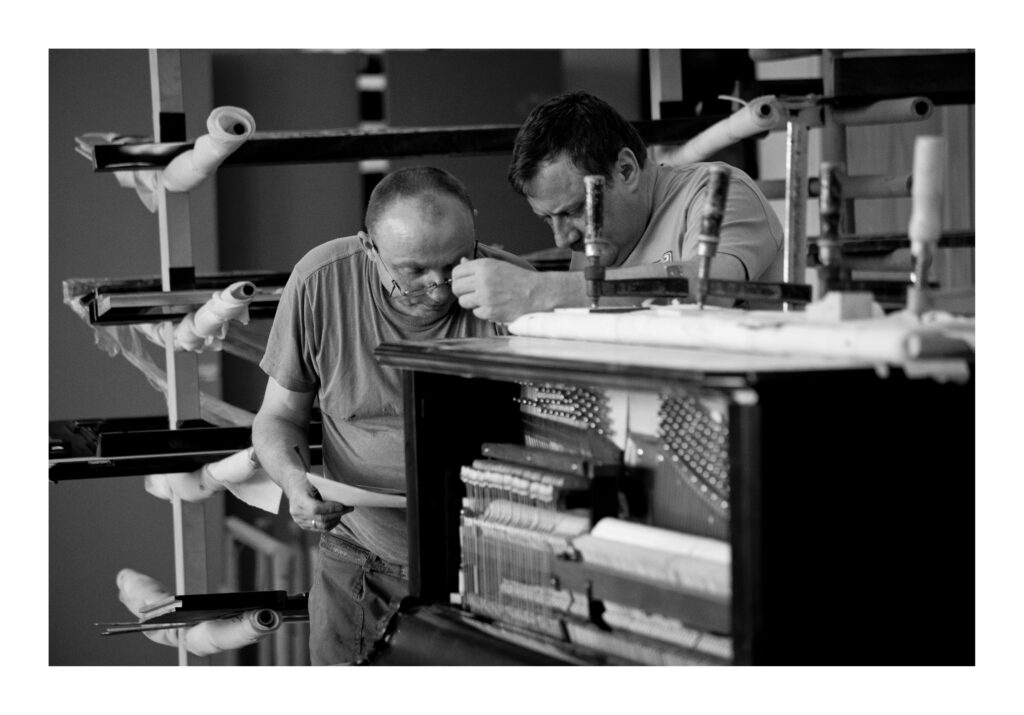
The pre-restoration assessment: what can be retained, and what must be rebuilt?
The pre-restoration assessment classifies components according to whether they can be restored or need replacing. Specialists balance the preservation of historic material with uncompromising performance standards. The team’s main criteria include:
- The structural integrity of the cast-iron plate and the condition of the soundboard.
- Wear in the wooden keyboard components and the operation of the levers.
- Preservation of original markings and identification plates.
- The condition of the pinblock and its ability to hold the tuning pins securely.
Every decision at this stage influences the final sound. This careful approach gives the owner confidence that the restoration will be both considered and professional.
Assessing the soundboard and bridges
The soundboard’s numerous small cracks and areas of material loss made replacement necessary. We chose a new soundboard from the respected manufacturer STRUNZ. The bass and treble bridge caps were to be made from selected beech. These decisions were intended to ensure efficient transmission of string vibration and were fundamental to the instrument’s future acoustic performance.
Checking the cast-iron plate and pinblock
The cast-iron plate showed no hairline cracks, allowing it to be retained and fully refinished. The pinblock, however, no longer gripped the tuning pins securely. A new five-ply hard maple pinblock was selected. Its precise fit is essential to dependable tuning stability over many years, while careful installation supports the structure under string tension.
Measuring wear in the action and hammers
Measurements of hammer wear and mass confirmed that the hammer assembly needed replacing. Genuine Steinway & Sons hammers, shanks and wippens were chosen. The keys were retained for careful cleaning and reweighting. Their white coverings were replaced with durable modern Kluge Ivo Plast keytops. The restored assembly was prepared to perform reliably under demanding concert conditions.
Establishing the instrument’s historic and musical value
The assessment revealed considerable musical value that a complete restoration could recover. Premium components combined the traditional character with lasting reliability. Original plates and model markings inside the case were preserved. The resulting balance of appearance and mechanical dependability produced a restored Steinway grand piano ready for decades of music-making.
Rebuilding the Steinway’s acoustic structure
Acoustic rebuilding encompasses all the components responsible for sound radiation and tonal fullness. It demands a refined understanding of materials and extensive woodworking experience. Every millimetre of fit influences tonal colour and sustain.
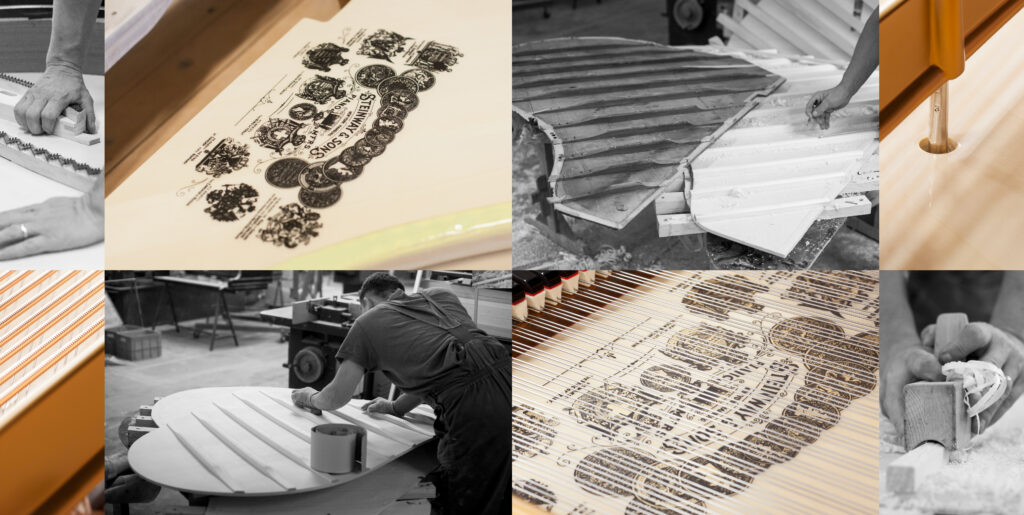
Repairing or replacing the soundboard
Installing the new STRUNZ soundboard required precise shaping. The spruce, selected for its exceptionally even grain, was finished with high-quality Italian lacquer. The board was carefully glued into the assembly to resonate freely under bridge loading. The result is a deep, projecting and remarkably singing tone.
Restoring the bridges and ribs
The new beech caps for the bass and treble bridges were shaped in four stages. The ribs were fitted precisely within the structure to establish the correct soundboard crown. This Steinway repair restored effective transmission of vibration across the full compass, supported by a stable structural framework.
Restoring the cast-iron plate
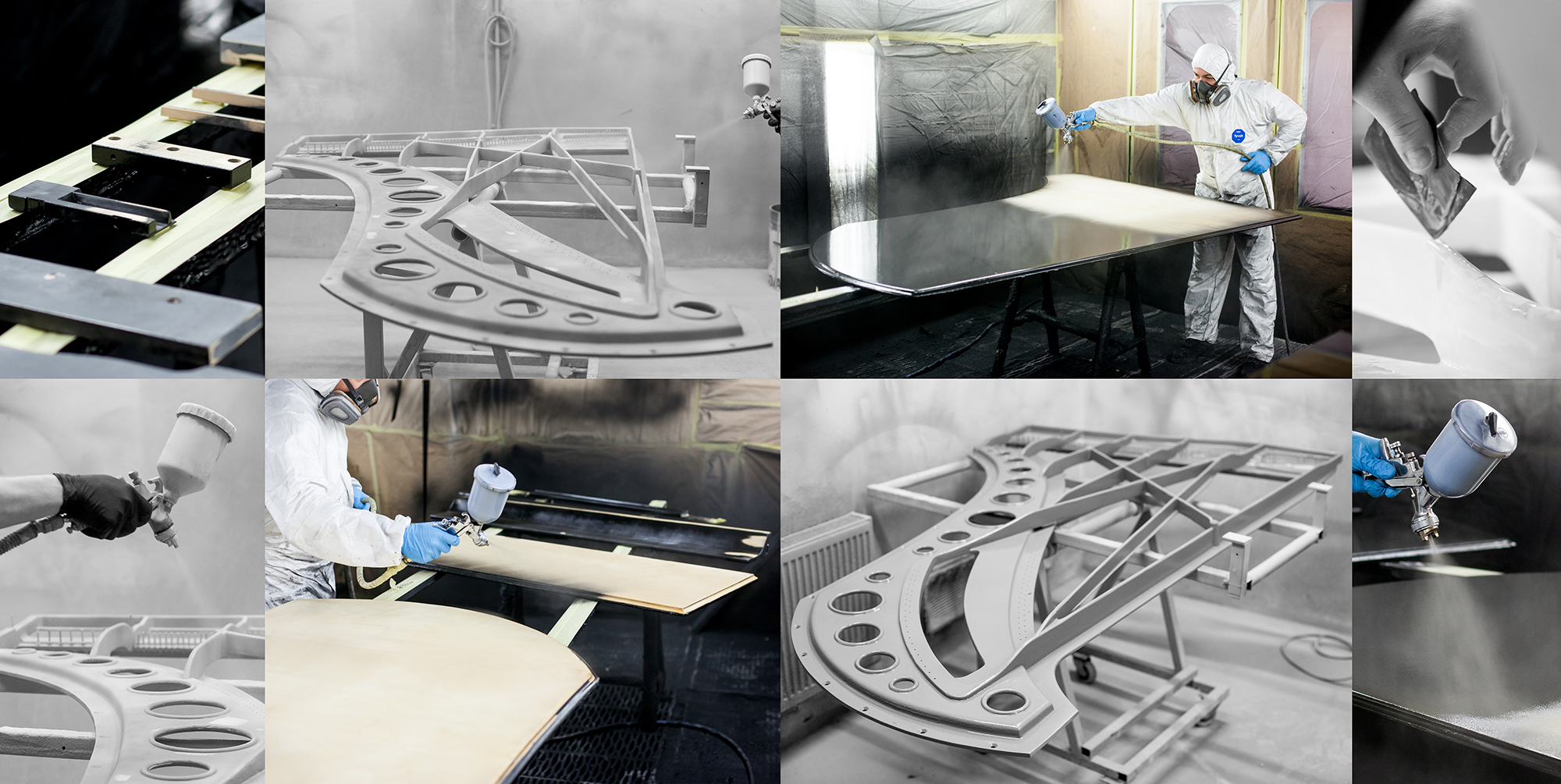
The old coatings were removed from the cast-iron plate before careful sanding and priming. A high-quality finish in a colour selected for the brand gave it a smooth surface and a beautiful satin sheen. Refitting the plate into the case required considerable engineering precision.
Installing new strings and tuning pins
We installed strings from respected manufacturers: Heller bass strings and Röslau plain-wire strings, specified for the individual scale. The tuning pins were seated in the new hard maple pinblock with the appropriate turning resistance. This completed the rebuilding of the mechanical and acoustic structure responsible for producing sound.
Restoring the action and keyboard
Action and keyboard restoration demands exceptional precision to recover expressive dynamics and sensitive touch response. Even the smallest departure from the correct settings is perceptible beneath the pianist’s fingers.
Retaining or replacing selected components
The original wooden levers were retained, while consumable materials such as felt and cloth were replaced. Genuine Steinway & Sons action components were used to preserve the authentic playing character.
Rebuilding the hammer, damper and repetition assemblies
New hammers and shanks were installed and their mass balanced with the rest of the mechanism. The dampers received new, soft felt to stop the strings immediately and quietly.
Regulating the action geometry
Regulation established the correct angles, travel and hammer-to-string distances. The components now operate smoothly, without unnecessary friction.
Making the touch even
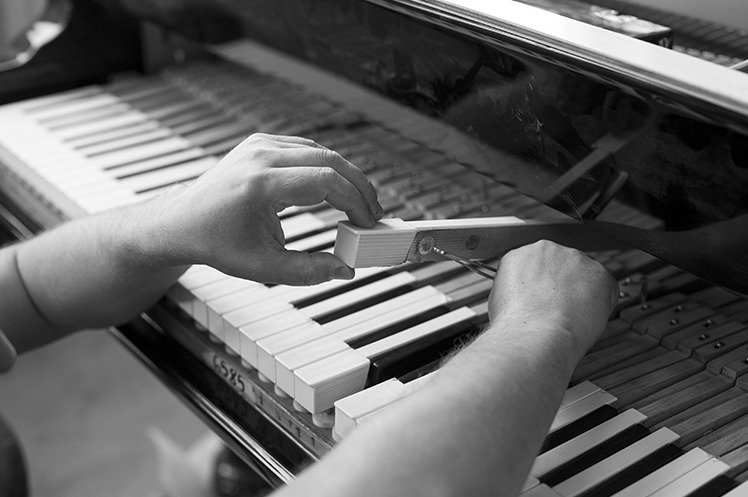
Each key was individually balanced with lead weights. This created a consistent, evenly balanced resistance across all 88 keys.
Restoring the case: preserve the original finish or choose a new one?
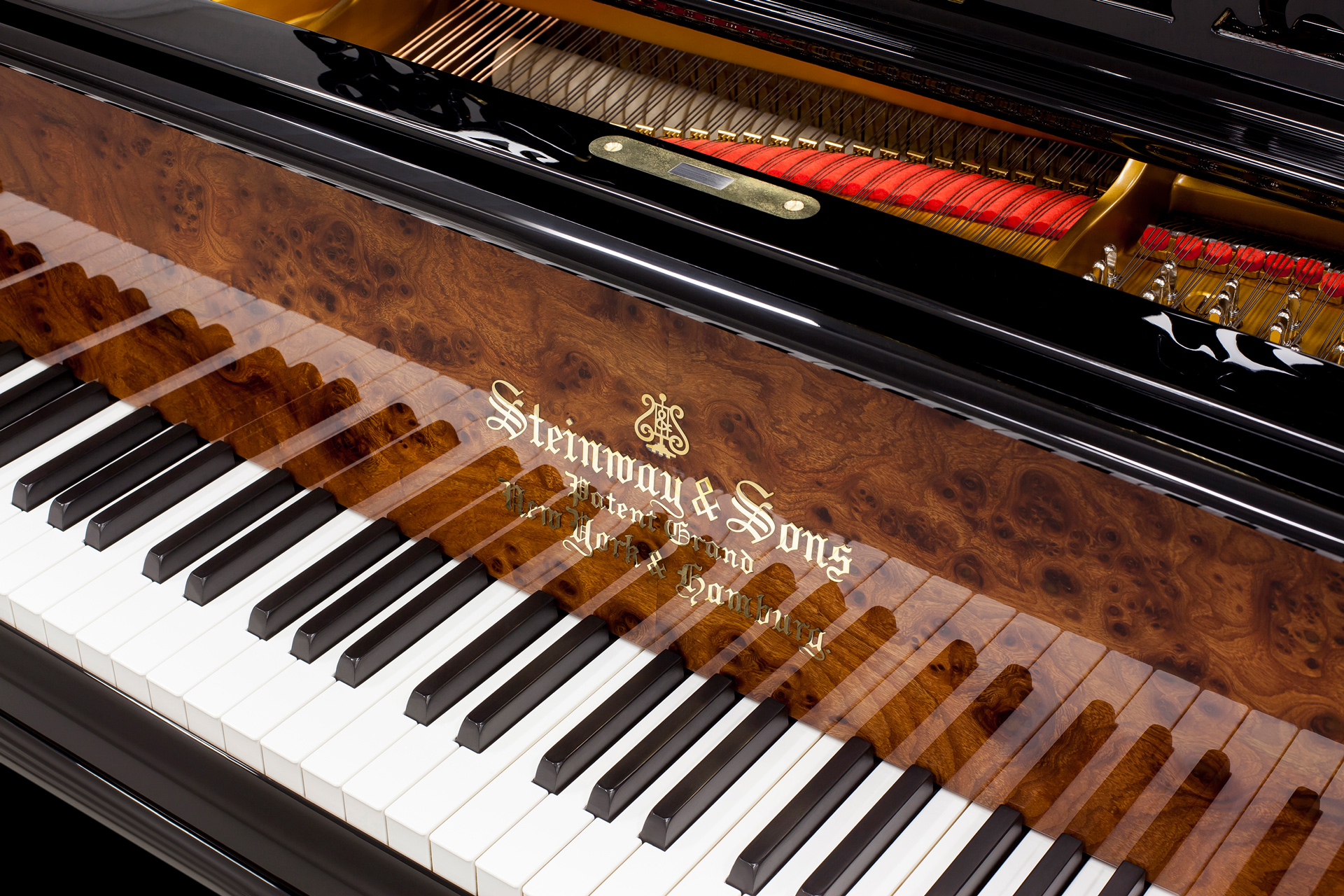
Case restoration involves a choice between preserving the patina of age and applying an entirely new finish. For this instrument, we chose complete refinishing in deep black Italian polyester lacquer. Sanding and high-gloss polishing created a smooth, mirror-like surface. All brass fittings and locks were also restored, recovering the piano’s elegance. Our specialist polishing and finishing workshop carried out the surface work and can restore your instrument’s case with the same care.
Reassembly: bringing the restored components together
Reassembly brings the restored case, acoustic structure and action back into one instrument. It is a striking moment when separate assemblies become a coherent whole again. Fitting the cast-iron plate to the case and soundboard required millimetre precision. We then inserted the assembled keyboard and coordinated the pedal lyre with the damper mechanism. The reassembled instrument was ready for the strings to be brought up to their initial tension.
Tuning, regulation and voicing: recovering the Steinway character
Recovering a refined tonal character requires repeated tuning, precise regulation and skilful voicing. This instrument underwent eight tunings to establish stability at concert pitch, A4 = 440 Hz. A certified technician also carried out specialist Steinway voicing. Needling the hammer felt produced an even, flexible tone rich in overtones. Each careful Steinway piano tuning brought the instrument closer to its full musical potential.
Quality control: how is the finished instrument tested?
The completed piano undergoes rigorous acoustic and mechanical tests in a dedicated inspection area. Technicians check tuning stability, even key resistance and pedal operation under load. Our quality control department attends to every detail. Testing continues over several days to ensure the piano meets the expectations of the most demanding players. Only instruments that pass without reservations are delivered to clients.
The result: how did the piano’s performance, sound and appearance change?
Professional restoration brought back the full dynamic range, immaculate appearance and stable tuning. The restored Steinway recovered its powerful, singing voice and refined finish. Its keyboard responds immediately to the finest nuances of articulation. Visually, it recalls a new instrument from the Hamburg workshop. Playing a piano prepared to this standard offers a memorable musical and aesthetic experience.
Documentation, warranty and preparation for transport
The process concludes with full documentation, warranty cover and careful preparation for the journey. The client receives a technical record of all work and components used. Our warranty explains the protection provided for the restoration. The instrument is then carefully packed and secured by our specialist transport team. Please contact us for detailed enquiries.
This restored Steinway & Sons grand piano brings historic piano-building craftsmanship together with precision workmanship. Every stage, from initial diagnosis to final voicing, helped this remarkable instrument approach its full musical potential. Whether you already own a piano or are planning to restore one, our professional team will help bring that ambition to life. Call or write to us to discover how we can care for your grand piano.