A grand piano is an instrument whose sound is shaped by decades of interaction between wood, metal, and felt. That is why the question of changing its tone during restoration arises with almost every major overhaul. Owners of old grand pianos often fear that sending their instrument to a workshop will change it beyond recognition. Others hope that grand piano restoration will improve a sound that has disappointed them for years. The truth lies somewhere between these concerns and expectations and depends on the scope of the work as well as the technician’s skill. What truly influences the tonal character of a grand piano, and what can realistically be expected from a professional restoration?
Can Grand Piano Restoration Change Its Sound? Facts and the Most Common Myths
Yes, grand piano restoration can change its sound, but this does not happen automatically or by accident. Many people believe that replacing the strings or hammers must radically change the character of the instrument, whereas in practice, a well-executed restoration most often restores a sound that is close to the manufacturer’s original intention. Another common myth claims that old grand pianos “wear out” completely and that nothing can be done about it, which is a considerable oversimplification. The tonal character of a grand piano depends on the combination of many different elements rather than on one miraculous repair. That is why it is worth understanding which parts of the instrument truly determine the tone colour and sound projection before judging the result of a restoration as “different” or “worse.”
What Does the Tonal Character of a Grand Piano Really Depend On?
The tonal character of a grand piano depends on several mechanical and acoustic components working together to create the instrument’s unique tonal signature. No single component is entirely responsible for the tone colour, although some have a greater influence than others.
The Soundboard – The Acoustic Heart of the Instrument
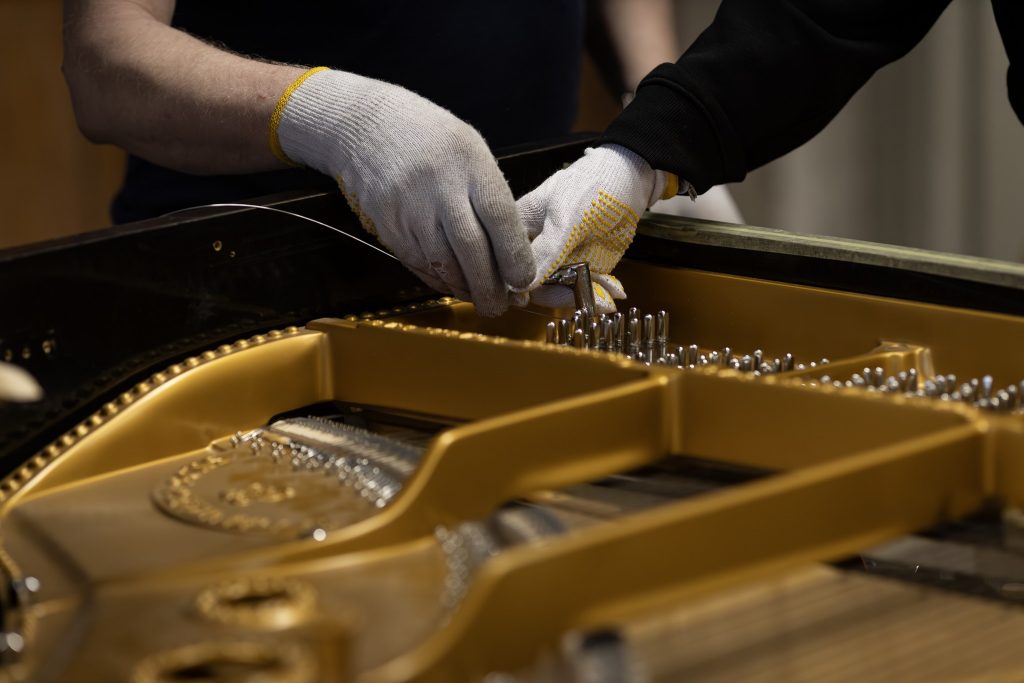
The grand piano soundboard is responsible for amplifying and projecting the sound generated by the strings, which is why its condition is crucial to the instrument’s overall tone. Cracks, loss of crown, or weakened ribs drastically reduce sound projection and tonal richness. In extreme cases, replacing the soundboard becomes necessary, which directly affects the instrument’s tonal character. A skilled technician selects wood with the appropriate density and grain structure in order to preserve proportions that are as close as possible to the original. This is precisely why an acoustic workshop carrying out such work must have experience with many different grand piano brands.
Can Grand Piano Restoration Change Its Sound? Facts and the Most Common Myths
Yes, grand piano restoration can change its sound, but this does not happen automatically or by accident. Many people believe that replacing the strings or hammers must radically change the character of the instrument, whereas in practice, a well-executed restoration most often restores a sound that is close to the manufacturer’s original intention. Another common myth claims that old grand pianos “wear out” completely and that nothing can be done about it, which is a considerable oversimplification. The tonal character of a grand piano depends on the combination of many different elements rather than on one miraculous repair. That is why it is worth understanding which parts of the instrument truly determine the tone colour and sound projection before judging the result of a restoration as “different” or “worse.”
What Does the Tonal Character of a Grand Piano Really Depend On?
The tonal character of a grand piano depends on several mechanical and acoustic components working together to create the instrument’s unique tonal signature. No single component is entirely responsible for the tone colour, although some have a greater influence than others.
The Soundboard – The Acoustic Heart of the Instrument
The grand piano soundboard is responsible for amplifying and projecting the sound generated by the strings, which is why its condition is crucial to the instrument’s overall tone. Cracks, loss of crown, or weakened ribs drastically reduce sound projection and tonal richness. In extreme cases, replacing the soundboard becomes necessary, which directly affects the instrument’s tonal character. A skilled technician selects wood with the appropriate density and grain structure in order to preserve proportions that are as close as possible to the original. This is precisely why an acoustic workshop carrying out such work must have experience with many different grand piano brands.
Does Replacing Components Always Mean Changing the Character of the Instrument?
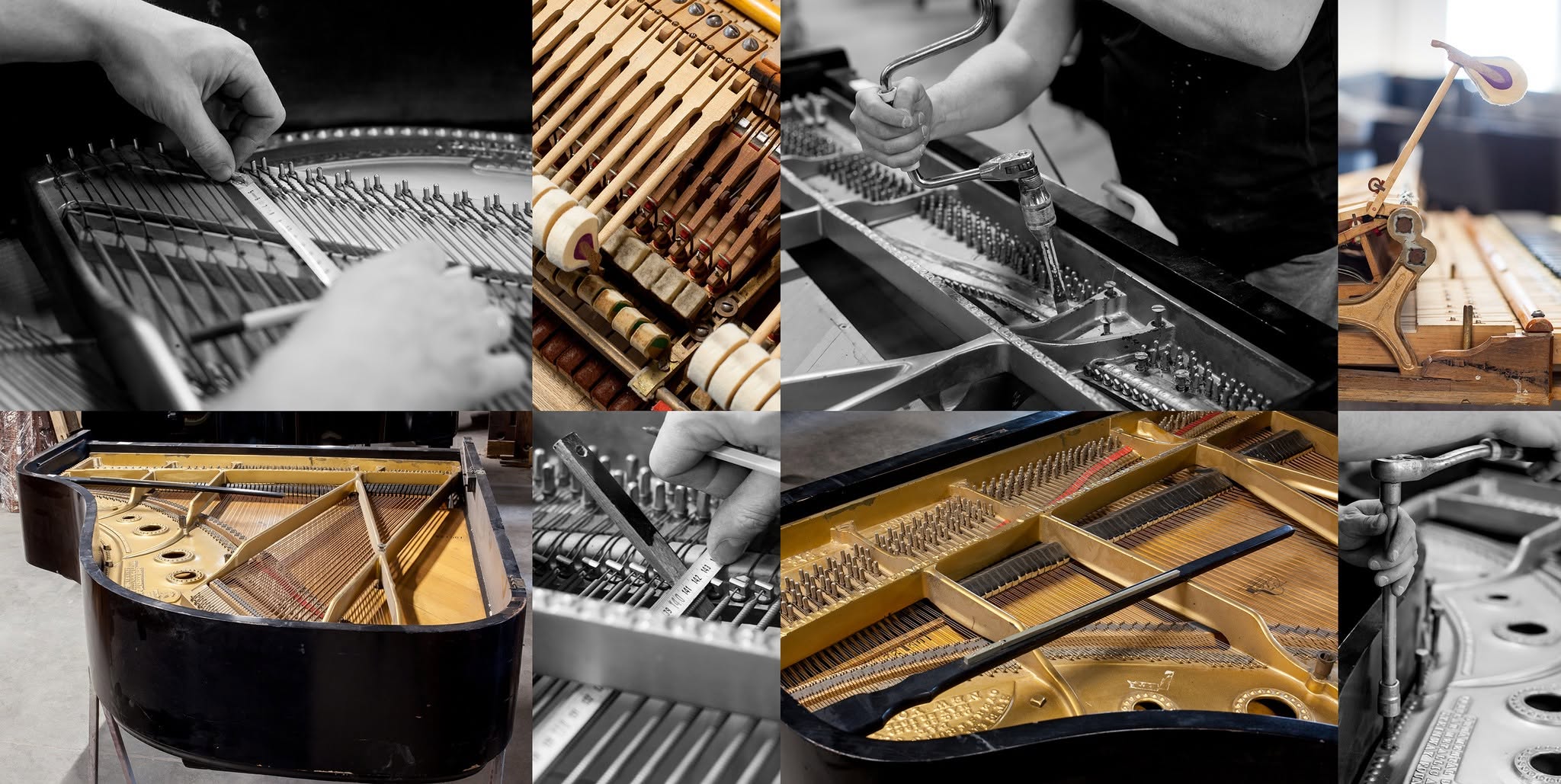
No, replacing components does not always change the character of the instrument if the technician accurately reproduces the parameters of the original parts. The key lies in the precision of material selection rather than in the replacement itself. There are cases where, after restoration, a grand piano sounds even closer to the manufacturer’s original concept than it did before the work began, because worn components had suppressed the instrument’s natural potential. On the other hand, the incorrect selection of strings, felt, or wood can indeed change the tonal character of a grand piano in an undesirable way. That is why it is worth reviewing examples of previous restoration projects before choosing a workshop.
Regulation and Voicing – Why Can Two Identical Grand Pianos Sound Completely Different?
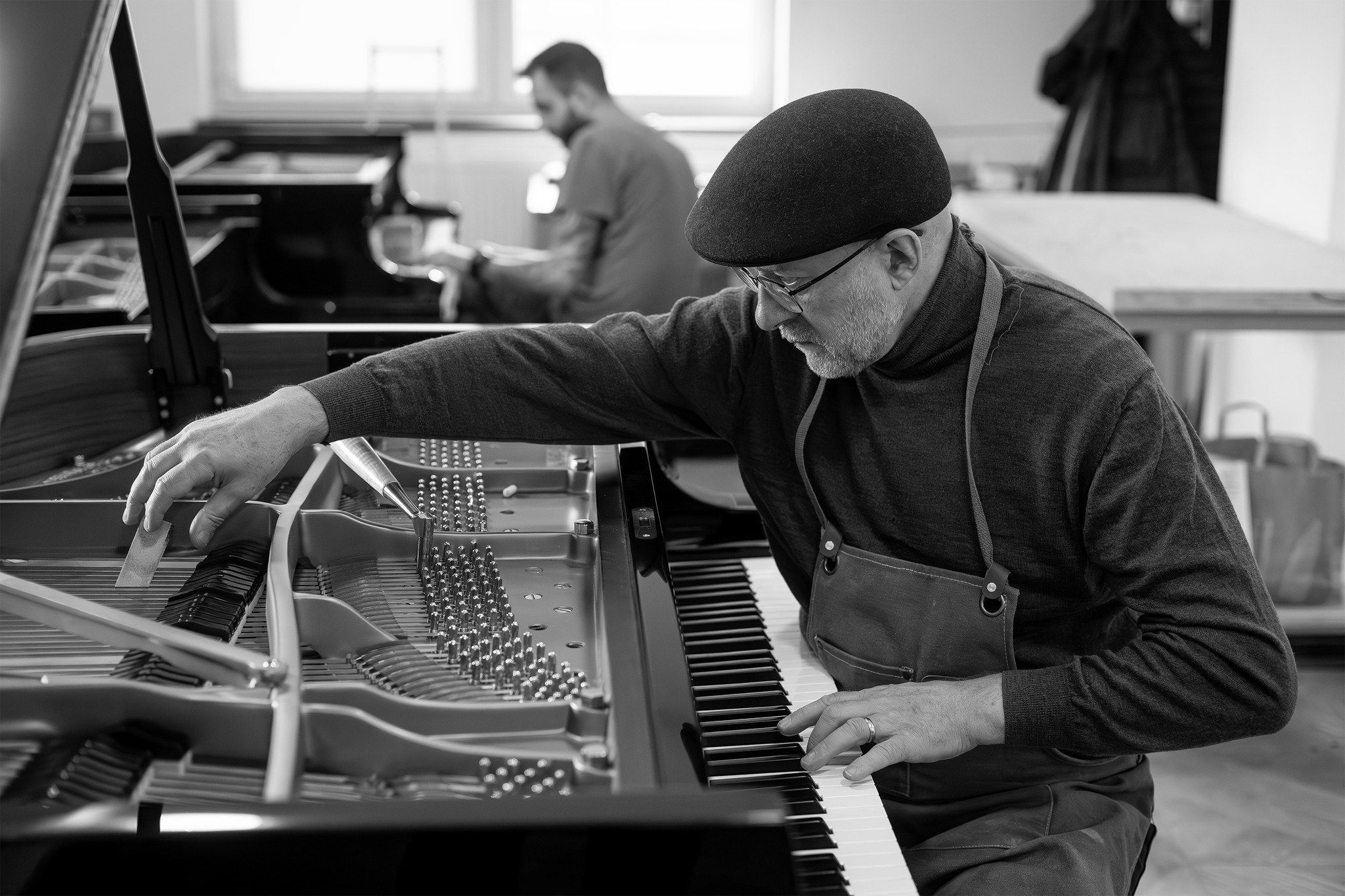
Two identical grand pianos can sound completely different because of differences in their preparation. The key factors are grand piano regulation and grand piano voicing, both of which require the trained ear and experience of a skilled technician. The construction and materials alone are only the foundation upon which the technician builds the final tonal result. The grand piano action must be regulated with great precision so that every note responds consistently to the pianist’s touch.
Hammer Voicing
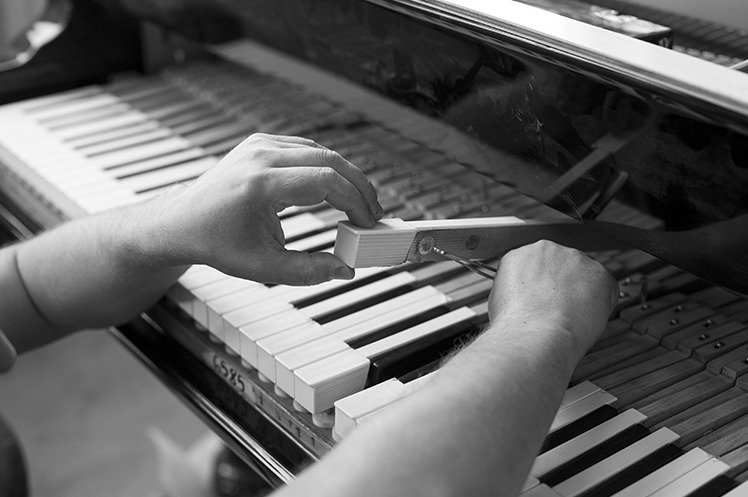
Hammer voicing consists of the precise needling and compression of the felt in order to achieve a consistent tone colour across the entire keyboard. It is almost a jeweller’s craft, requiring patience and sensitivity, because one incorrect movement can undo several hours of work. A properly voiced grand piano produces an even sound in both the bass register and the upper register.
Action Regulation
Action regulation determines how quickly and accurately the key transfers the pianist’s finger movement into the hammer striking the string. An improperly regulated action causes delays, double strikes, or uneven volume between individual notes. A precisely regulated action gives the pianist complete control over dynamics and articulation.
Keyboard Balance
Keyboard balance determines the uniformity of resistance across the keys beneath the pianist’s fingers. Uneven balance causes some notes to sound louder or softer regardless of the performer’s intention. Proper key weighting improves playing comfort and indirectly influences the perceived quality of the instrument’s sound.
Which Elements of Restoration Have the Greatest Influence on a Warm, Bright, or Dark Tone?
The elements that have the greatest influence on whether a grand piano has a warm, bright, or dark tonal character are the hardness of the hammers, the type of strings, and the condition of the soundboard. Below is a brief summary of the most important relationships:
- harder hammer felt produces a brighter, more metallic sound,
- softer felt and deeper hammer reshaping promote a warmer tone colour,
- new strings with the correct gauge increase the richness of the overtones,
- a flexible soundboard with a well-preserved crown deepens and rounds the tone,
- the condition of the bridges determines the instrument’s natural sustain.
The conscious selection of these elements allows the technician to deliberately shape the tonal character of the grand piano according to the owner’s expectations.
Is It Possible to Recreate the Original Tonal Character from Several Decades Ago?
Yes, it is possible to recreate the original tonal character from several decades ago, although doing so requires detailed knowledge of the original specifications of the particular model. The technician must be familiar with the historical string scale, the type of felt used at that time, and the construction of the soundboard. A grand piano restoration carried out with respect for these details can restore a sound that is remarkably close to its original factory condition. However, achieving a one-hundred-percent match is not always possible because some of the materials used in the past are no longer available. Even so, professional grand piano restoration can achieve results that satisfy even the most demanding musicians.
Why Is the Experience of a Grand Piano Technician More Important Than the Parts Themselves?
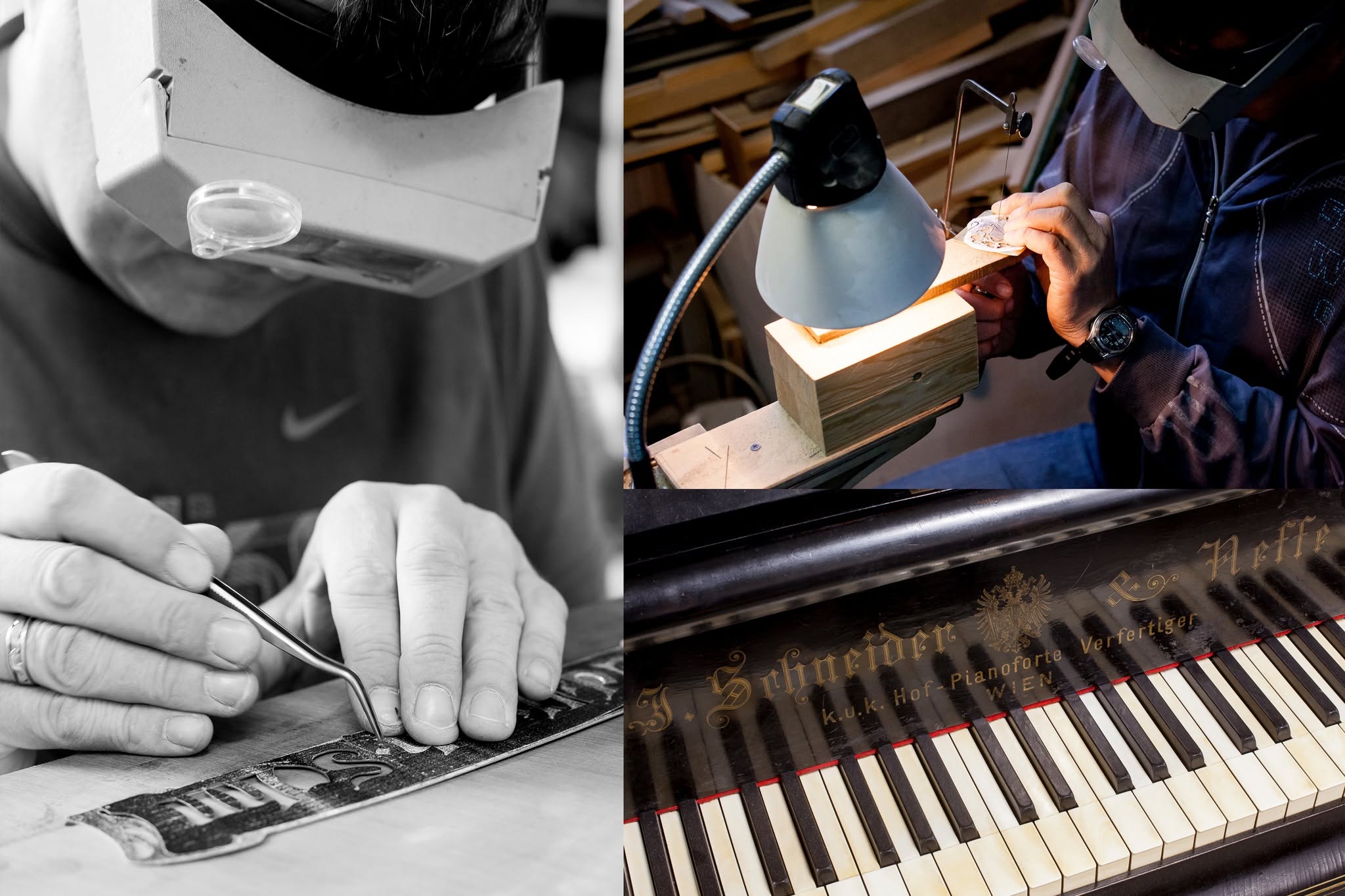
The experience of a grand piano technician is more important than the parts themselves because it is the technician who determines how the selected materials will work together in the final result. The finest strings or hammers will not achieve their full potential in the hands of an inexperienced person, whereas a skilled professional who can listen and respond to subtle tonal differences can achieve exceptional results. It is precisely the ability to combine technical knowledge with musical hearing that distinguishes an average repair from a restoration of the highest standard. An example of this approach is the masterful work of Peter Salisbury, demonstrating how much can be achieved through many years of experience. The SAP Renovation restoration services illustrate the full range of possibilities that an experienced specialist can offer.
How Is the Final Tonal Character Shaped at SAP Renovation?
The final tonal shaping process at SAP Renovation is based on multiple stages of testing and adjustment that take place only after all structural work has been completed. Every grand piano undergoes a thorough inspection of the action, tuning, and repeated hammer voicing until the sound achieves its intended character. The technicians compare the results with historical recordings or the expectations of the instrument’s owner in order to refine every detail. The final result is always the outcome of craftsmanship, acoustic expertise, and musical sensitivity working together. Those interested in such a process can contact an expert to discuss the restoration possibilities for their own instrument.