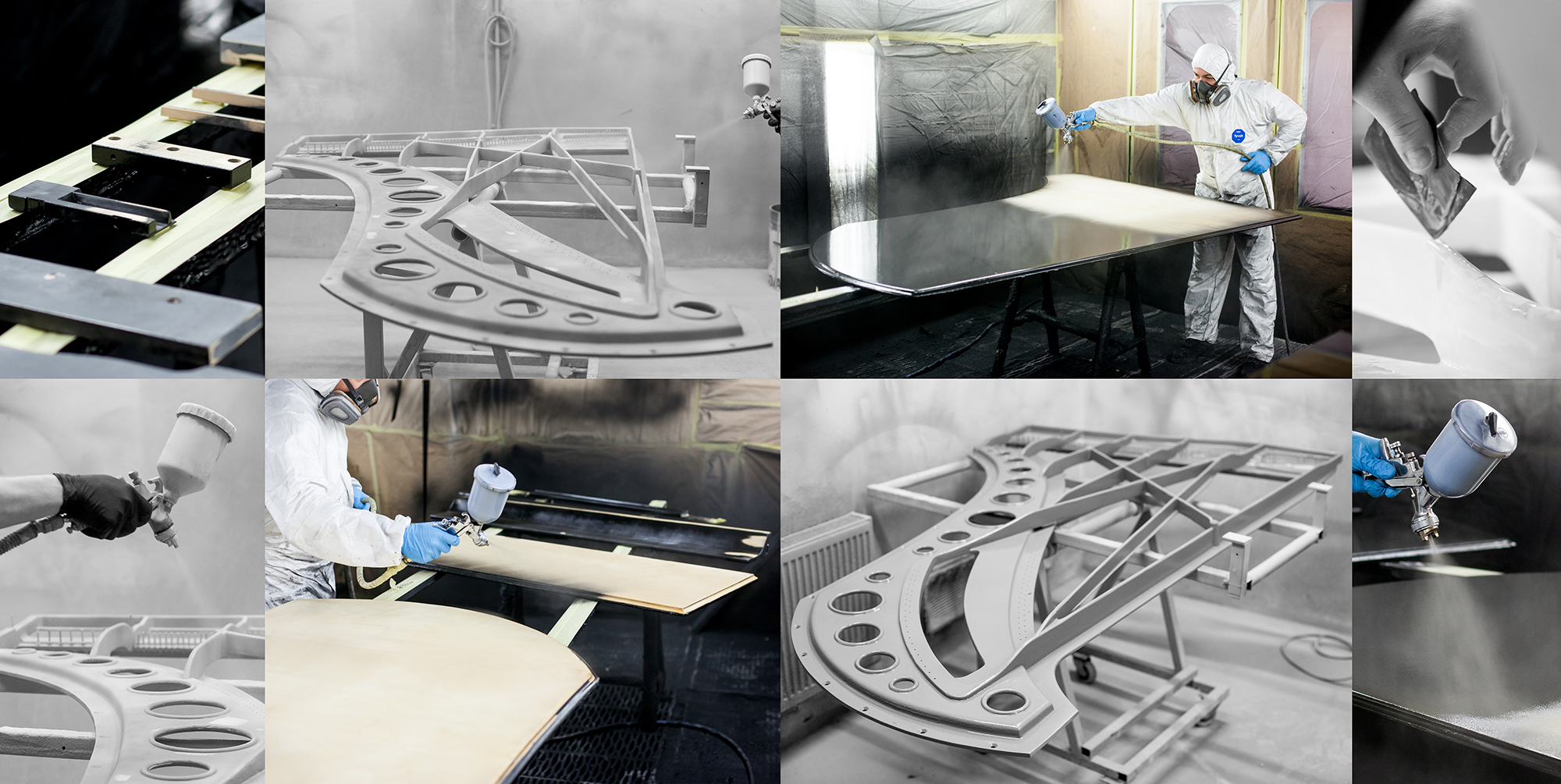

Creating instruments designed for concert performance requires a combination of knowledge and the passion of master craftsmen. This process engages designers and piano makers in many months of work focused on every detail. The structural components must support sound projection while ensuring the stability of the frame during performance. The market seeks instruments with soulful sound that impress through their craftsmanship and powerful volume. The creation of a new brand represents a breakthrough for the community of instrument makers and musicians. This article presents the secrets behind the creation of the frame and strings, from the very first sketches to the final assembly.
Can a New Premium Grand Piano Still Be Created in the 21st Century?
Instrument manufacturers have long faced the challenge of combining innovation with tradition. Many producers limit themselves to reproducing established designs without introducing meaningful changes. The answer to these challenges became a premium grand piano developed under the innovation project known as Alaudis. The team set out to combine traditional craftsmanship with the possibilities offered by modern materials engineering. The design process required an in-depth analysis of acoustics as well as the long-term behaviour of materials. The goal was to create an instrument for pianists who expect absolute excellence.
From an Idea to the First Note – The Story Behind the Birth of the Alaudis Project
The journey toward creating an original instrument required overcoming numerous technological barriers. The designers devoted years to studying the behaviour of wood and metal over time. Every step brought the team closer to the moment when the first tone would emerge from the frame. The creators analysed how each component behaved under the tension generated by the strings. Achieving a pure tonal colour required hundreds of listening tests. The story of this instrument’s creation is a story of passion and uncompromising dedication.

Why Did SAP Renovation Decide to Build Its Own Grand Piano?
The company gained worldwide recognition through the restoration of historic instruments. Its experts became familiar with the limitations of historic designs as well as the craftsmanship of the great piano makers of the past. This practical experience inspired the desire to build an instrument entirely from the ground up using the knowledge gained in the workshop. The project began with an analysis of musicians’ expectations and a search for the ideal tonal dynamics. In this way, a Polish grand piano was born, combining tradition with exceptional precision of craftsmanship. The question of how a premium grand piano is made found its answer in the plans developed within the workshop.
How Did the Experience Gained from Restoring Thousands of Instruments Influence the Project?
The restoration of thousands of instruments gave the team invaluable insight into how materials behave after decades of use. The craftsmen identified the points where the frame and other heavily stressed components wear over time. This knowledge made it possible to avoid many of the mistakes made by piano builders in the past. Learn more about what makes this model unique by reading how the Alaudis grand piano differs from traditional designs. Every stage of the grand piano construction process described here is supported by scientific knowledge. You can also explore the restoration process and the stages of grand piano restoration carried out by this team.
Everything Begins with Wood – Choosing the Materials That Shape the Future Sound
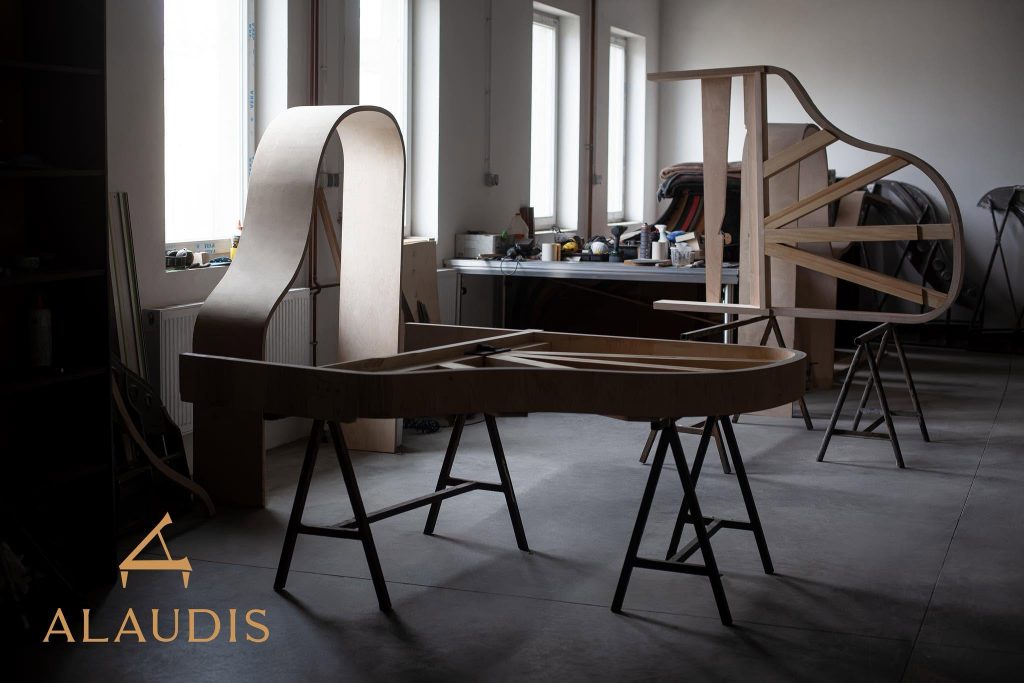
The choice of raw materials determines both the tonal colour and the power of the sound produced by the instrument. Piano makers carefully select timber based on the density of its growth rings and the absence of structural defects. At the heart of the acoustic system lies the soundboard, which is responsible for amplifying sound waves. Spruce harvested from mountainous regions undergoes a drying process lasting several years. Beech and hornbeam are used to manufacture structural components and parts of the action. Storing the wood under carefully controlled humidity conditions prevents cracking during future use.
Designing the Acoustics – How Is the Tonal Character of a New Grand Piano Created?
Designing the acoustics requires combining knowledge of physics with a highly trained musical ear. The analysis of sound wave propagation takes place in the department known as the acoustic workshop. Vibration measurements make it possible to achieve balanced proportions between all registers of the instrument. The designers analyse the arrangement of the ribs and the thickness of the components responsible for tone production. Work on the distribution of forces forms an integral part of the grand piano design process. The result of these efforts is tonal consistency combined with outstanding dynamic performance during concerts.
Scale Design
The scale determines the length and tension of the strings in each section of the frame. Calculating these parameters ensures an even level of volume across every note. Developing the scale requires computer simulations as well as extensive listening tests. The engineers avoid abrupt changes in wire tension between neighbouring notes on the keyboard. The transitions between the bass register and the upper register remain perfectly smooth. These calculations also simplify the subsequent tuning process while improving the long-term stability of the strings on the frame.
Selecting the Strings
The bass and treble strings are manufactured from steel, with the bass strings wrapped in copper wire. The diameter of each wire must correspond precisely to the design specifications for the intended frequency. Winding copper around a steel core provides greater tonal depth and a richer bass resonance. The treble strings undergo careful selection to ensure resistance to continuous tension. The choice of materials influences both sustain and the richness of overtones. Attention to every detail eliminates sound distortion during concert performances.
Structural Tension
The pressure exerted by the strings on the cast-iron frame amounts to several tons of force under static conditions. The frame and the pinblock form the structural core that carries these forces without deformation. The engineers use a cast-iron alloy specifically selected for its vibration-damping properties. The installation of the frame eliminates resonances that could otherwise reduce tonal quality. The strength of these components directly influences tuning stability throughout the instrument’s lifetime. Proper balancing of these forces guarantees the structural safety of the instrument for decades.
Mechanika najwyższej klasy – dlaczego precyzja wykonania liczy się w setnych części A Premium Action – Why Does Precision Measured in Hundredths of a Millimetre Matter?
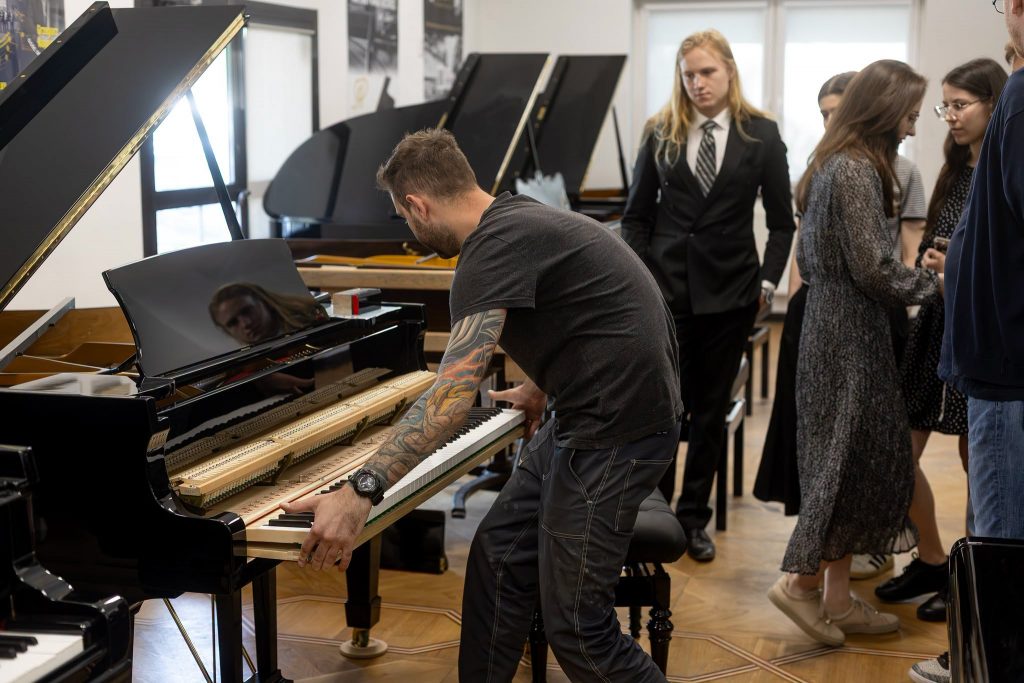
The levers and hammers form the connection between the movement of the pianist’s hands and the vibration of the strings. Thousands of individual parts must operate without resistance and with perfect consistency. Read more about the grand piano action, which explains the principles behind its regulation. The hammers are covered with felt of carefully selected density and fibre elasticity. As a result, the pianist gains complete control over dynamics, from the quietest pianissimo to the most powerful chord. Any lack of precision would lead to sticking keys and uneven action performance.
Voicing as the Final Stage of Construction – When Does a Grand Piano Develop Its Own Character?
Once all components have been assembled, the instrument receives its unique tonal colour and musical expression. The craftsman carefully needles the hammer felt to modify its density. This process shapes the tonal colour and determines the carrying power of the sound. This procedure, known as grand piano voicing, requires patience and exceptional musical hearing. These adjustments ensure tonal consistency across the entire keyboard. The final result is an instrument with a unique voice and a wide dynamic range.
Quality Control – How Many Tests Does an Instrument Undergo Before Leaving the Workshop?
Before the instrument is delivered to the musician, it undergoes a comprehensive phase of inspection and listening tests. Inspectors evaluate the operation of every component under varying humidity conditions. The inspection includes measuring key resistance and verifying tuning stability. Proper grand piano manufacturing requires every detail to be verified by experienced specialists. Every component is carefully inspected for defects and precise fitting. The testing process includes the following procedures:
- Frame strength tests under static loads.
- String stretching and seating on the bridges.
- Listening tests in rooms with varying acoustic conditions.
Learn more about what our restoration and instrument-building services include. The question of how a grand piano is made finds its complete answer in these quality control procedures.

Alaudis – A Combination of European Craftsmanship and Modern Technology
The project combines traditional craftsmanship with the use of precision machining in the production of the frame. Machines ensure the repeatability of every shape, while the final finishing is carried out by skilled craftsmen. This combination guarantees stable technical parameters and the highest standard of workmanship. The team remains committed to preserving the European tradition of fine piano making. In this way, a modern grand piano is created that meets the expectations of today’s pianists. If you have any questions, contact us and speak with one of our advisors.
Why Does a Modern Premium Grand Piano Take Months to Build Instead of Weeks?
Mass production is focused on speed, which inevitably requires compromises in quality. In the construction of unique instruments, however, time plays a vital role in allowing the wood to stabilise naturally. The curing of the finish and the stabilisation of structural tension within the frame require patience and many months of work. The regulation of the action and the tuning process are repeated numerous times at carefully planned intervals. Every stage of the work is thoroughly inspected to eliminate even the smallest imperfections. Only by avoiding haste is it possible to achieve consistent quality and exceptional precision.
Creating an outstanding instrument is a challenge that combines engineering with the art of piano making. This project demonstrates the possibilities made possible through knowledge gained from decades of restoration work. Careful attention to the quality of the wood, steel and felt is directly reflected in the power and beauty of the sound. The combination of skilled craftsmanship and machine precision establishes new standards within the industry. Every instrument leaving the workshop becomes a unique creation with its own individual tonal character. The dedication of the entire team allows music to gain new depth and new sonic possibilities.