Are you standing in front of an old, dusty instrument and considering restoring it to its former glory? Its majestic cabinet inspires admiration, yet the passage of time damages delicate wood and felt. Restoring such a masterpiece of craftsmanship requires extensive knowledge and precision. Before making a decision, you need to understand the technical and financial realities. Find out what determines whether your instrument has a chance for a second life.
Why Not Every Grand Piano Is Worth Saving – Emotions Versus Technical Reality
Not every instrument qualifies for restoration, because severe structural damage eliminates any justification for carrying out restoration work. We often approach family heirlooms with great sentiment, seeing them as priceless treasures. Reality, however, can be harsh when years of neglect have irreversibly damaged the wooden structure. Changes in humidity cause deformations that cannot be easily corrected. Remember that an old grand piano intended for restoration requires a cool-headed and objective assessment by a specialist.
What Do Experts Examine When Assessing an Instrument for Restoration?
During the qualification process, specialists carefully analyse the main structural areas that determine the instrument’s stability and sound. A thorough assessment of the condition of the grand piano makes it possible to accurately determine the degree of wear of individual components. Experts measure stresses and search for hidden material defects within the cabinet. Every single element has a direct influence on the final acoustic result of the entire project. A reliable grand piano inspection before purchase forms the absolute foundation for all further work.
The Soundboard – The Most Important Element of the Assessment
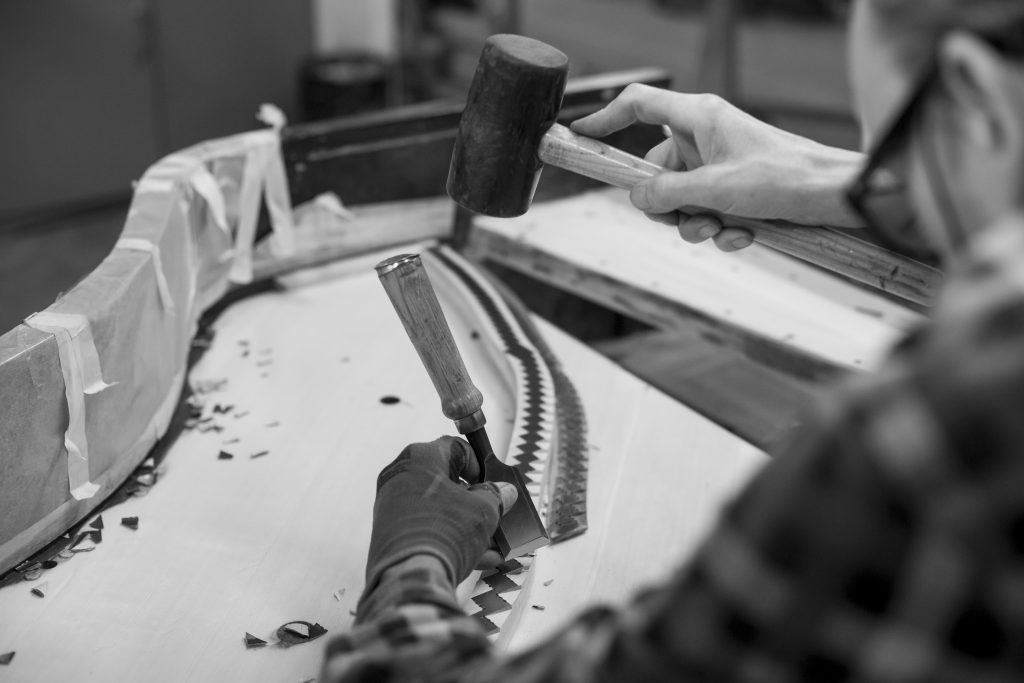
The soundboard is responsible for the instrument’s tonal colour and volume, which is why its condition determines the success of the restoration. Deep cracks or the loss of its proper crown dramatically reduce the instrument’s tonal qualities. Specialists working in a professional acoustic workshop are able to diagnose such defects efficiently. It is precisely at this stage that the question of whether every grand piano is suitable for restoration is decided. Properly restored wood will reward you with an extraordinary, rich, and powerful sound.
The Cast-Iron Frame and Supporting Structure
The cast-iron frame must withstand the enormous tension of the strings, making any crack in this component a critical defect. Damage to this metal element makes restoration impossible for safety reasons. Experts also assess the condition of the tuning pins and the pinblock responsible for maintaining tuning stability. A weakened structure will not withstand the pressure, causing the instrument to go out of tune almost immediately. Structural stability is the foundation without which any further work loses its purpose.
The Condition of the Action and Keyboard
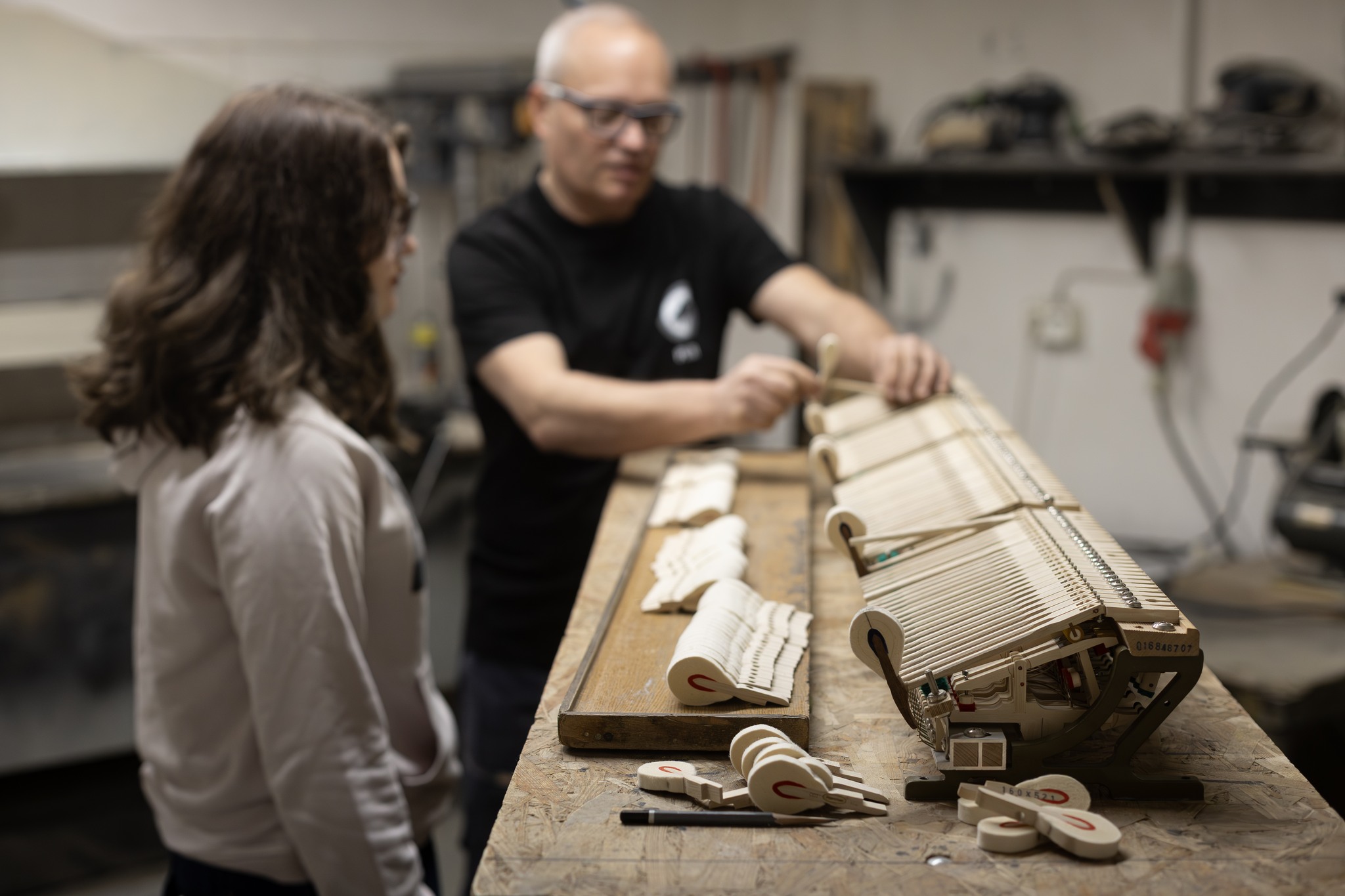
The keyboard and lever system determine playing comfort and the precision with which musical emotions can be expressed. Worn felts or damaged centre pins require meticulous attention and replacement. During the inspection of the grand piano action, specialists assess the degree of wear of the wooden components. In some cases, an advanced regulation alone is sufficient to restore full functionality. A comprehensive rebuilding guarantees the pianist complete control over the dynamics of the sound.
Does the Brand Matter – Which Grand Pianos Are Most Frequently Restored?
Renowned brands attract the greatest interest because their outstanding construction guarantees excellent restoration results. Instruments built by respected manufacturers possess a unique acoustic architecture that withstands the passage of time. When reviewing restoration examples, it is easy to notice that the same manufacturers appear repeatedly in professional workshops. This is due to their exceptional durability and unique tonal character. Below you will find the reasons why it is worth choosing proven brands.
- Outstanding quality of the materials used by master craftsmen of the past.
- Availability of original replacement parts on the market.
- Stable market value after restoration.
- A unique tonal profile of the instrument.
Steinway & Sons
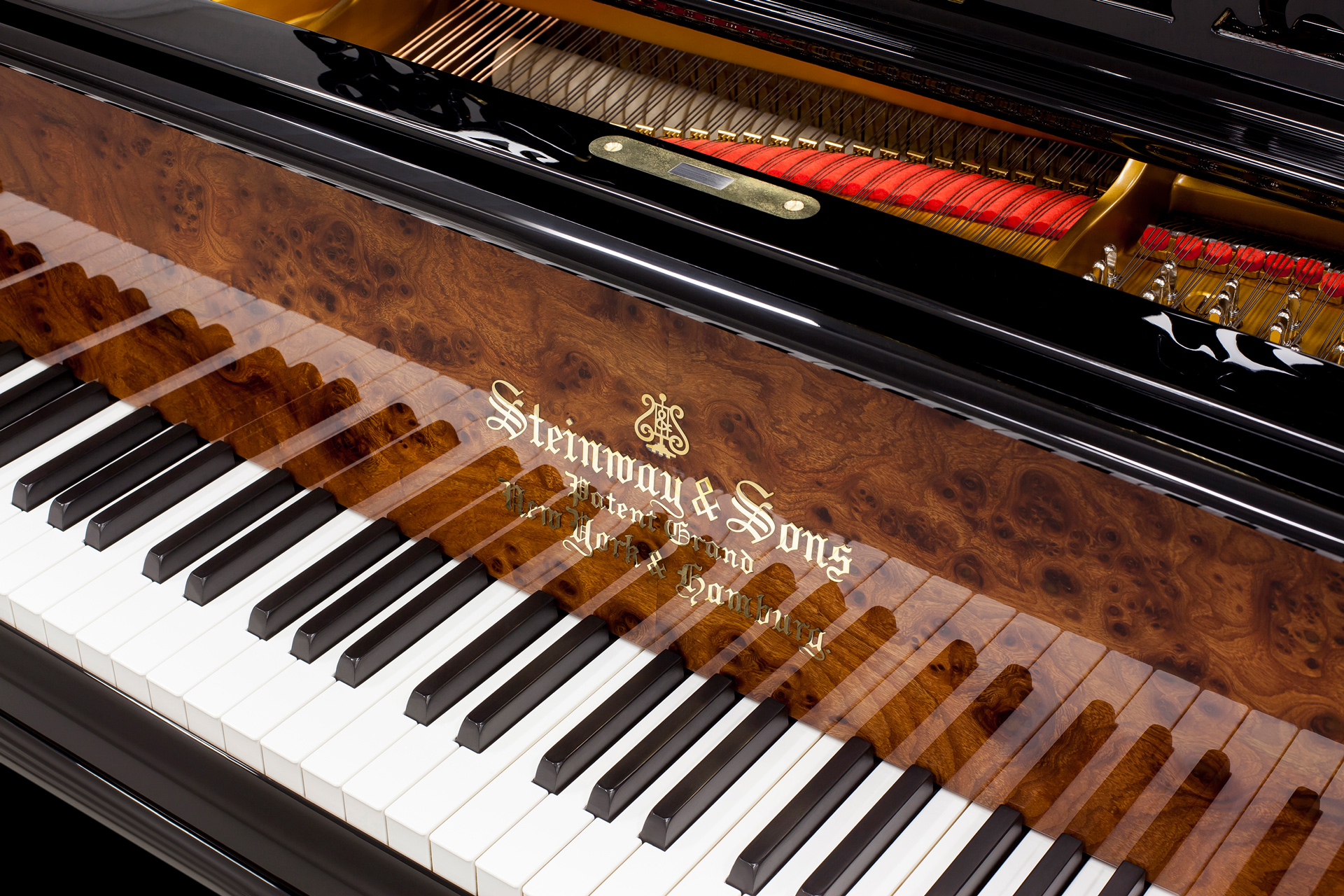
These American-German instruments are regarded as the absolute benchmark in the world of music. Their unique construction enables them to regain their full palette of tonal colours after restoration. Owning such an instrument is a source of pride, and the value of the grand piano increases significantly. Restoration workshops are eager to work on these models because their construction is thoroughly understood. Every component was designed with perfect sound in mind.
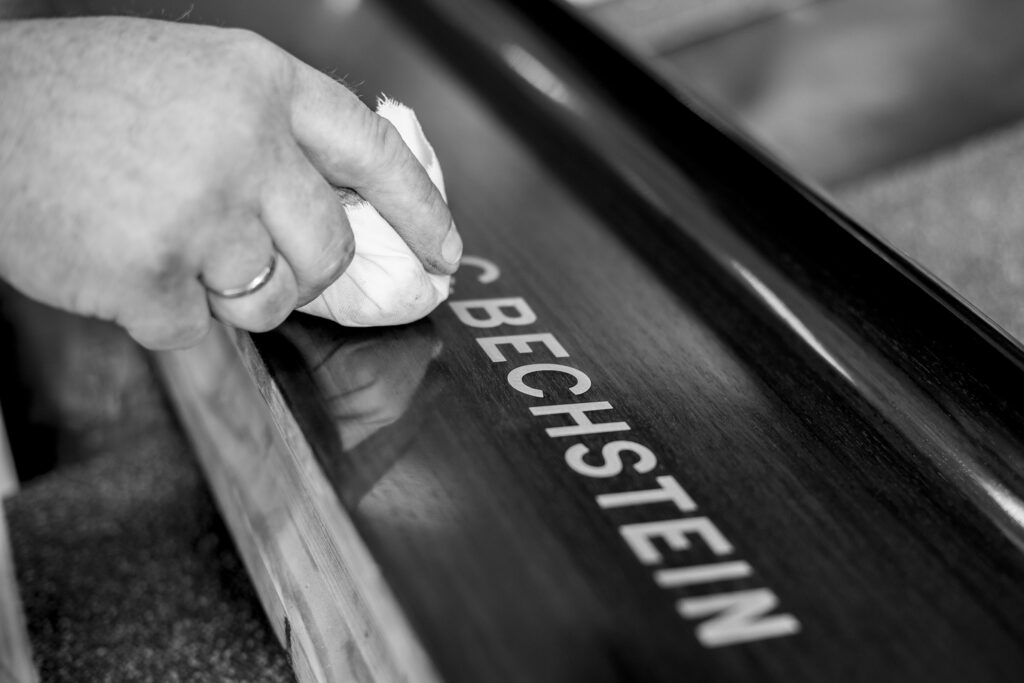
C. Bechstein
German precision and lyrical tone distinguish the instruments produced by this respected manufacturer. They are characterised by a durable construction capable of withstanding demanding environmental conditions. Restoration work brings back the clarity of tone that once filled historic music salons. Pianists looking for an instrument for solo performance often choose this brand. The craftsmanship of the turn of the twentieth century demonstrates remarkable technical longevity.
Bösendorfer
The Viennese tradition has resulted in a rich bass that continues to captivate musicians all over the world. Some models feature additional black keys that require specialist knowledge during restoration. Restoring such a masterpiece is a challenge reserved for experienced piano technicians. The final result is capable of transporting the listener into an entirely different dimension of musical experience. These unique instruments retain their collector’s value exceptionally well.
Blüthner and Grotrian
Both brands represent the very highest level of European piano manufacturing, offering an exceptionally singing tone. Blüthner grand pianos feature the unique aliquot system, which enriches the highest sound registers. Grotrian impresses with the solid construction of its frame, ensuring many years of structural durability. Restoring these instruments preserves historic acoustic innovations. Musicians appreciate them for their ability to create an intimate musical atmosphere.
When Is Restoration Financially Unprofitable?
Restoration becomes financially unjustifiable when the cost of materials and labour exceeds the value of the completed instrument. This mainly applies to mass-produced instruments made by lesser-known manufacturers during the last century. In such cases, the cost of new strings and cabinet refinishing may be economically unreasonable. Before making a decision, carefully check how much grand piano restoration costs. Sometimes it is better to purchase a ready-to-play instrument, especially when considering when grand piano restoration is worthwhile. Browse professionally restored instruments available for sale to make a well-informed decision.
Historical, Sentimental, and Collectible Value – Three Different Perspectives
Three different perspectives on an instrument determine the scope and depth of the planned restoration work. The sentimental perspective focuses on family memories, where economic considerations become secondary. On the other hand, a historic grand piano requires the maximum possible preservation of its original historical substance. In such cases, the restoration of historic grand pianos is governed by specific conservation principles. Collectors seek rare models that may increase in value in the future. Each of these approaches modifies the final expectations regarding the restored instrument.
Is It Worth Investing in the Restoration of a Family Instrument?
Restoring a family heirloom makes emotional sense, even when the costs are high. This process allows the family’s history to be preserved for future generations of musicians. You gain not only a fully functional instrument but also an invaluable carrier of family memories from the past. Grand piano restoration – is it worth it? This is a question that everyone must answer individually. Professional assistance will help determine the chances of restoring the instrument’s original appearance. A reliable grand piano inspection before purchase, carried out by an experienced expert, will also prove invaluable.
What Does a Professional Pre-Restoration Assessment Look Like?
A professional technical assessment consists of a thorough inspection of every component by a qualified technician. The specialist begins with an external inspection and the removal of the internal action. Moisture measurements of the wood are taken, and acoustic tests of the soundboard are carried out. The result is a report containing a description of the damage together with a restoration cost estimate. A comprehensive grand piano assessment protects you from unexpected expenses during the restoration process. As a result, you gain confidence about the future of your instrument.