Search the site

Experience

A sound
unlike
any other

SAP Alaudis – Skylark

The Polish grand piano

Ask for the price Alaudis in pictures – gallery
01 – 03
Gold Alaudis mark on wood

SAP Alaudis

SAP Alaudis is an extraordinary grand piano that sets out to capture the enchanting beauty and sound of the skylark’s song. It was born of the desire to create a master instrument – one that delights with its sound, stirs the emotions and becomes a natural extension of the pianist’s soul.

The Alaudis grand piano is the work of human hands, patience and a love of sound. We do not use series production – each instrument is built individually, in a process full of precision and masterly craftsmanship. Every component – from the soundboard, bridges and action to the lacquering and voicing – is made with the greatest attention to detail.

Our aim is not merely to build a grand piano, but to create a work of art – an instrument with a soul that will delight pianist and listener alike. At Alaudis we combine classical craft techniques with modern acoustic solutions to create a sound full of depth, warmth and life.
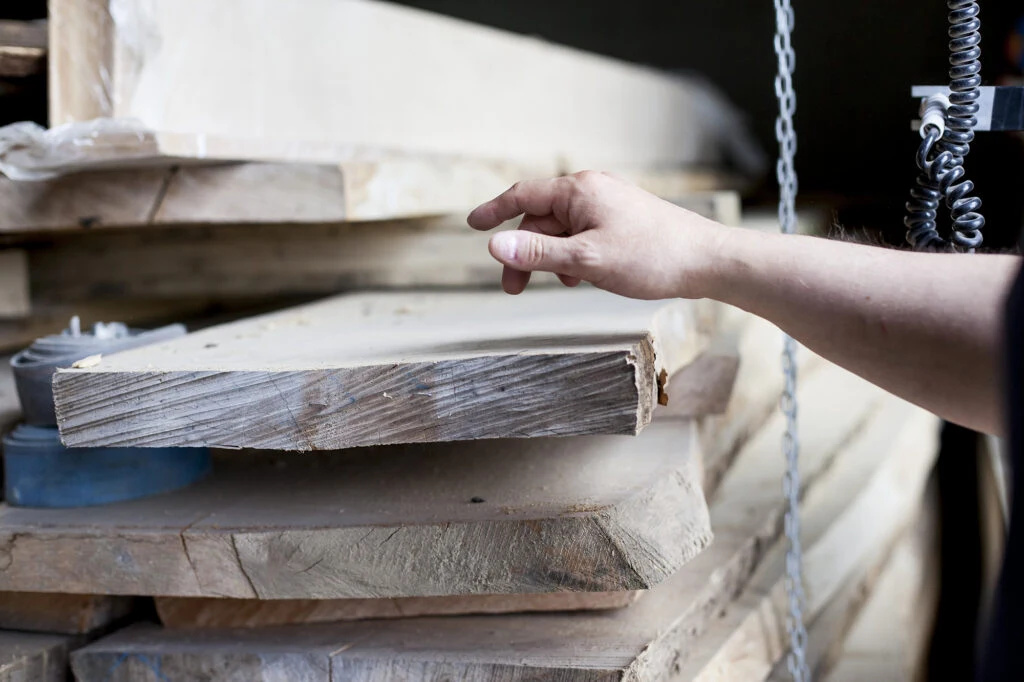
A hand on seasoned boards in the timber store

Wood

Everything begins with wood. Seemingly ordinary boards, stacked in piles, wait for their time – for the moment when they will turn into sound. The future soul of the grand piano is hidden within them.

At SAP Alaudis we choose wood the way an artist chooses colours for a painting. We look for harmony, elasticity and soul. Each species has its own voice – resonance spruce gives warmth and depth, birch brings precision, and maple and beech provide strength and durability.

It matures for years in natural conditions before it reaches the hands of our masters. Only then does the real transformation begin – from raw material into a carrier of emotion.

Because a grand piano is not a machine.
A grand piano is wood that plays.

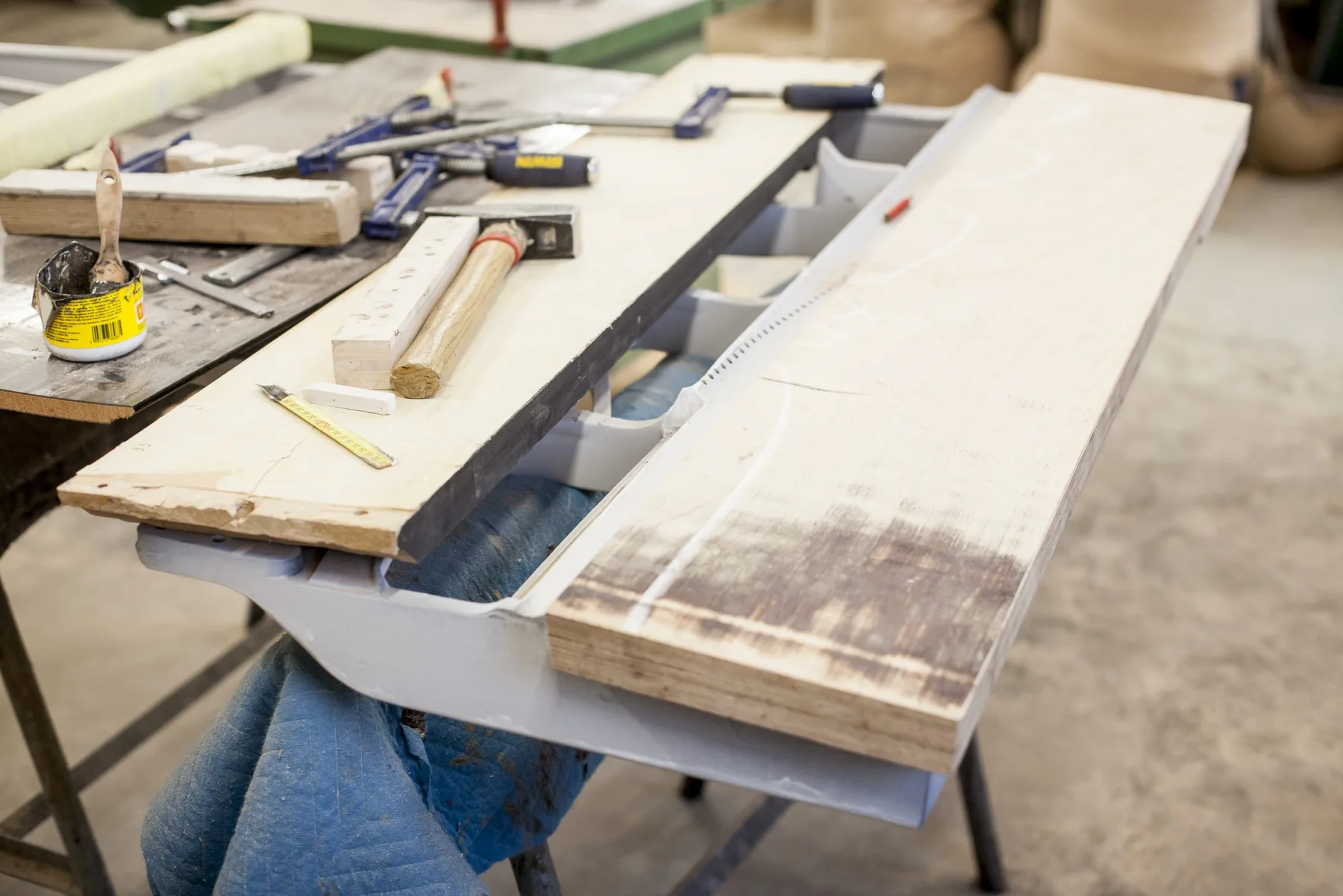
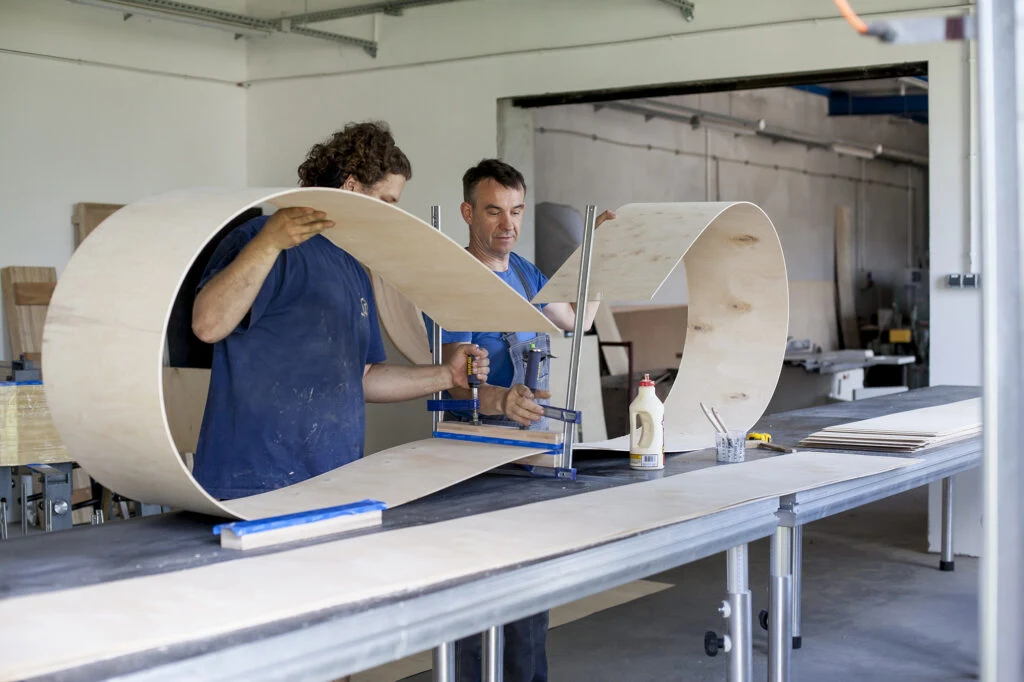
Two masters bending the maple laminations of a grand piano rim

The rim

The Alaudis rim is built from laminations of carefully selected maple, each a few millimetres thick. This construction provides an excellent combination of elasticity, resilience, stability and high structural strength.

We lay each layer according to the direction of the wood grain, then glue and bend the stack on a special form — the rim press. Under controlled pressure and at the right temperature, the laminations bond into a single rim that keeps its shape with the utmost precision.

A laminated rim of this kind provides exceptional structural rigidity, minimises internal stresses and improves tuning stability, while allowing the rim to resonate actively with the soundboard.

The result? A rim that not only supports and binds the whole instrument together, but also helps shape its tonal character — exactly as the Alaudis philosophy has it: a grand piano is wood that sings.

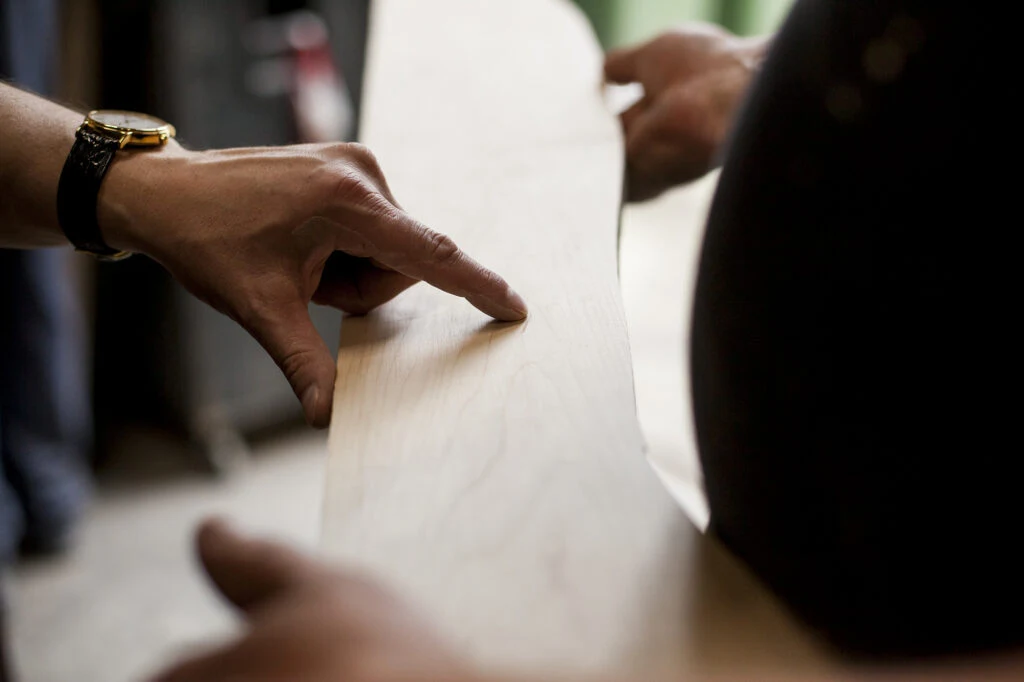
A hand checking the surface of an Okoumé lid

The lid

For the lids of the SAP Alaudis we chose Okoumé wood for its exceptional combination of lightness, stability and resonance. Okoumé makes it possible to build lids that are lighter than traditional ones while retaining a multi-ply structure. The multi-ply construction limits stresses in the wood, improves its dimensional stability and extends the life of the component.

This lid construction brings tangible benefits: less load on the hinges and hardware, easier lifting of the lid and greater comfort in use. It also matters acoustically – less mass means less “dead” structure that could absorb vibration. In contrast to heavy, rigid constructions, we aim for harmony: premium material and craft technique create an element of comfort that does not restrict the sound of the instrument.

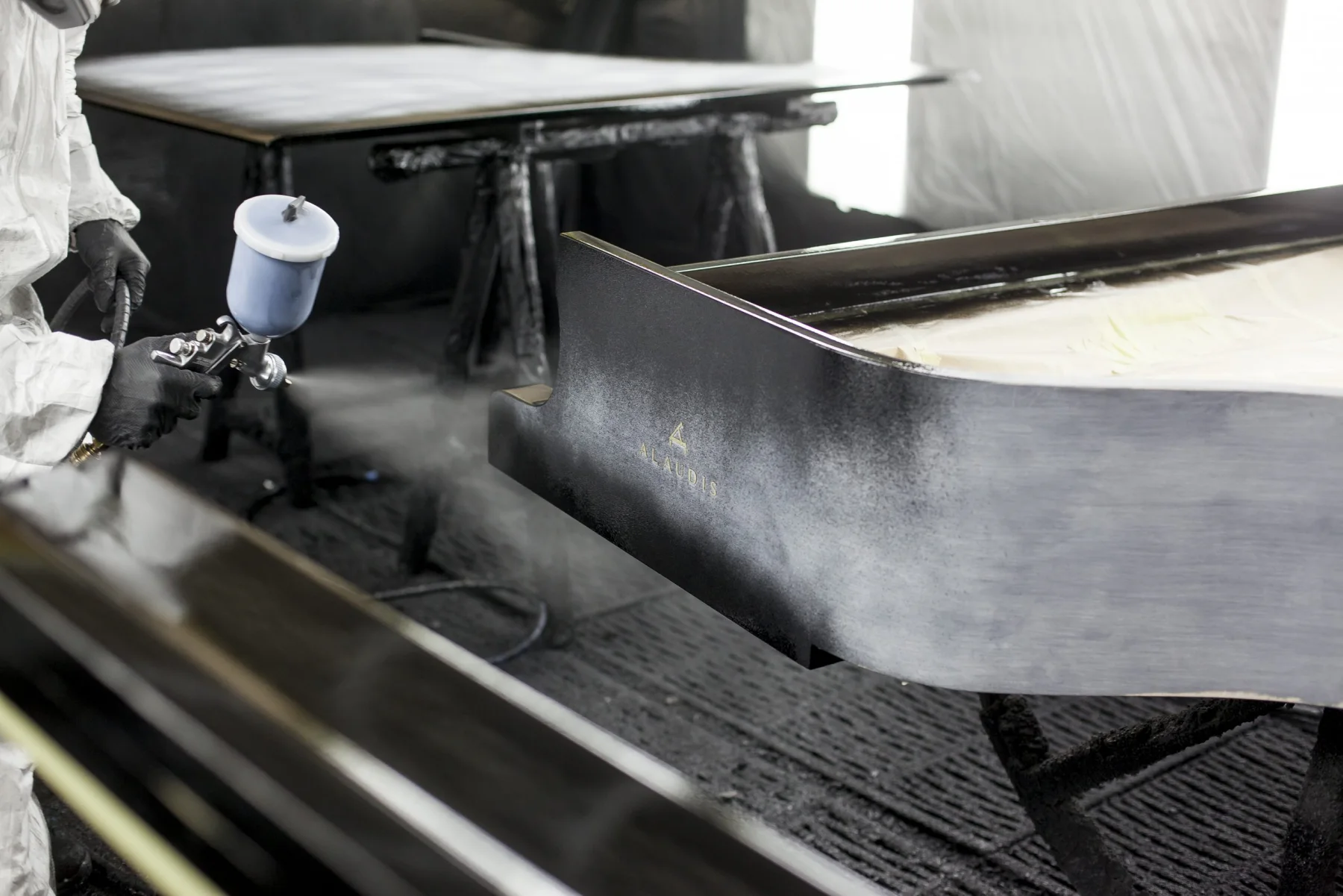
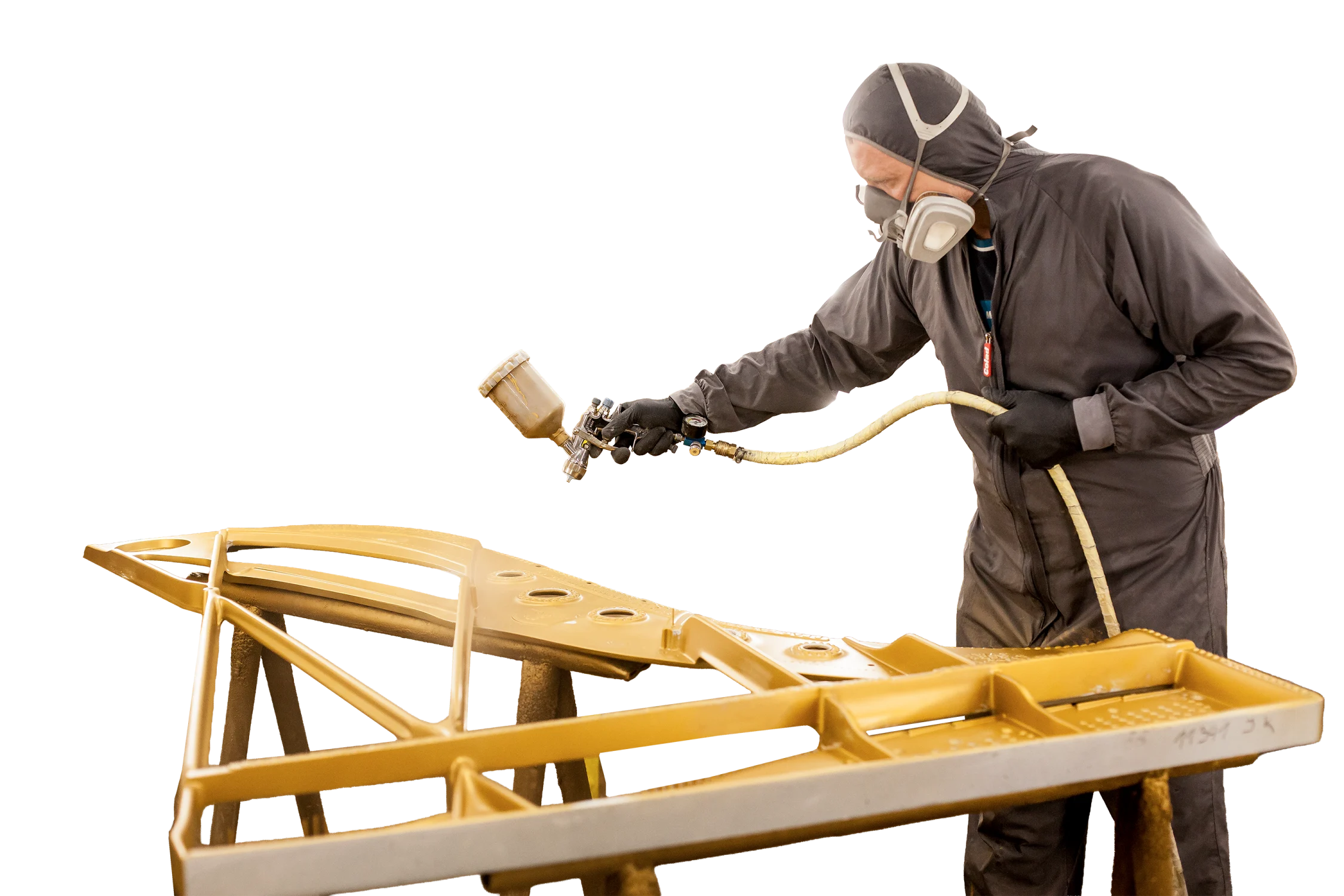
Lacquering the rim of an Alaudis grand piano in the spray booth

Lacquering

The SAP Alaudis grand piano was lacquered with the utmost care, using a coating system from ICA – a renowned Italian manufacturer of finishes developed for musical instruments.

Six coats of primer were applied to the rim and case parts and cured for 350 hours, ensuring deep penetration of the substrate and stable base layers. Nine coats of polyester topcoat followed, cured for 400 hours, which guarantees exceptional gloss, scratch resistance and durability.

This multi-layer finishing cycle produces a smooth, deep, mirror-like surface that not only enhances the instrument’s appearance but also protects its structure from changes in humidity, UV radiation and mechanical damage. Thanks to this finish, the SAP Alaudis grand piano not only looks supremely elegant but will also remain in excellent technical and acoustic condition for many years.

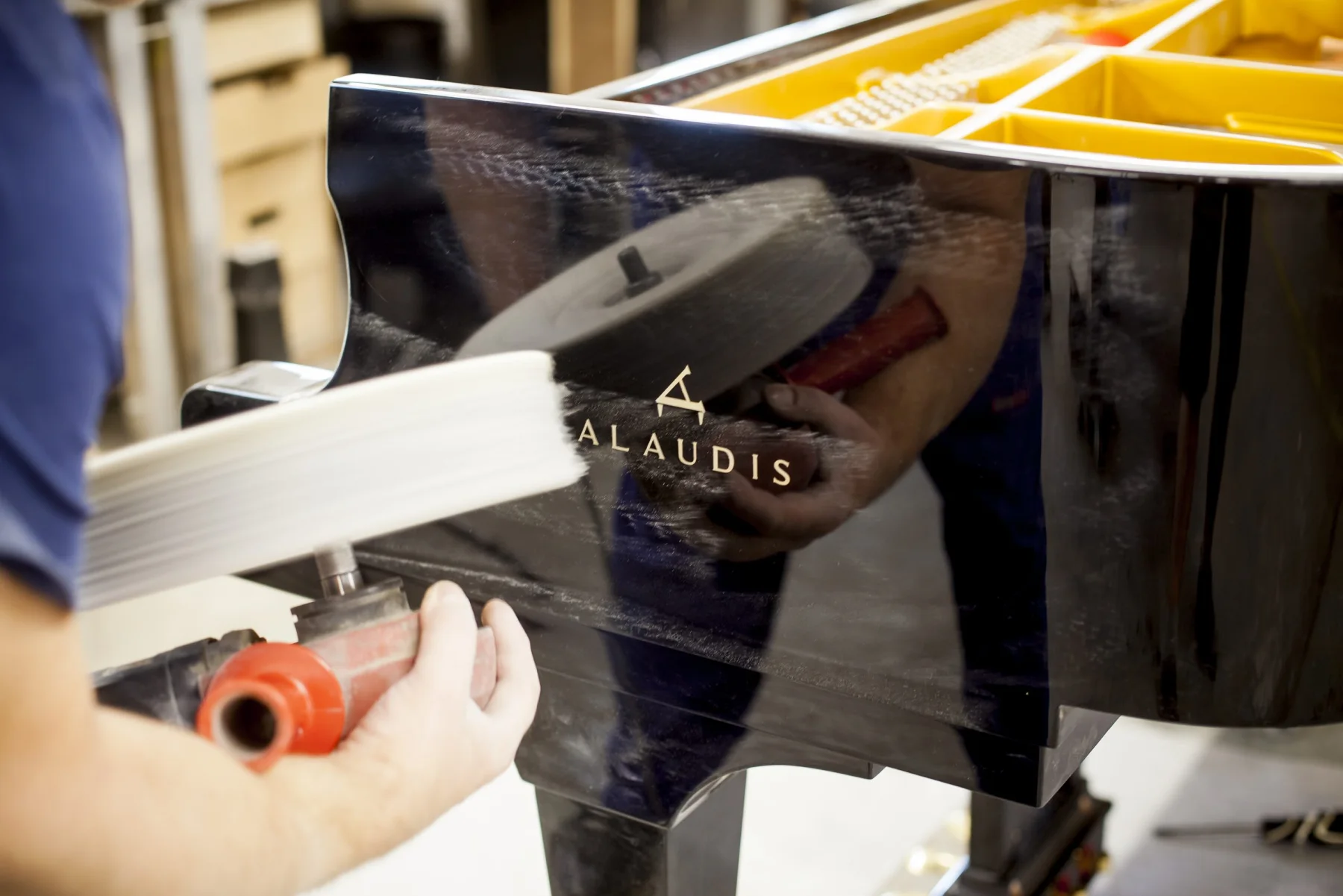
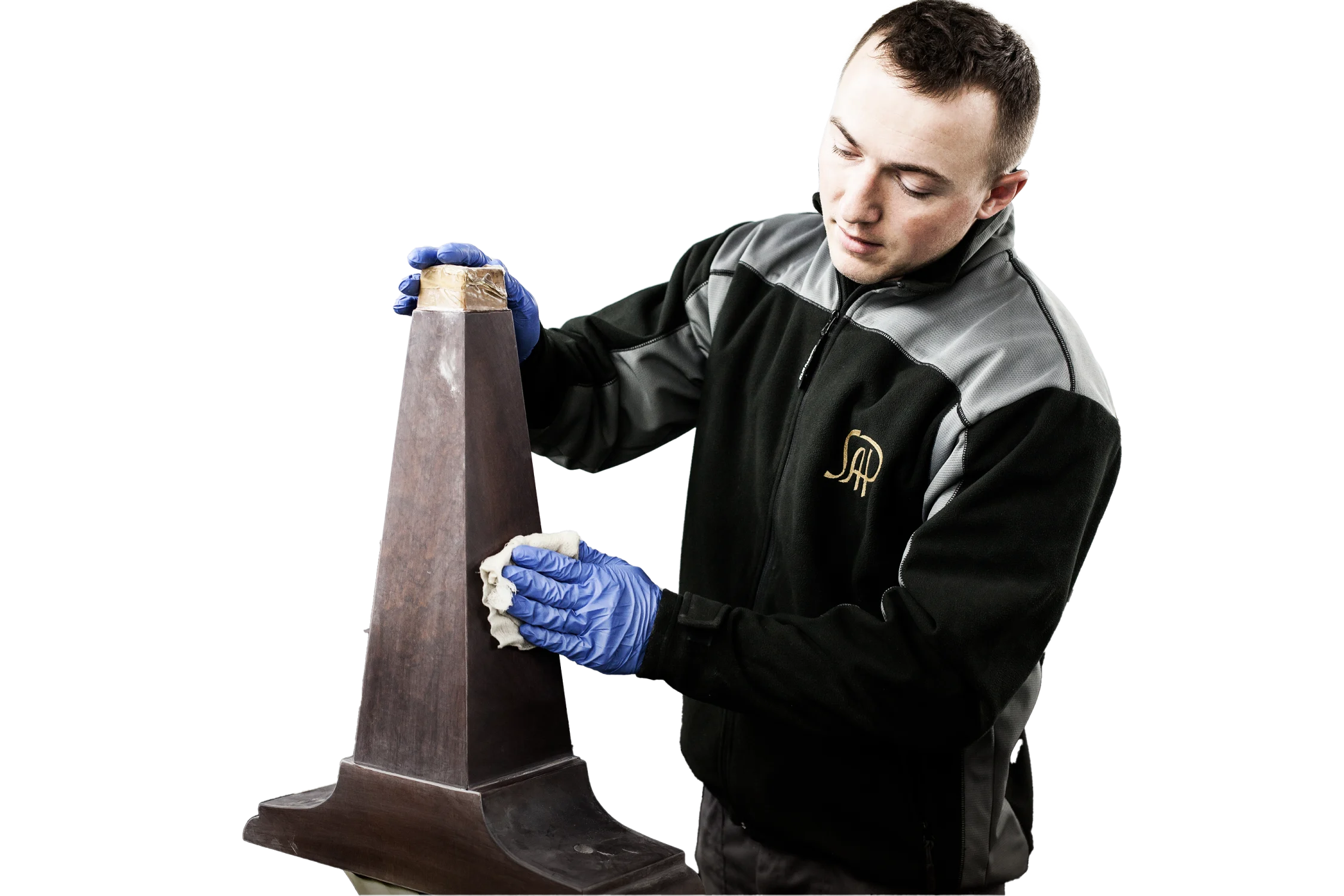
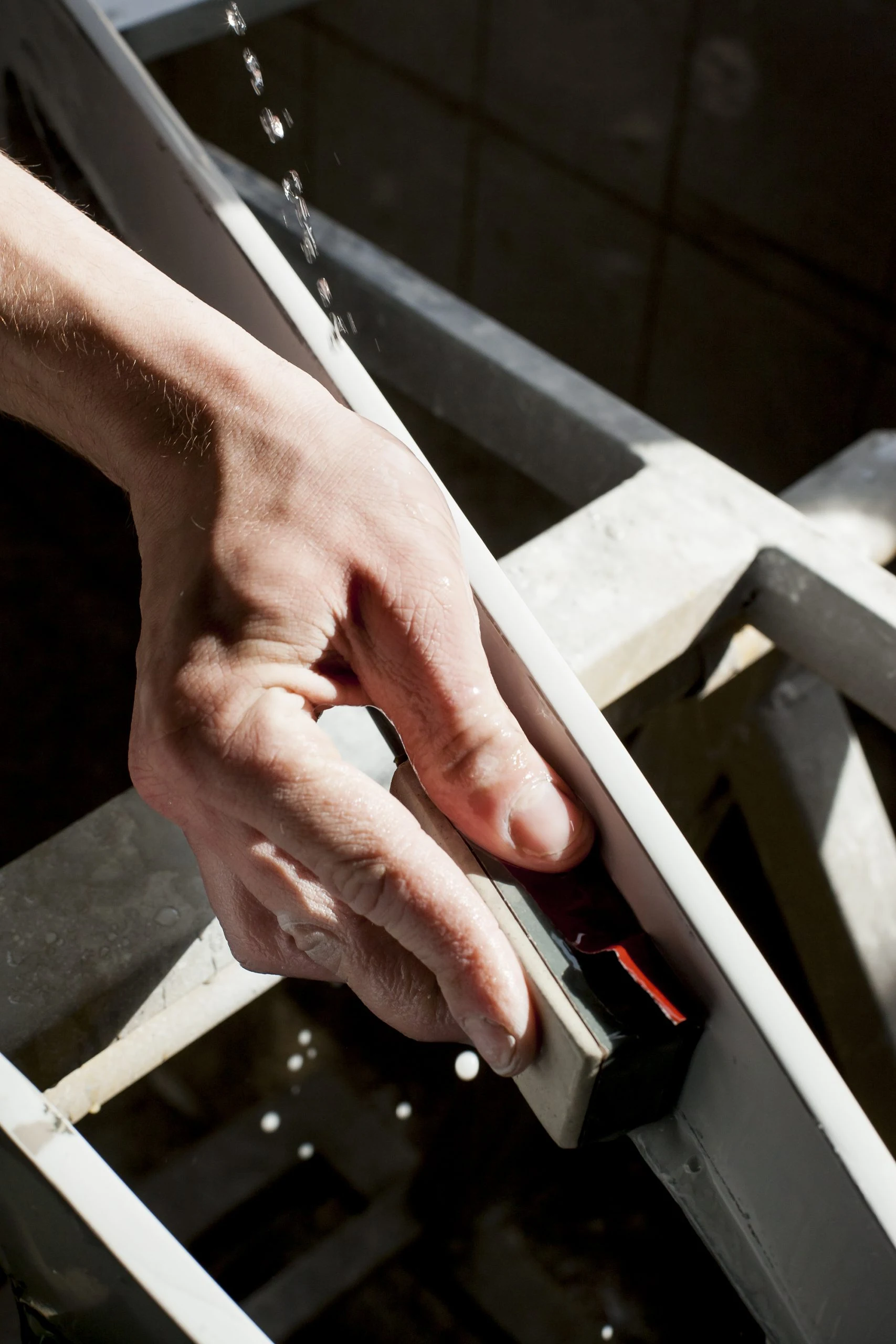
Polishing a lacquered surface bearing the Alaudis mark

Sanding and polishing

SAP Renovation is one of Europe’s leaders in piano finishing. Over more than three decades our team has restored more than 14,000 instruments, of which over 10,000 received a polyester finish – from classic concert grands to historic models by Steinway & Sons, Bösendorfer and C. Bechstein.

At SAP Renovation, sanding and polishing combine masterly craftsmanship with modern technology.

On the SAP Alaudis grand piano, sanding and polishing were carried out with exceptional attention to the smallest detail. After the successive coats had been applied, a multi-stage sanding cycle produced an ultra-smooth surface, followed by intensive polishing to achieve a flawless mirror finish.

The final surface of the SAP Alaudis grand piano not only delights with its gloss and beauty but is also an integral part of the instrument’s structure – it minimises the loss of vibration, reduces micro-vibrations and supports acoustic transmission through a clean, stable reflection and a mechanically coherent finish.

The masters

01 – 04

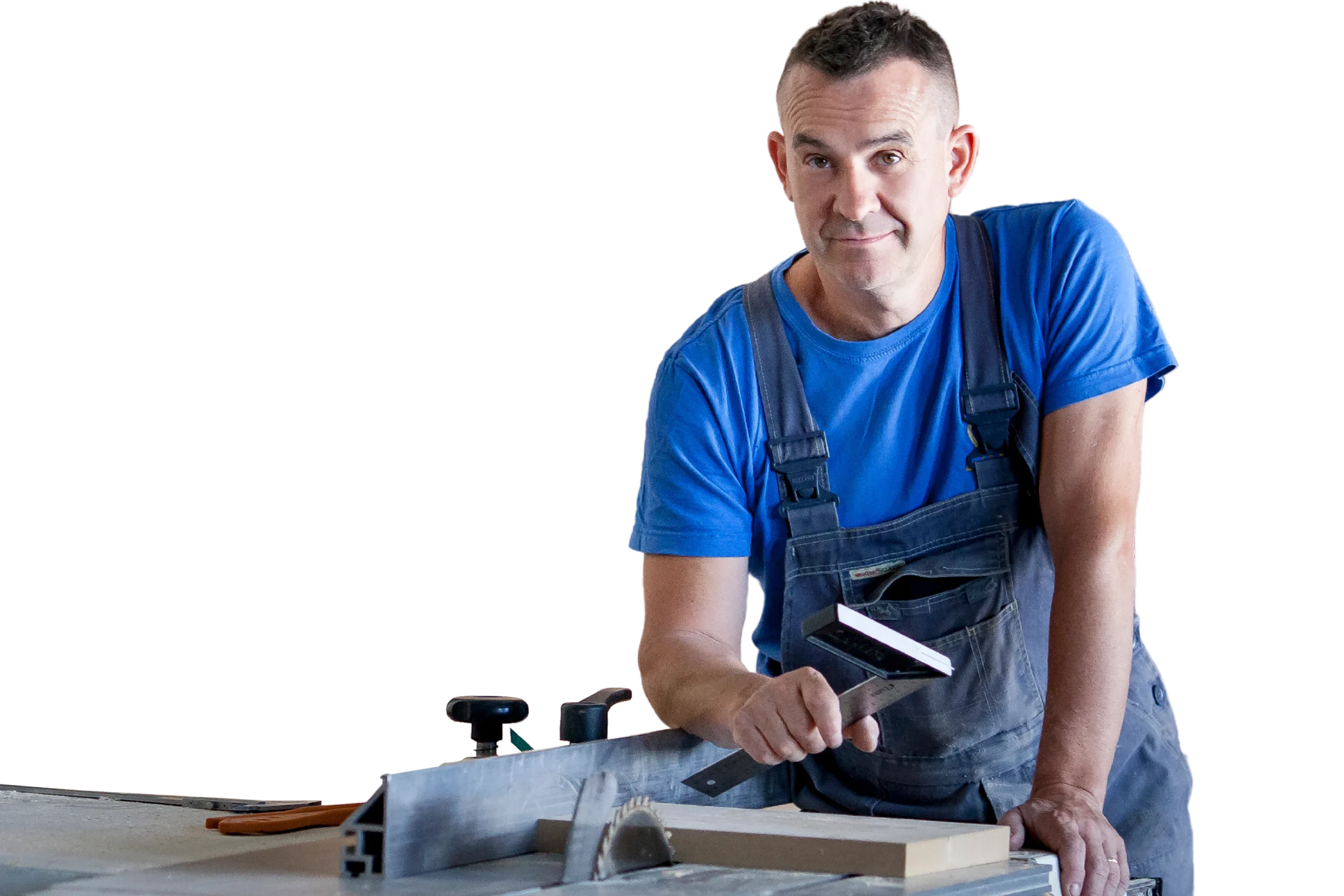
The woodworking shop is led by

Grzegorz

35 years of experience

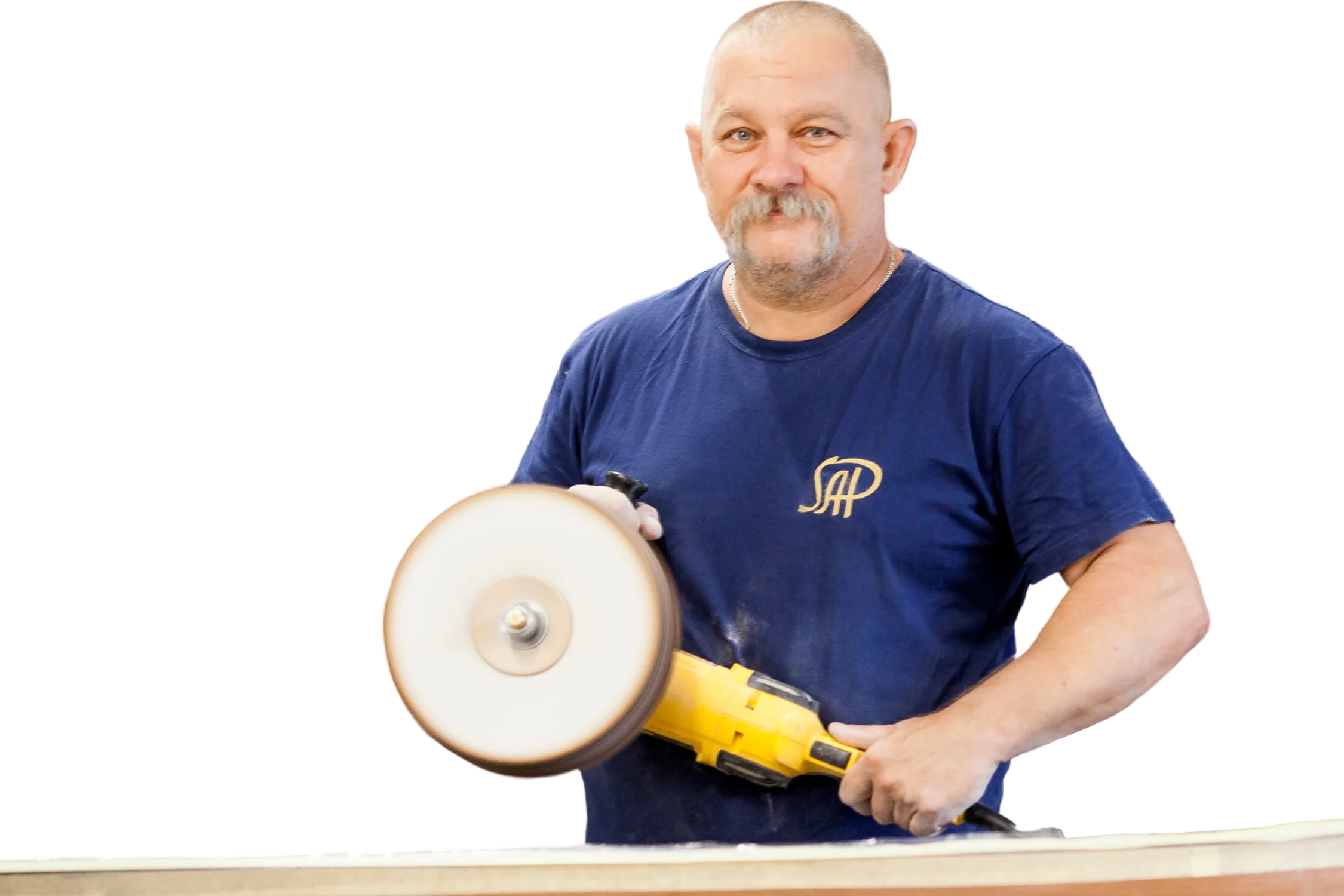
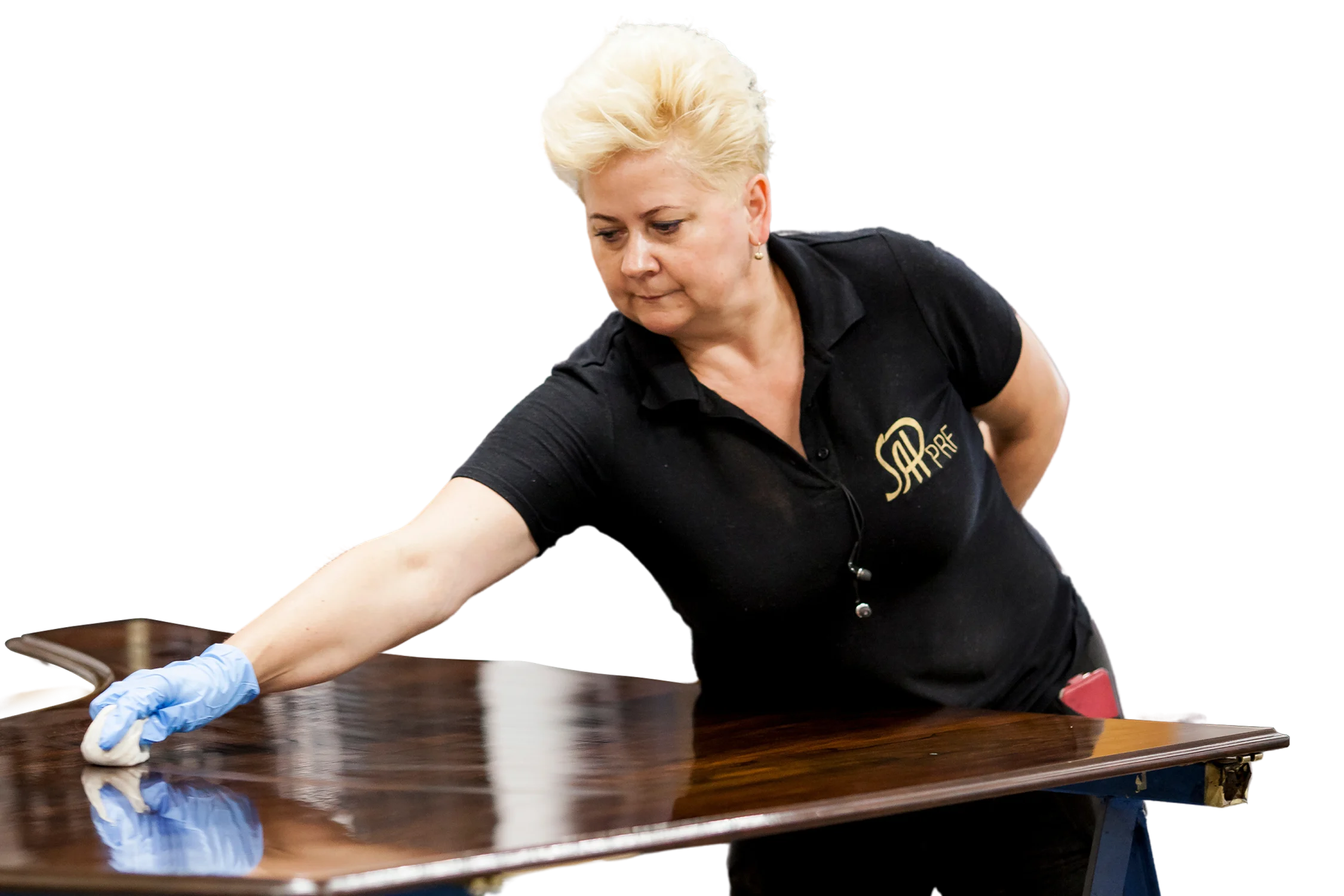
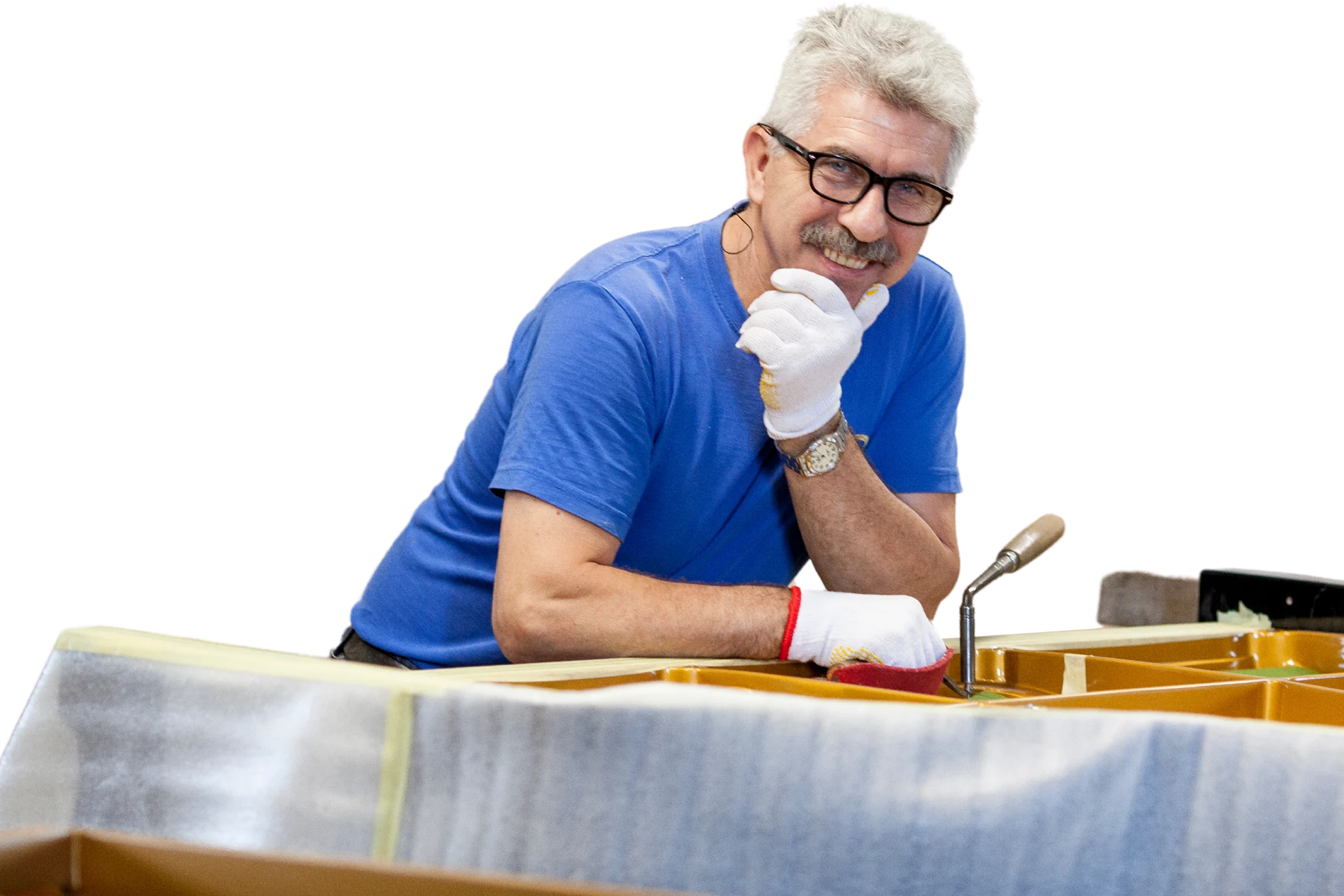
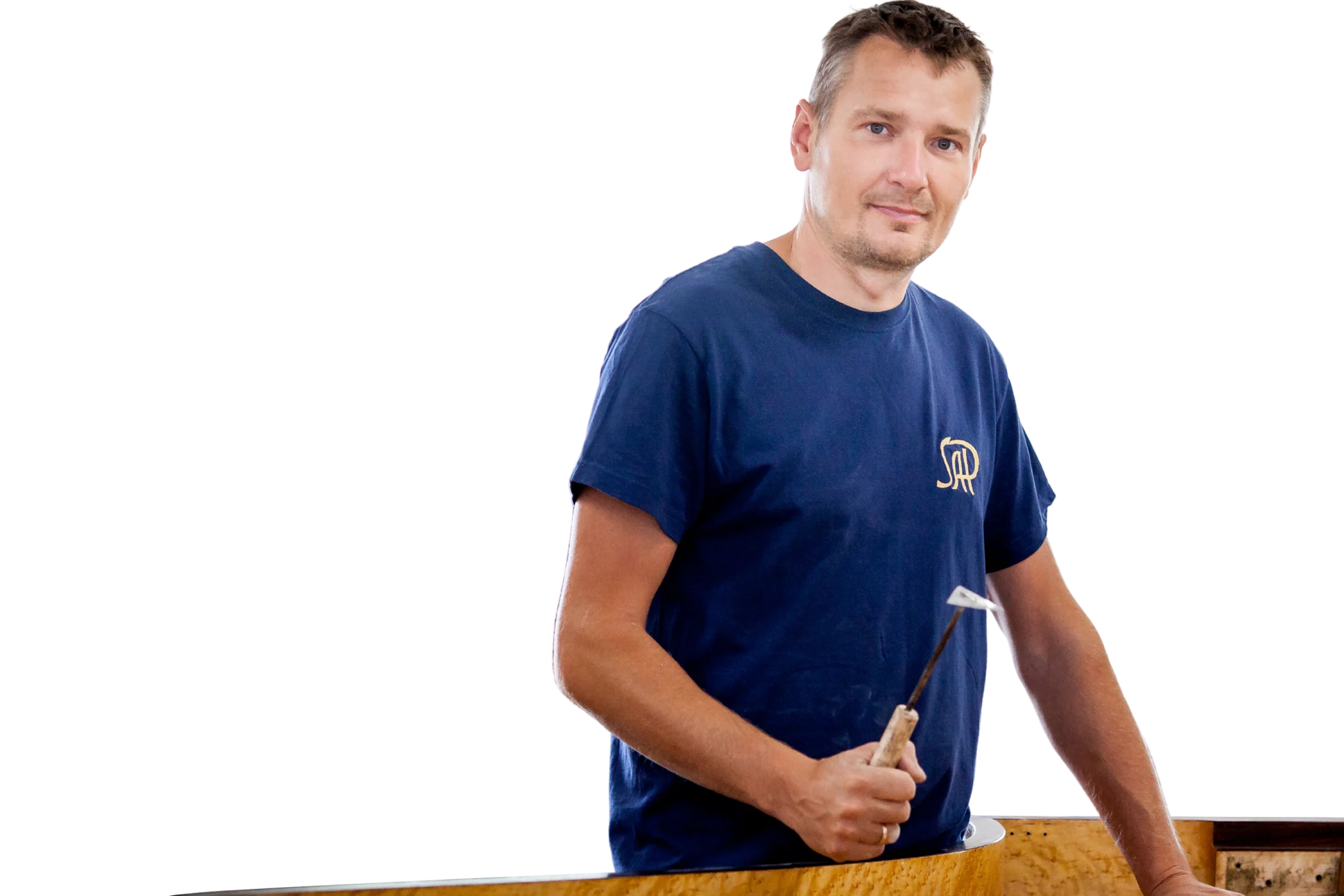
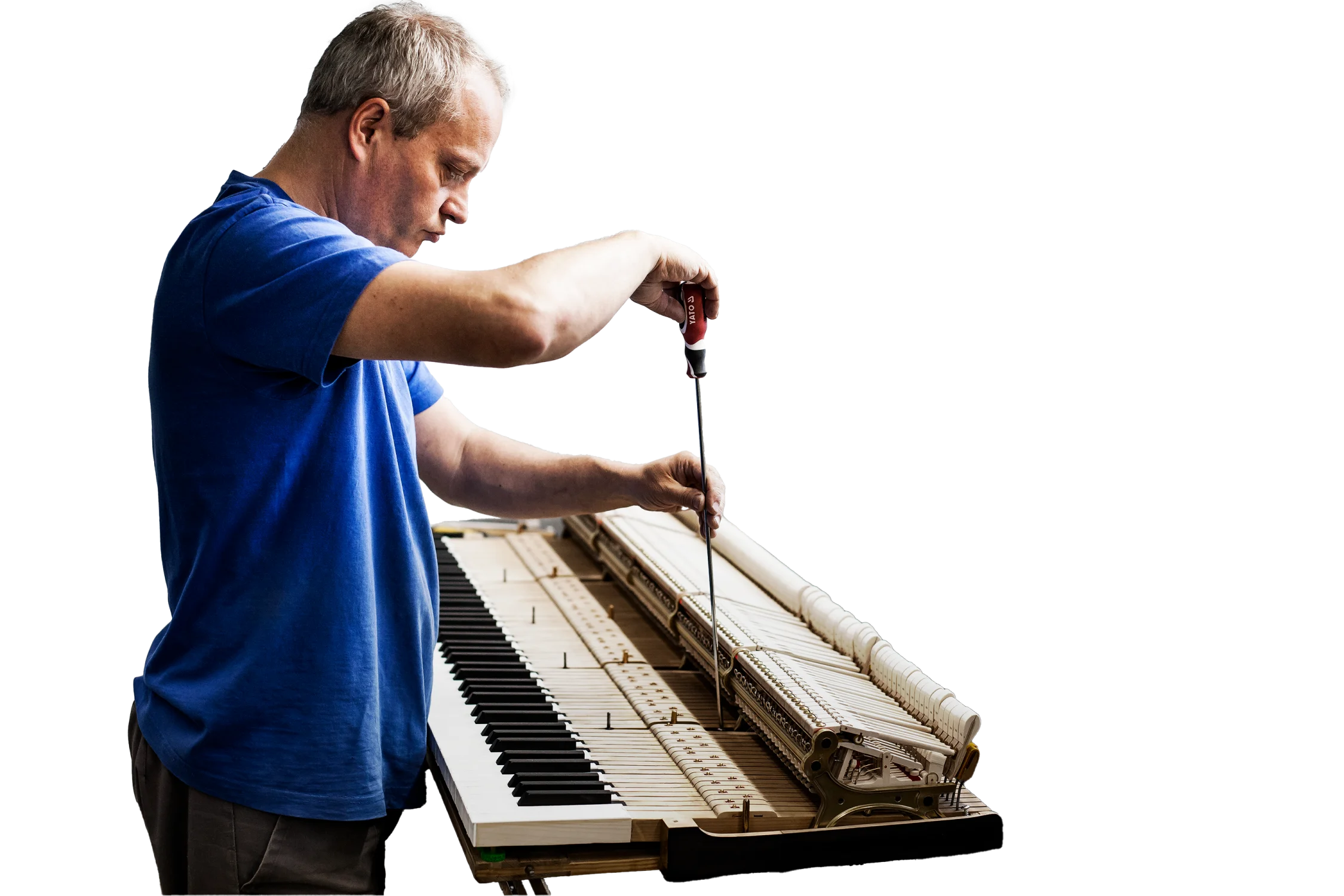
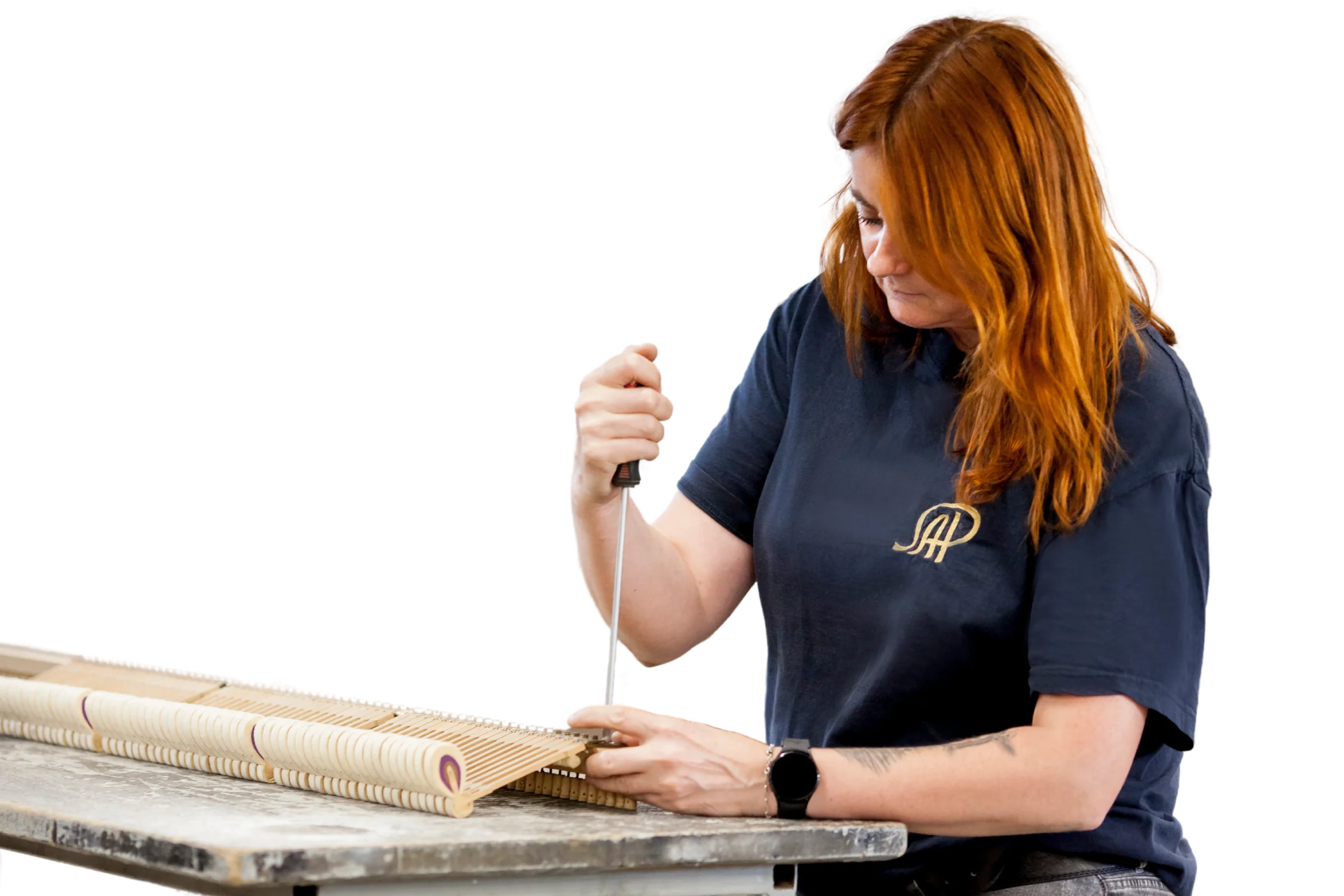
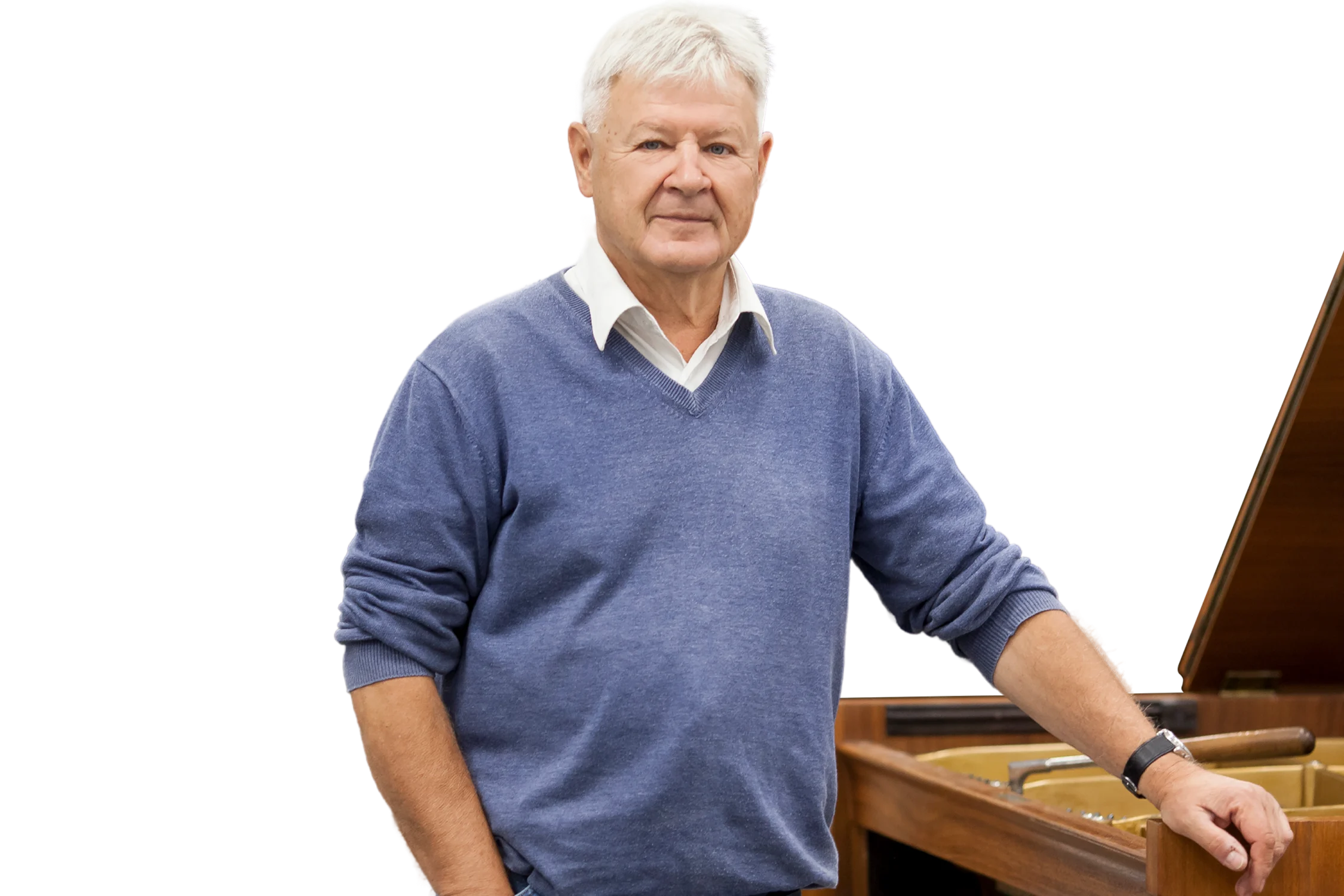
Grzegorz – SAP Renovation master at work
Marcel – SAP Renovation master at work
Bogdan – SAP Renovation master at work
Kasia – SAP Renovation master at work
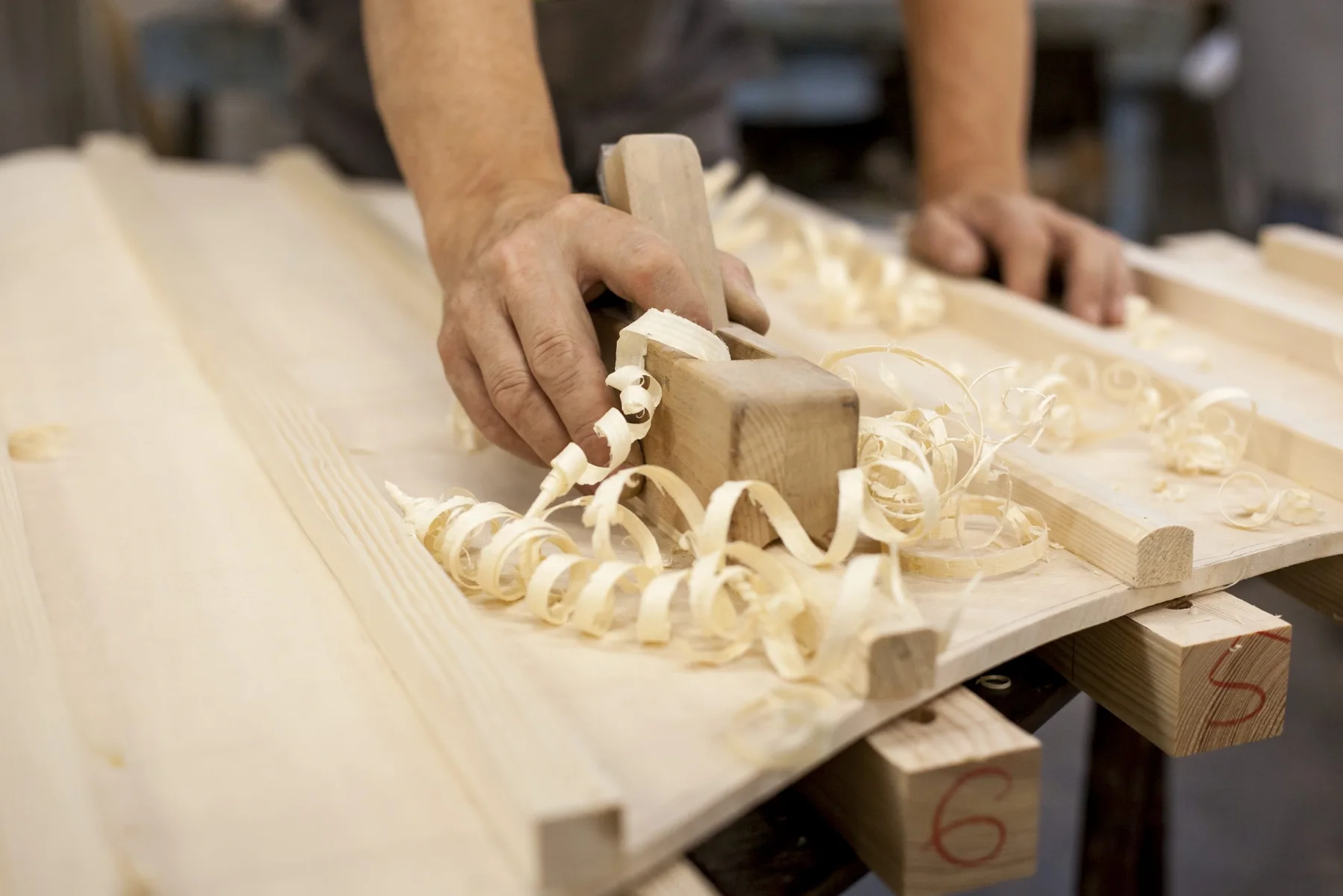
Hand-planing soundboard ribs

Soundboard

The soundboard of the Alaudis grand piano is made of tonewood-grade spruce supplied by the renowned producer Strunz and is a key element of the instrument’s acoustic structure. Many regard it as the heart of the grand piano, because it determines the power of projection and the character of the tone.

Carefully seasoned and selected wood, precisely fitted to the rim, forms an active resonating surface that carries and amplifies the vibrations of the strings, giving the sound richness of colour, a broad harmonic spectrum and a long, natural sustain.

Designed in the spirit of the finest piano-making traditions, the soundboard gives the instrument full projection and tonal balance – from deep, saturated basses to clear trebles.

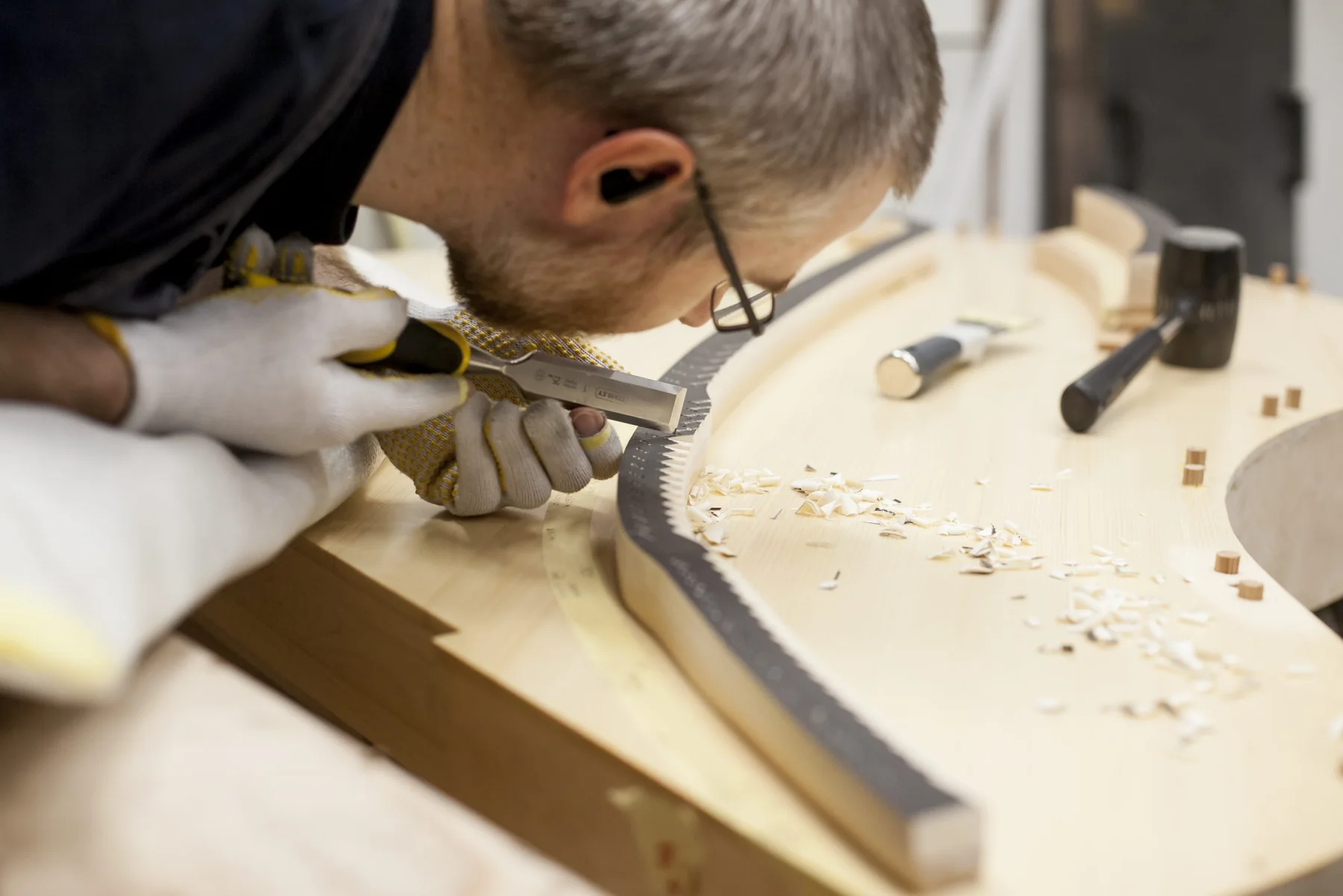
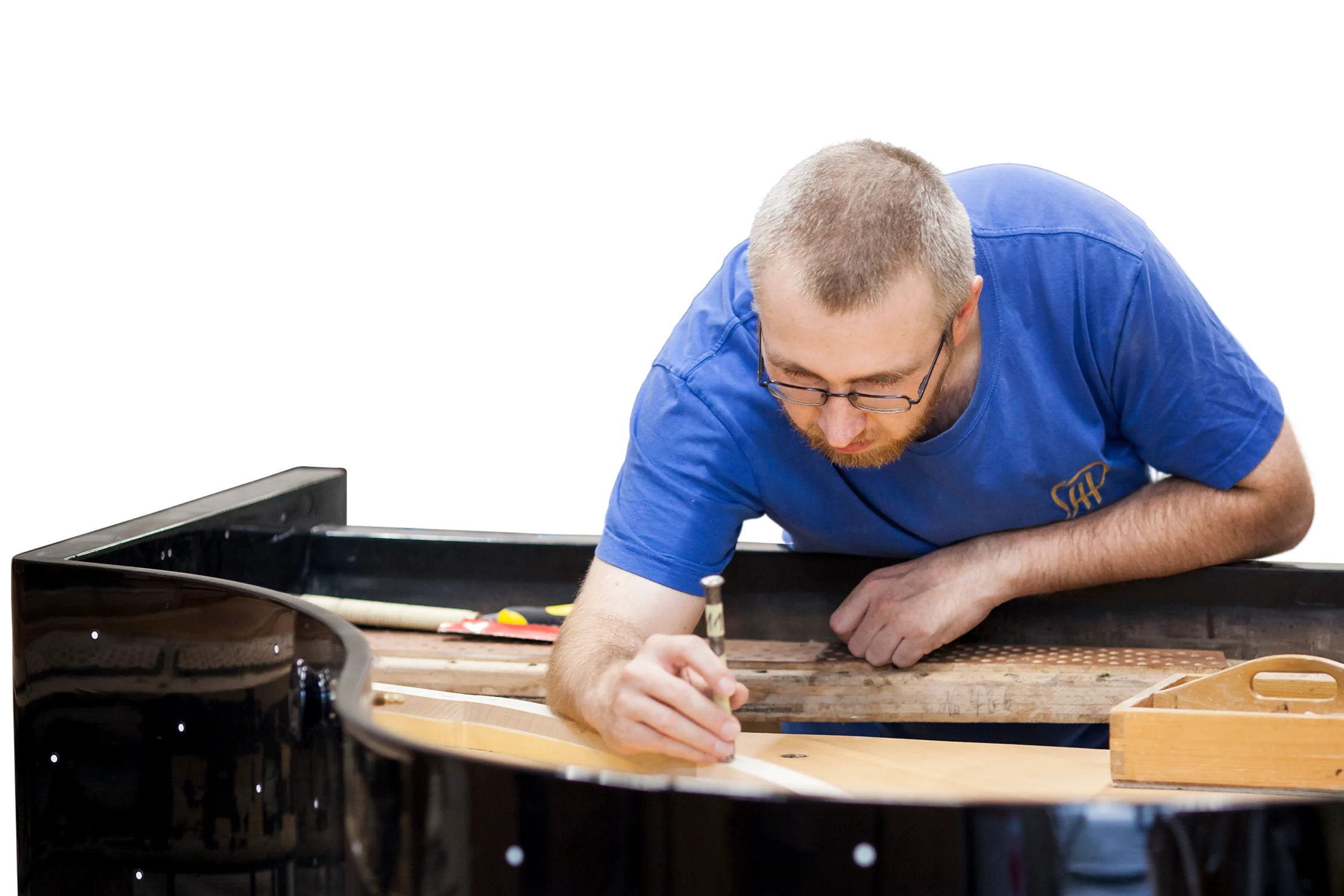
A master notching a bridge with a chisel

Bridges

The Alaudis bridges are made of selected hard maple, seasoned and stabilised for moisture content, in line with the standards of the finest piano manufactories.

The laminated construction of vertically glued hardwood layers is further reinforced with a solid maple cap, which ensures exceptional mechanical stability and lasting tuning.

This design gives great longitudinal stiffness, so the vibrational energy of the strings is transferred to the soundboard with maximum efficiency. The reduced contact area between the bridges and the soundboard leaves the board free to vibrate fully, supporting long sustain and a rich spectrum of overtones.

Precise notching where the strings meet the bridges ensures optimum transmission of vibration and stable tuning.

A multi-ply beech pinblock on the workbench

Pinblock

The pinblock of the Alaudis grand piano is made of cross-laminated multi-ply beech, following the construction principles used in the finest grand pianos. The layered structure, oriented according to the wood grain, provides remarkable mechanical stability and resistance to changes in humidity and to the tension of the strings.

The cross-grain arrangement – modelled on Hexagrip-type designs, where successive layers are rotated by 45–90° – makes the grip on the tuning pins more even and reduces the risk of cracking, which translates into longer-lasting tuning.

In practice, professional multi-ply beech pinblocks can have around 21 laminations at a thickness of 1 3/8″, which stabilises the torque of the tuning pins even at a total string tension of more than 18 tonnes (~40,000 lb).

Thanks to this construction the tuning pins are firmly anchored, which guarantees long-lasting tuning and ideal transfer of energy from the strings to the resonating structure. The whole has been designed so that the instrument holds its pitch precisely and its sound is full, stable and precise.

Hand-sanding the edges of a cast-iron plate

Cast-iron plate

The cast-iron plate of the Alaudis has been designed to the highest structural standards of the established piano manufactories. It is cast from high-grade grey iron that meets the mechanical requirements imposed by the tension of the strings.

Thanks to precise casting and careful finishing, the plate serves not only a structural purpose – stabilising the whole instrument – but also an acoustic one, maintaining optimum contact between the speaking length of the strings and the body of the instrument. Carefully designed reinforcements and the precise fitting of the plate to the rim allow the vibrational energy of the strings to be used to the full, guaranteeing powerful projection and tonal clarity across the whole compass.

With this design the plate of the Alaudis acts as a lasting stabiliser of the structure and at the same time as an active acoustic partner, allowing the whole construction to work freely and efficiently.

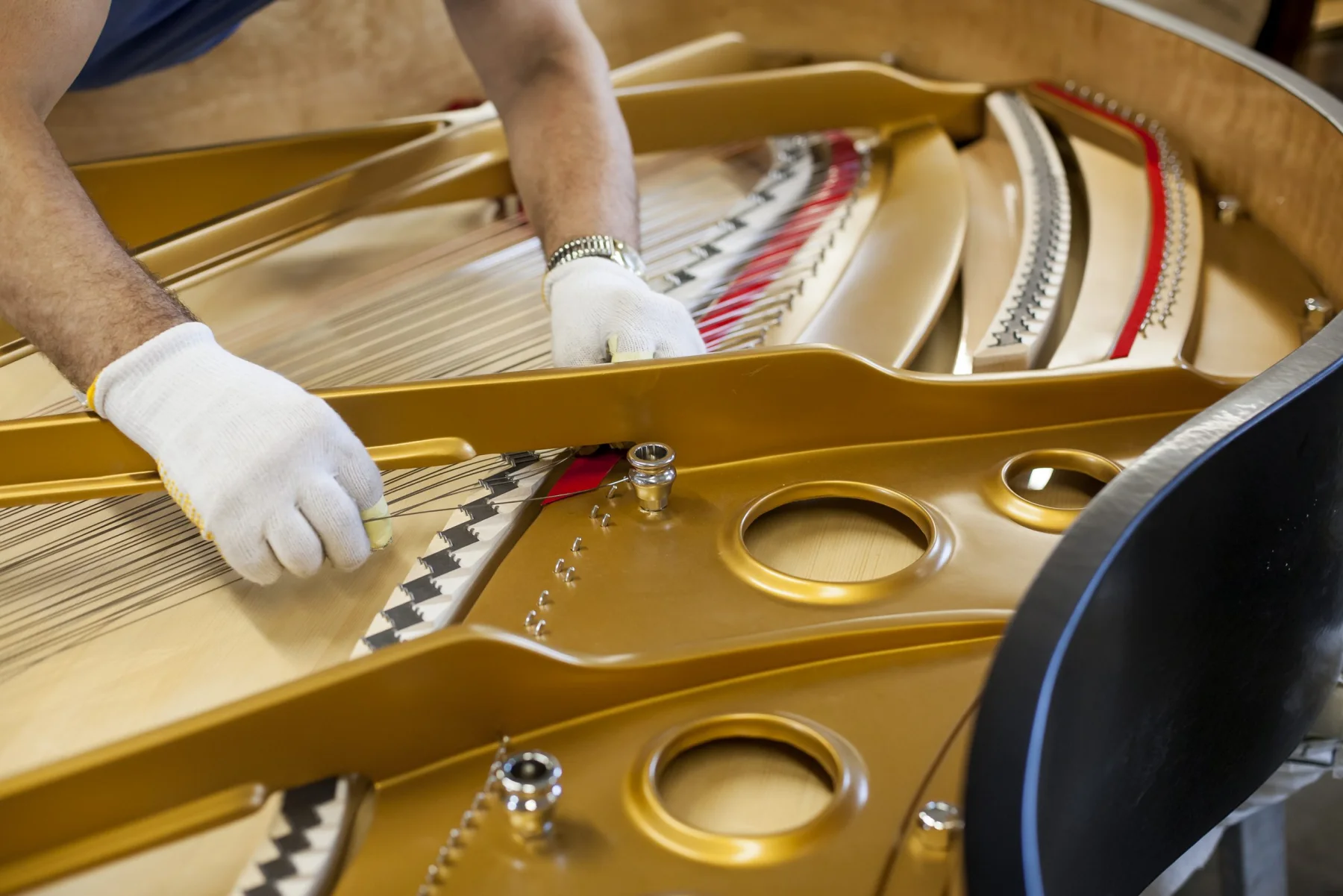
Fitting strings on the gold plate of a grand piano

Stringing

For the stringing of the SAP Alaudis grand piano we used Diamant tuning pins (Julius Klinke, Germany), valued for their precise manufacture and consistent specifications, which translates into stable torque and reliable tuning stability.

The set of steel strings is made from Röslau wire, known for its uniformity and high elastic properties; the bass strings were supplied by Hellerbass (Germany), a specialist in precisely wound bass strings for manufacturers and restorers.

The string scale was designed in dedicated calculation software that optimises diameters, speaking lengths and target tensions, taking into account inharmonicity and the intended tonal characteristics.

In the SAP Alaudis grand piano it is crucial that the choice of wire, tuning pins and scale parameters matches the strength of the plate and of the whole structure.

The masters

01 – 04

The cast-iron plate workshop is led by

Darek

10 years of experience

Darek – SAP Renovation master at work
Sławek – SAP Renovation master at work
Mateusz – SAP Renovation master at work
Jarek – SAP Renovation master at work
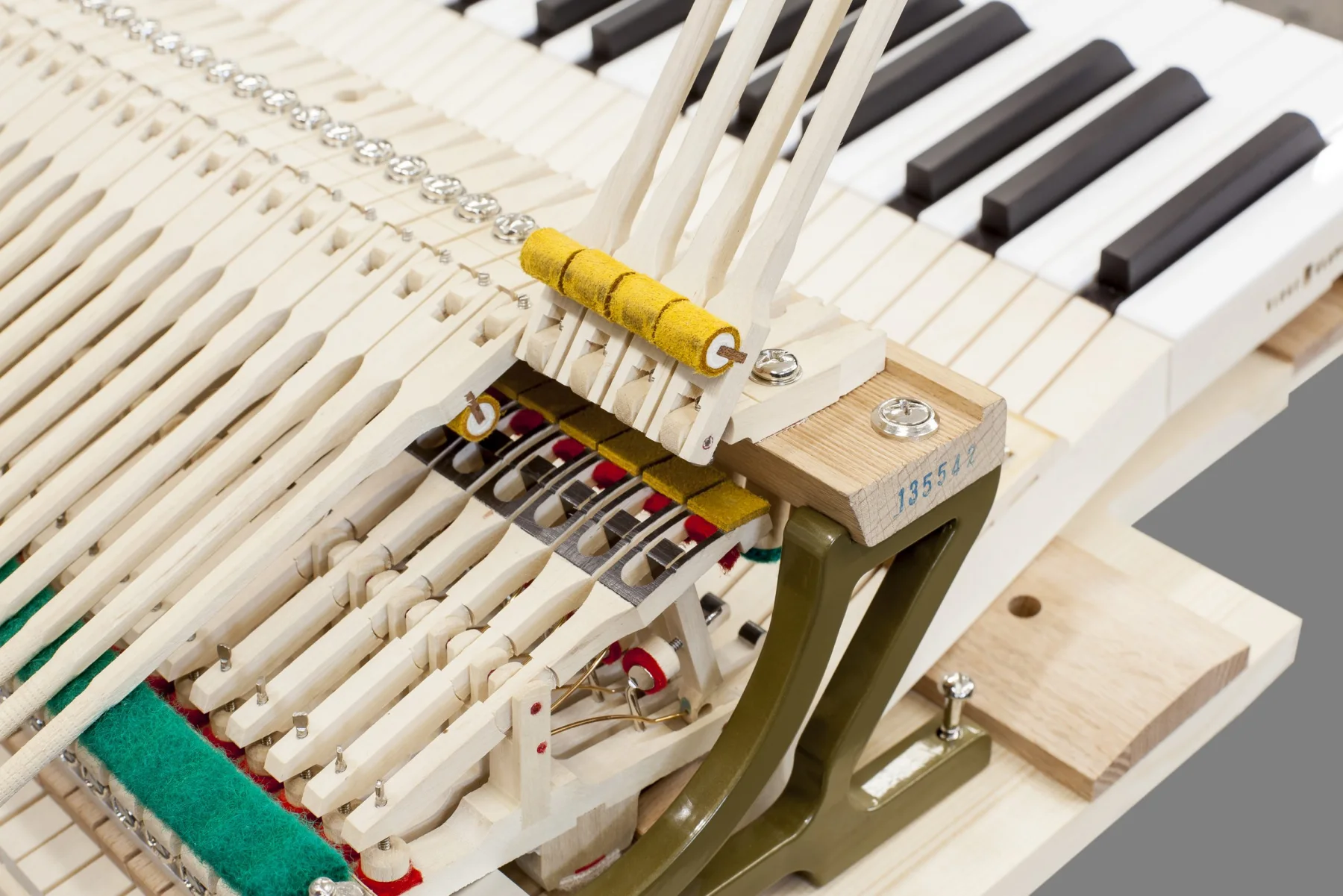
Hammers and levers of a Renner action

Action

The hammer action of the SAP Alaudis grand piano is built from high-grade components by Louis Renner GmbH – the world leader in the manufacture of piano actions.

Renner hammers: precisely formed heads made of the highest-quality felt have been individually matched and adjusted to the string scale and the tonal character of the instrument. This matching ensures a perfectly balanced response – a clean, precise attack, quick rebound and full control over dynamics.

Renner shanks: made from materials of high strength and dimensional stability, which keeps deformation and any change in dynamic properties over time to a minimum. High-precision machining and exact fitting to the action frame eliminate play and unstable operation.

Wippens: the whole wippen section of the action is built to tight tolerances, so that mechanical energy is transferred from the key to the hammer quickly, smoothly and with almost no loss. In top-class instruments, the use of a Renner action allows the maker to guarantee the highest quality of performance.

Thanks to this action design, the SAP Alaudis offers exceptional keyboard responsiveness and a delicate, precise touch in pianissimo and full fortissimo alike. The Renner action, made up of more than 8,800 components, guarantees consistent and stable performance, and its natural construction of wood, leather and felt ensures durability and a long life even under intensive use. Excellent transmission of energy from the key through the hammer to the strings results in a clean attack, a wealth of overtones and full use of the acoustic potential of the soundboard and of the whole body of the instrument.

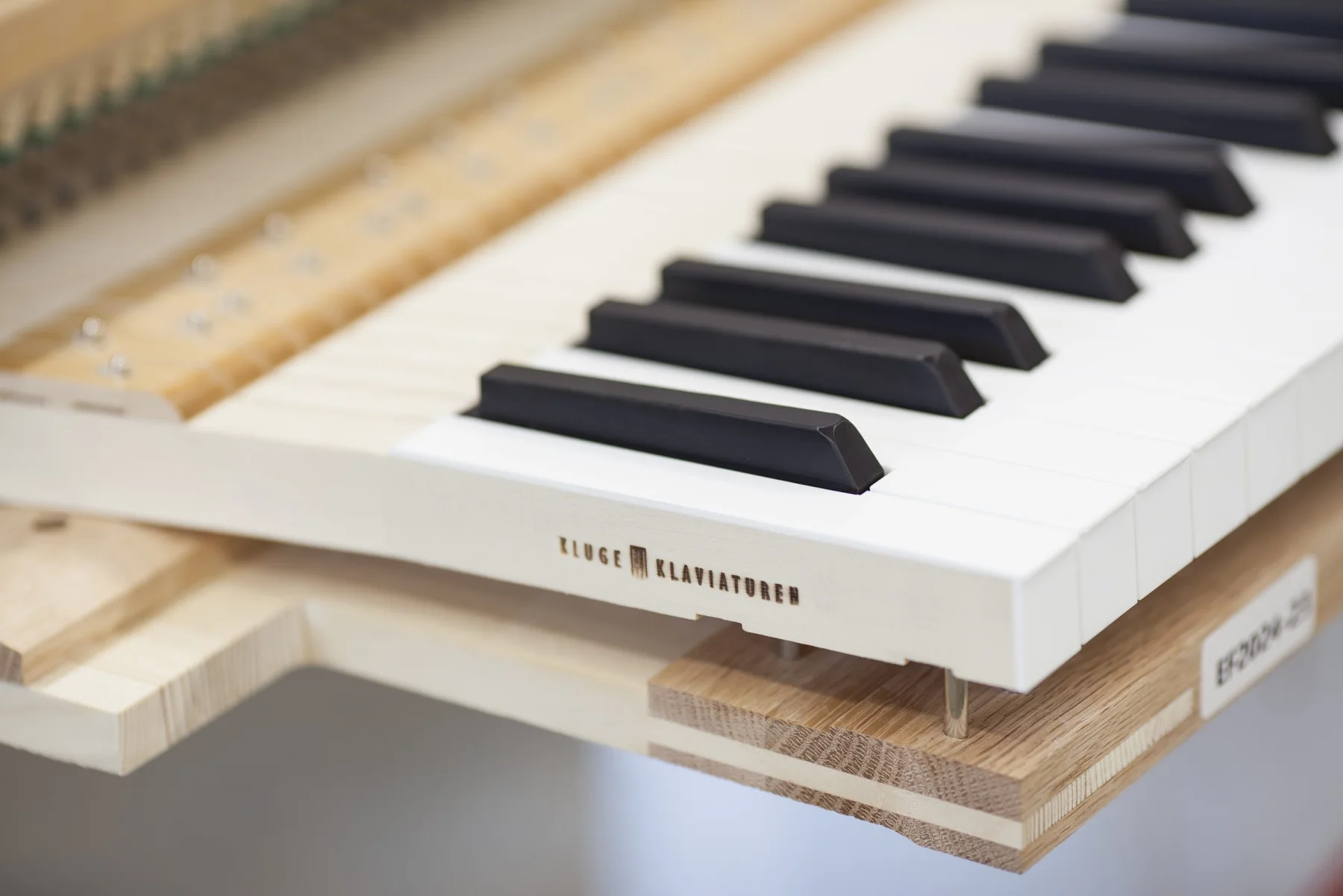
Kluge keyboard of the SAP Alaudis grand piano

Keyboard

The keyboard of the SAP Alaudis grand piano was developed in close cooperation with the renowned firm Kluge, regarded as one of the finest makers of premium keyboards in the industry. A bespoke layout and execution were created specially to our order, so that the keyboard would match the concept of the instrument perfectly – as an extension of the pianist’s artistic expression.

Made by Kluge, the keyboard has exceptional acoustic and mechanical balance – minimal damping of the vibrations of the instrument’s body in the keyboard area, which supports full sound transmission and stable operation.

The keyboard is also made with an eye to aesthetic detail: perfectly matched keys, a surface level to within a millimetre, rounded edges and a flawless finish – all of which underline the luxurious character of the instrument.

As a result, the keyboard of the SAP Alaudis is not just a mechanical device but an integral part of the pianist’s artistic expression – it responds precisely to intention, allows controlled nuance and supports the full sound the instrument has to offer.

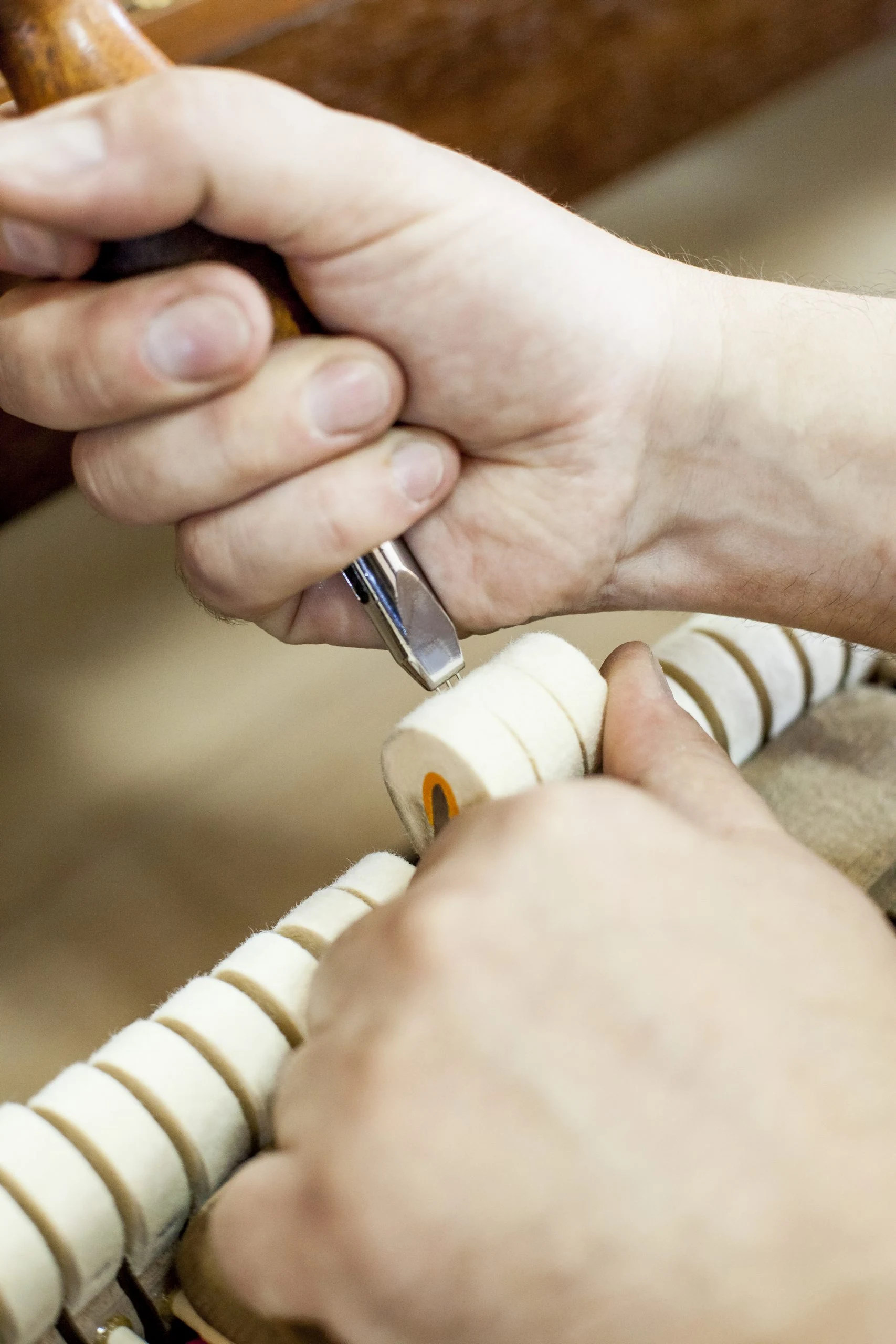
Voicing grand piano hammers with needles

Voicing

Voicing the SAP Alaudis grand piano is one of the most demanding stages of the finishing process – the moment where technique meets art. The aim of voicing is to give the instrument its individual tonal character through precise work on the hammers, the felt and the point where the hammer strikes the string.

Each hammer is individually shaped and voiced. Using needles and special agents that soften or harden the felt, the technician adjusts its resilience and density to achieve the ideal balance between attack and carrying power.

The process calls for exceptional experience – hammers that are too hard make the tone excessively bright and metallic, while hammers that are too soft limit projection and clarity. Voicing at SAP Alaudis is carried out in stages: after initial regulation and voicing, the grand piano is played in on an automatic playing machine, then precisely regulated again and voiced once more.

The result is a sound with a full harmonic spectrum, perfectly balanced registers and the exceptional singing quality characteristic of the skylark. The voicing of the SAP Alaudis gives the instrument its own identity while preserving the natural warmth and richness of colour that lie at the heart of our philosophy of sound.

The masters

01 – 03

The regulation workshop is led by

Piotr

36 years of experience

Piotr – SAP Renovation master at work
Agnieszka – SAP Renovation master at work
Marek – SAP Renovation master at work

SAP Alaudis – Skylark

The Polish grand piano. A sound unlike any other.