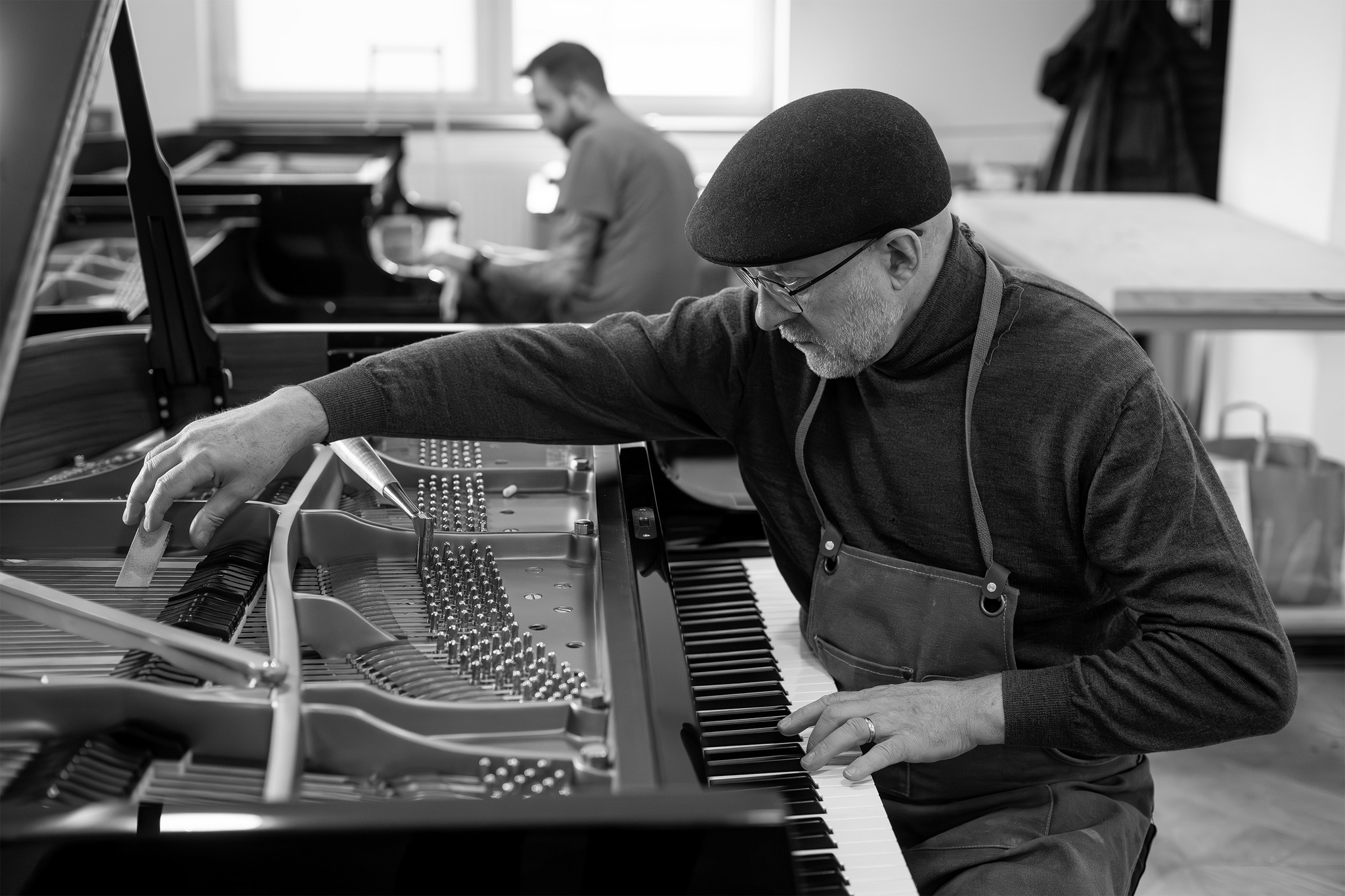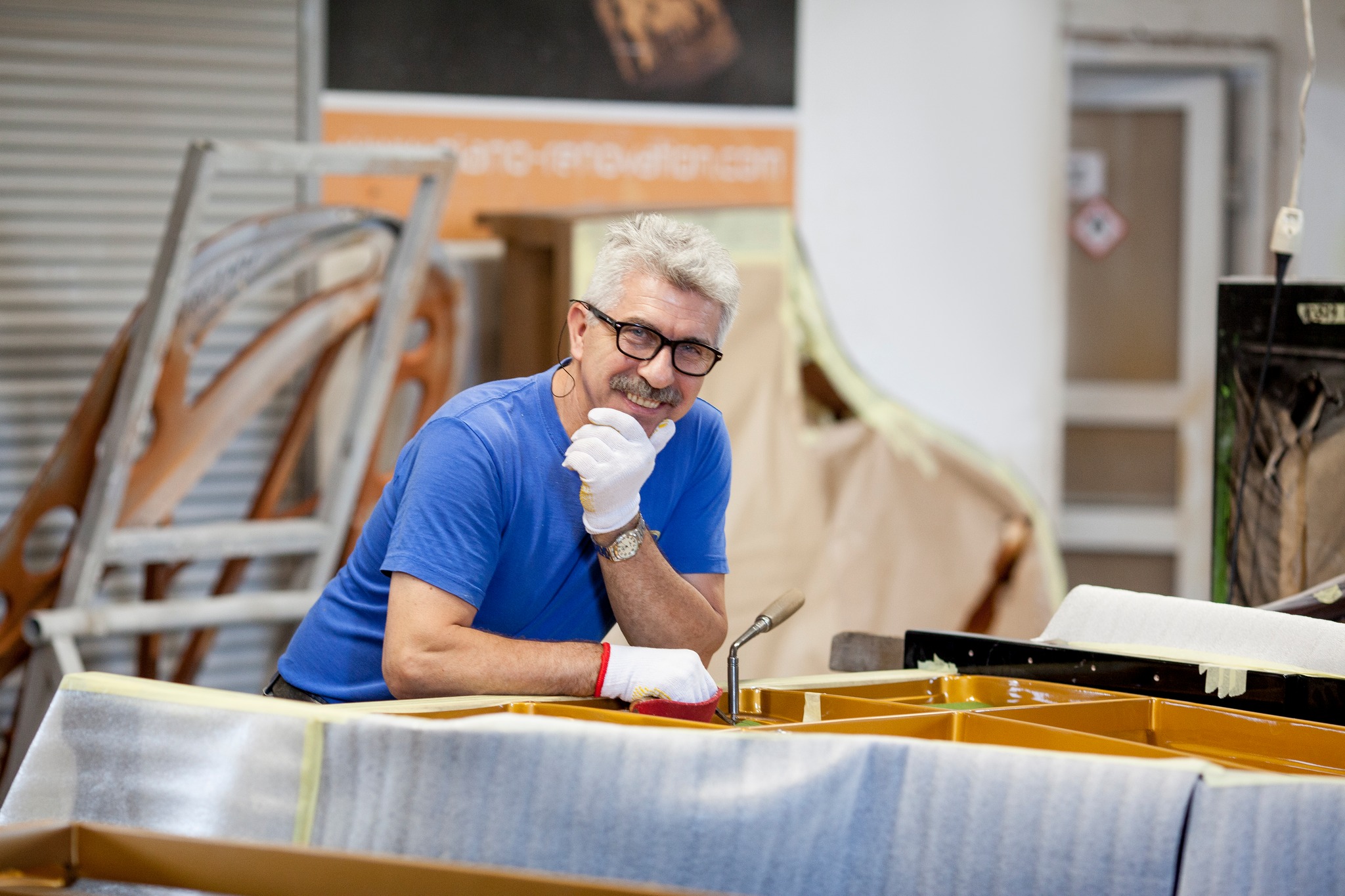
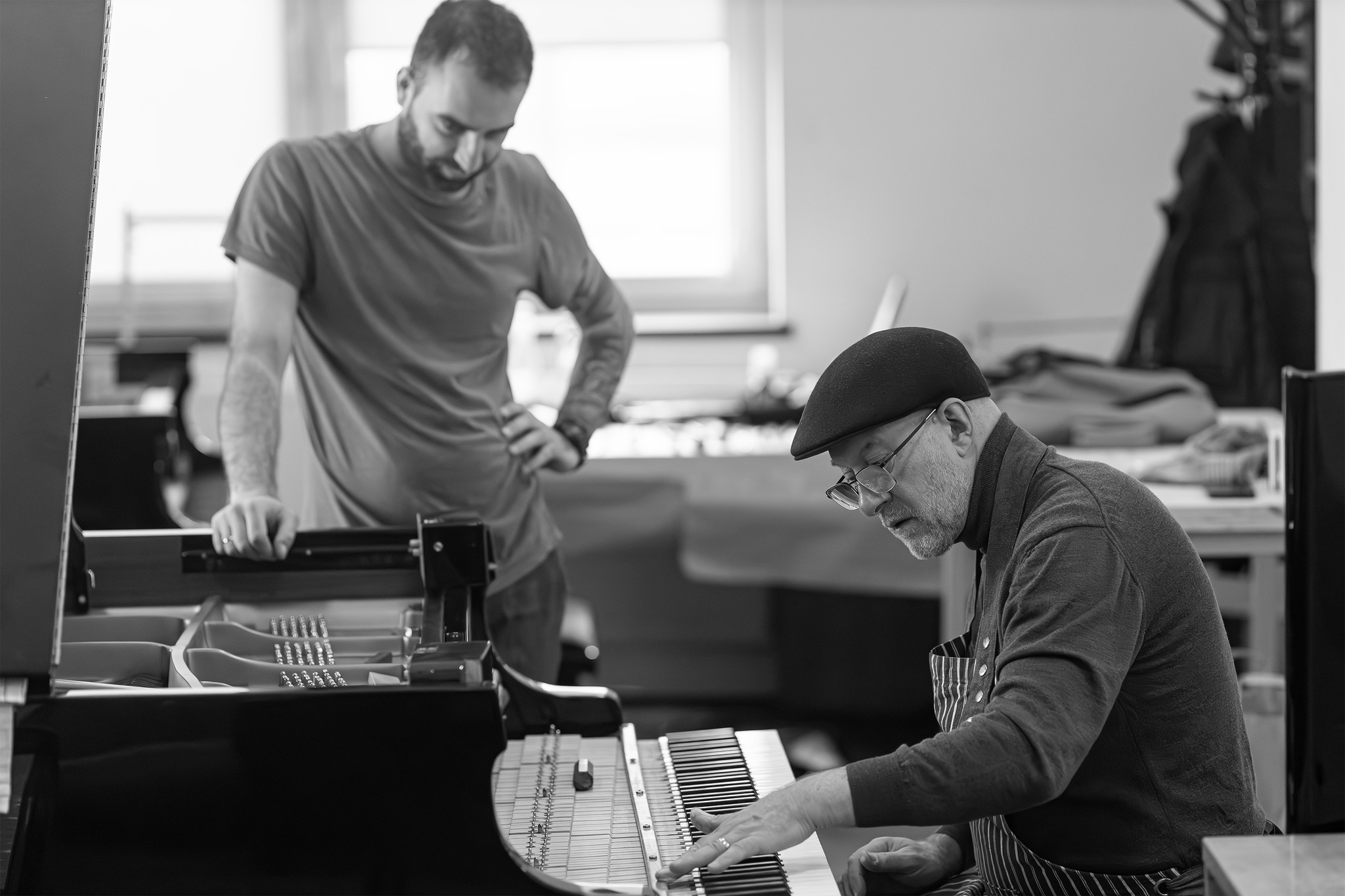
Owning a piano is not only an artistic privilege, but above all a significant responsibility for an owner who cares about technical details. This complex instrument constantly operates under high tension, so a lack of maintenance quickly leads to irreversible degradation of the action and a loss of tonal qualities. The lifespan of the instrument therefore depends almost entirely on our consistency in caring for it. Only professional technical care guarantees that the sound will remain deep and inspiring for decades to come.
Regular piano servicing as the foundation of durability and protection against costly repairs
Every keyboard instrument undergoes natural aging processes, but systematic care by a specialist determines how quickly these unwanted changes progress during use. Regular piano servicing is an investment that, in the long term, can save significant financial resources by protecting us from the need to replace expensive components. Many people mistakenly assume that a tuner should only be called when the instrument’s pitch becomes unbearable to the ear, which is a damaging approach to the instrument itself. Professional restoration services are often directed at instruments that have been neglected for years, even though many issues could have been easily avoided through simple regulatory procedures.
Continuous monitoring of the technical condition allows minor deviations to be corrected on an ongoing basis before they turn into serious failures requiring complex workshop intervention. It is important to understand that individual piano components work in strict interdependence, and the failure of one can trigger a cascade of further mechanical faults. Caring for the instrument is not only a matter of sound aesthetics, but above all of preserving its material and historical value for decades of use.
Why the lack of regular servicing leads to accelerated wear of the action
The interior of a piano is an extremely precise system of levers, springs, and felts that must work in perfect harmony to transfer the movement of a finger into an accurate hammer strike on the string. Without periodic regulation, cooperating parts begin to rub against each other improperly, leading to rapid wear of delicate internal materials. When the action falls out of adjustment, the pianist is forced to use significantly more force while playing, further burdening already strained components.
Worn hammer felts become flat and hard, resulting in an unpleasant metallic tone that cannot be corrected by tuning the strings alone. A neglected keyboard begins to develop lateral looseness, which reduces playing precision and removes any enjoyment from practicing or performing at home. Protecting the action from excessive wear is therefore an absolute priority if we want the instrument to serve reliably for future generations of pianists.

Tuning stability and tonal clarity – how servicing affects sound quality
The primary goal of each technician’s visit is to restore the instrument to the correct pitch, which involves physically adjusting the tuning pins embedded deep in the pinblock. The wood used in this part can lose its properties over time and under great tension, making tuning increasingly difficult. Regular visits by a specialist help maintain the pins in proper condition and stabilize the tension of the entire system, directly contributing to crystal-clear intervals.
If a piano is not tuned for a long time, the overall tension of the strings drops significantly, and bringing it back to the standard 440 Hz can become risky for the stability of the entire structure. Sound clarity also depends on the precise positioning of the hammer strike point, which may shift due to natural changes in wood and felt. Only the experienced ear and hand of a professional can bring out the instrument’s full tonal palette and dynamic nuances.
Humidity, temperature, and wood – the role of servicing in protecting the piano’s structure
Acoustic instruments are largely made of wood, a hygroscopic material highly sensitive to changes in environmental conditions. Fluctuating humidity causes the soundboard to swell or shrink, which in extreme cases may lead to cracks and permanent damage to the instrument’s tone. During a service visit, a technician assesses the condition of the wood and may recommend installing specialized humidification systems to prevent costly structural repairs.
Tensions resulting from the movement of wood are also transferred to the cast-iron frame, which is why restoring piano frames is a complex process that can often be avoided by maintaining a stable indoor microclimate. A specialist can detect early, subtle symptoms of drying bridges or loosening ribs—warning signs for any owner. Monitoring environmental conditions is an inseparable part of professional servicing and a fundamental requirement for preserving the piano’s structural integrity over time.

Regulation of the action and keyboard – the key to playing comfort and balanced dynamics
Playing comfort depends largely on how the keyboard responds to the pianist’s touch and whether the resistance of individual keys is uniform across the entire range. Even the best-tuned piano will not provide satisfaction if its action feels heavy, uneven, or unable to produce a soft piano dynamic. Precise adjustment of key dip, hammer release, and backcheck restores the instrument’s responsiveness and allows full artistic expression.
Many people are unaware that an uneven keyboard forces unnatural tension in the hands, which may lead to painful injuries and discouragement from further musical study. A technician makes hundreds of microscopic adjustments so that each of the eighty-eight keys behaves identically under the player’s fingers, ensuring complete control. Smooth playability and the ability to shape musical phrasing freely are direct results of well-executed regulation by a qualified instrument technician.
Early fault diagnosis – when regular servicing prevents major repairs
Routine technical inspections play an important preventive role, allowing problems to be detected before they become visible or audible to the average user. An experienced technician can notice microcracks, signs of wood pests, or early corrosion on the strings before they lead to irreversible damage. In many cases, quick intervention and minor adjustments are sufficient, whereas ignoring symptoms may result in the need for a full-scale piano repair.
Early diagnosis also allows maintenance costs to be spread over time, which is far less burdensome for a household budget than sudden major expenses. Regular technical checks are an expression of responsibility and deep respect for the craftsmanship of those who built the instrument.
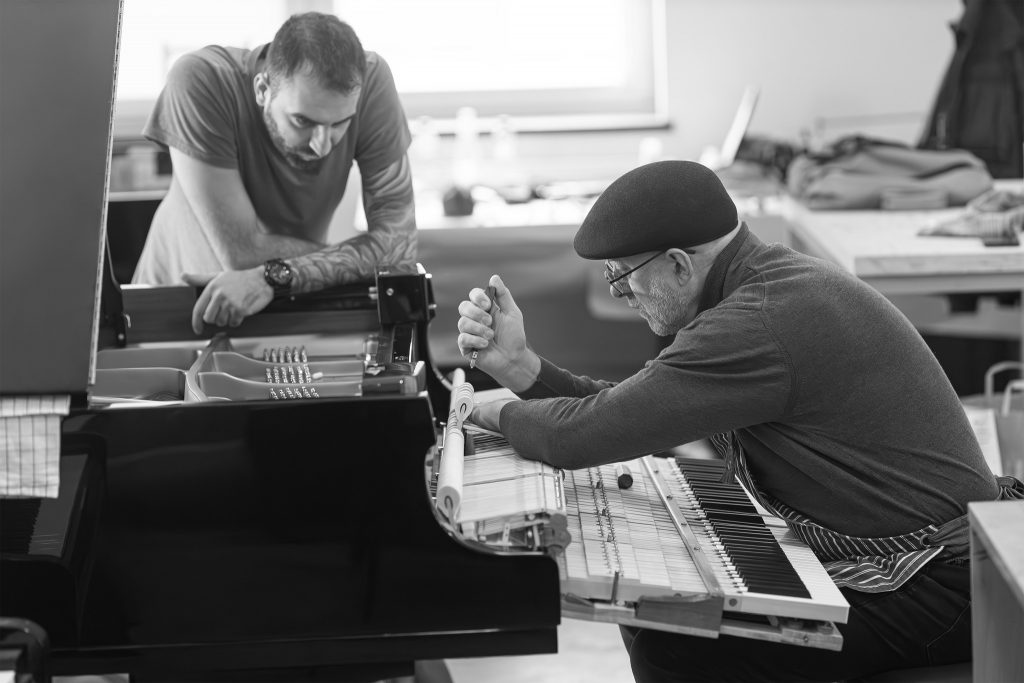
What does professional piano servicing include and how often should it be performed?
Comprehensive servicing is a multi-stage process that goes far beyond simply turning a tuning wrench to set proper string frequencies. To maintain full efficiency, a specialist must perform a range of precise inspection and maintenance tasks on the instrument’s mechanical and acoustic components. Experts generally recommend tuning and inspection at least once—and ideally twice—a year, taking into account seasonal and heating-related changes.
Typical activities included in a professional service visit:
- precise tuning of the instrument to standard pitch (usually A4 = 440 Hz or 442 Hz),
- voicing adjustments, including needling hammer felts to balance tone across the scale,
- regulation of the action, including accurate setting of key dip and hammer release,
- cleaning the interior of accumulated dust beneath the strings and on the soundboard,
- tightening screws in the case, keyboard assembly, and pedals to eliminate unwanted noises,
- checking tuning stability and conducting a thorough assessment of the soundboard and bass and treble bridges.
Regular performance of these tasks allows a piano to “mature” beautifully, gaining nobility rather than deteriorating through everyday use. Consistent servicing is the only reliable way to enjoy a dependable, efficient, and beautifully sounding instrument throughout its lifetime. Understanding the individual needs of one’s instrument is a fundamental step in building a lasting relationship between the musician and the material that enables emotional expression. A piano is not a maintenance-free device, and any apparent savings on servicing will eventually affect sound quality and playing comfort. By treating regular visits from a tuner as an essential part of instrument care, we ensure peace of mind and the certainty that we can sit at the keyboard at any time. A well-maintained instrument is not only a tool for artistic work, but above all a source of inspiration and daily joy for the entire household.u.